
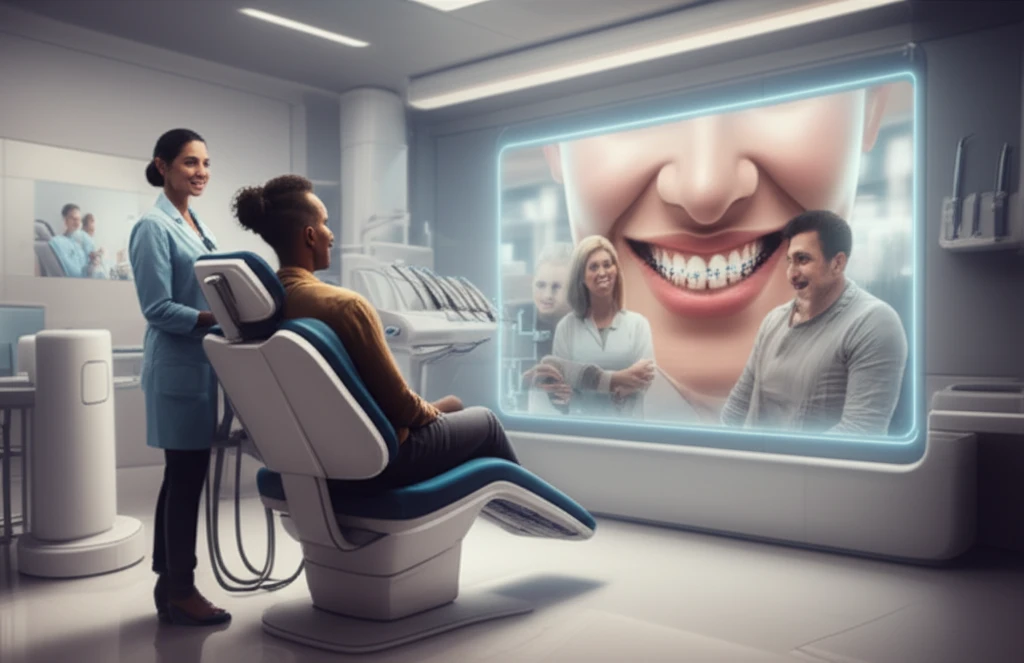
Smile Makeover Magic: How Digital Photography is Changing Orthodontics

"Discover how digital photography is revolutionizing orthodontic practices, enhancing treatment planning, and improving patient outcomes. A must-read for professionals aiming to stay ahead."
In today's fast-paced world, where digital technology reigns supreme, orthodontics has embraced the power of digital photography to revolutionize traditional practices. From capturing detailed images to enhancing treatment plans, digital photography has become an indispensable tool for modern orthodontists.
For over a century and a half, photography relied on silver halide film, but the advent of digital photography has ushered in a new era of possibilities. Combining the strengths of information technology and traditional photography, digital imaging offers orthodontists a wealth of benefits, from improved diagnostics to enhanced patient communication.
This article explores the exciting realm of digital photography in orthodontics, highlighting its advantages, discussing different types of cameras, and providing guidance on selecting the right equipment. Discover how this innovative technology can transform your orthodontic practice and elevate patient care.
Digital Orthodontics: Scope and Impact
A 2026 review of digital orthodontics aims to survey current advancements, technologies, applications, benefits, and challenges. A 2017 article describes digital photography as the convergence of information technology and photography, and reviews its possibilities in orthodontics. The supplied sources do not provide specific market statistics or quantified clinical impact, so no figures can be stated from this material.
Clinical Photography Requires Technique
Smartphone photography may be simple, but producing high-quality orthodontic clinical photographs that meet clinical-record standards is more difficult and requires suitable equipment and technique. A 2024 article likewise describes consistently clear, detailed clinical photographs as challenging without knowledge of standardized techniques and equipment. Clinical photography is described as an essential tool for diagnosis, treatment planning, patient education, communication, and case documentation.
Why Digital Photography is a Game-Changer for Orthodontists
Digital photography offers several compelling advantages for orthodontic practices:
- No Waiting for Film Development: Unlike traditional film photography, digital images are available instantly, eliminating the need for time-consuming film processing. This allows for immediate assessment and decision-making.
- Enhanced Efficiency: Digital photography streamlines workflows, enabling orthodontists to quickly capture, store, and share images with patients, colleagues, and labs. This improves communication and collaboration, leading to better patient outcomes.
- Cost-Effectiveness: By eliminating the need for film and processing, digital photography significantly reduces operating costs. Digital images can be stored and accessed electronically, saving valuable storage space.
- Improved Image Quality: Digital cameras offer exceptional image quality, capturing fine details and subtle nuances that may be missed with traditional film. This allows for more accurate diagnoses and treatment planning.
- Easy Sharing and Collaboration: Digital images can be easily shared with patients, colleagues, and labs via email, cloud storage, or web portals. This facilitates collaboration and ensures that everyone is on the same page.
Digital Tools and Future Capabilities
A systematic review and meta-analysis on portraiture photography notes that 3D imaging and artificial intelligence may further enhance its diagnostic and treatment-planning capabilities in the future. A 2024 review reports that digital tools are already part of orthodontists’ armamentarium, advancing appliances, diagnosis, and treatment; it also says digital technology has enabled in-office orthodontic laboratories and customization of many appliances. These sources describe current digital applications and potential future capabilities, rather than establishing a single measured effect of photography on treatment.
Elevate Your Orthodontic Practice with Digital Photography
Digital photography has revolutionized orthodontics, offering numerous benefits that enhance treatment planning, improve patient communication, and streamline workflows. By embracing this innovative technology, orthodontists can elevate their practices and deliver exceptional patient care.
Photography in Everyday Orthodontic Care
The supplied sources describe digital dental photography as an important visual tool in daily orthodontic practice, supporting the documentation, study, and presentation of clinical cases as well as diagnosis and treatment planning. A review article also characterizes clinical photography as an essential tool and prerequisite for accurate diagnosis, treatment planning, and case documentation. The systematic review and meta-analysis aimed to assess portraiture photography’s effects on orthodontic treatment and diagnostic procedures, but the provided snippet does not report its findings.
Digital Integration and Personalization
A 2026 industry outlook describes orthodontics as evolving through digital integration, rising patient expectations, and demand for efficiency, comfort, and personalization. It reports that practices and dental service organizations are increasingly adopting advanced technologies to improve precision, streamline workflows, and enhance patient experiences, while patients seek more aesthetic options. A 2024 trends article points to digital technology, artificial intelligence, sustainable practices, and integrative treatments as developments shaping orthodontic care.
As digital photography continues to evolve, orthodontists must stay informed about the latest advancements and best practices. By investing in the right equipment and mastering the techniques of digital imaging, you can unlock the full potential of this transformative technology.
In conclusion, digital photography is an indispensable tool for modern orthodontic practices. Its numerous advantages make it a valuable asset for improving diagnosis, treatment planning, and patient care. Embrace the digital revolution and transform your orthodontic practice today.