
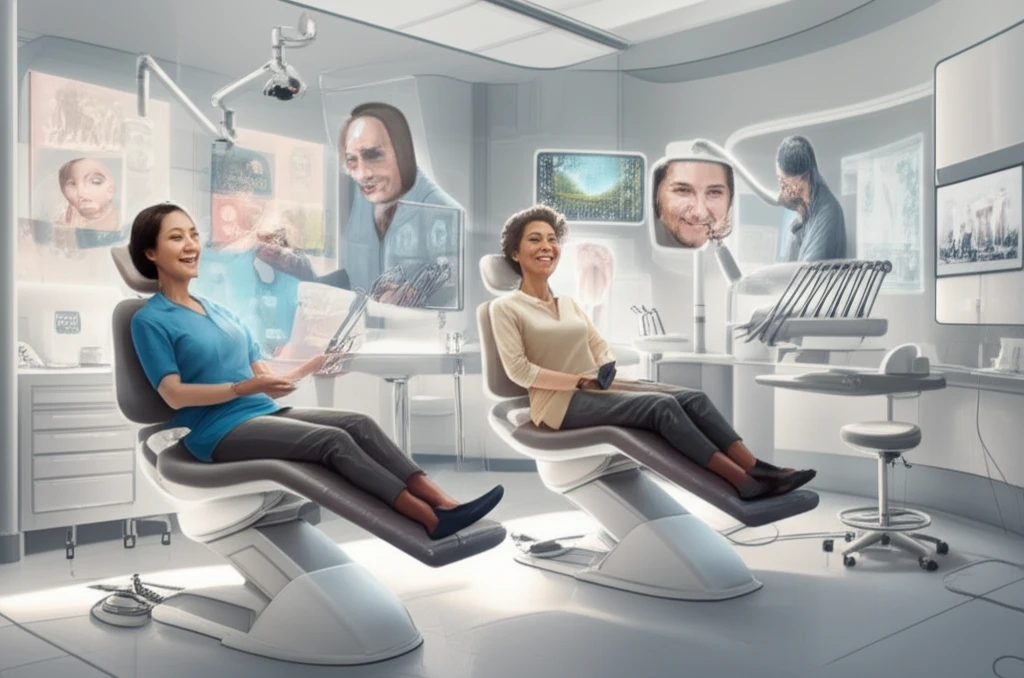
Dental Tech Revolution: Innovations Transforming Your Smile

"Explore the latest breakthroughs in dental materials and practice management that are reshaping the industry and enhancing patient care."
The dental industry is constantly evolving, driven by innovations that promise to enhance patient care, improve practice efficiency, and deliver superior results. From revolutionary composite materials to advanced practice management tools, these breakthroughs are transforming the way dental professionals approach their work.
This article explores some of the most exciting recent advancements in dental technology, highlighting how these innovations are being used to create healthier, more beautiful smiles. We'll delve into the details of new composite materials, explore the benefits of AI-driven practice management, and examine cutting-edge handpiece solutions.
Whether you're a dental professional looking to stay ahead of the curve or a patient curious about the latest advancements in oral care, this article will provide valuable insights into the future of dentistry.
The Prevalence of Dental Fillings
Over 90% of US adults have had at least one dental filling, making restorative dentistry one of the most common healthcare procedures in the country. Dental fillings serve as the cornerstone of restorative dentistry, aimed at treating cavities and restoring both tooth function and aesthetics. As dental technology and materials evolve, understanding the longevity and patient satisfaction associated with different filling types has become essential for informed treatment decisions. The shift from amalgam to composite resin materials reflects changing patient preferences and technological advancements in the field.
Traditional Filling Methods
Traditional dental restoration typically involves removing decayed tooth material and filling the cavity with restorative materials such as amalgam or composite resin. While these established methods have proven effective for decades, they come with inherent limitations including potential sensitivity to moisture during placement, varying longevity depending on material choice, and aesthetic concerns with metal-based fillings. The conventional approach requires careful technique and patient cooperation to achieve optimal results, and material selection often involves trade-offs between durability, cost, and appearance.
Evolution of Dental Filling Materials
The journey from ancient beeswax to modern biomimetic materials reflects centuries of innovation in dental fillings. Early synthetic resins emerged as restorative materials because they were insoluble, offered good tooth-like appearance, were insensitive to dehydration, easy to manipulate, and relatively inexpensive. The development of composite resin fillings has revolutionized dentistry by providing patients with more aesthetically pleasing, durable, and effective options for restoring teeth. Future innovations may include laser technology for placing fillings, potentially reducing the need for drilling and decreasing patient discomfort and recovery time.
Composite Technology: The Next Generation of Fillings
Traditional dental fillings have come a long way, but recent breakthroughs in composite technology are taking restorative dentistry to a new level. One notable innovation is the development of 'aesthetic pearl fillers,' which offer superior optical and physical performance compared to conventional materials. Tokuyama, a leading dental material manufacturer, has pioneered this technology, creating composites that mimic the natural appearance of teeth more closely than ever before.
- Superior Aesthetics: Pearl fillers provide a more natural look, blending seamlessly with the tooth.
- Enhanced Durability: The sol-gel method ensures consistent performance and longevity.
- Optimal Performance: Precise control over translucency, color, and refractive index.
Advances in Dental Composite Technology
Three-dimensional printing of dental composites represents a key emerging technology for fabricating personalized restorations, offering high geometric precision, reduced material waste, and promising mechanical performance. Recent innovations in adhesive technology, smart materials, and self-healing composites hold significant promise for improving the longevity and functionality of dental restorations. Bulk-fill composite resins have gained attention in restorative dentistry for their potential to streamline clinical procedures while maintaining adequate performance. These technological advancements offer new opportunities to enhance both the durability and aesthetic outcomes of dental restorations.
Challenges and Failure Risks
Systematic reviews comparing amalgam and composite resin materials have identified distinct failure risks associated with each material type in permanent posterior teeth. Studies examining extensive direct composite resin restoration failures suggest that while challenges exist, composite resins can fully substitute dental amalgams in routine dental practice with proper technique. The chemical aspects and formulation challenges of dental composites continue to be active areas of research, particularly regarding resin composition and filler influences on material performance. Clinical evidence indicates that both material types have specific limitations that must be considered in treatment planning.
Composite vs. Amalgam: A Material Comparison
Composite fillings typically cost between $150-$400, while amalgam fillings range from $75-$200, representing a significant cost difference for patients. Composite materials offer superior aesthetics as tooth-colored restorations compared to the silver appearance of amalgam, though amalgam has traditionally been valued for its durability. Safety concerns regarding mercury content in amalgam have driven increased preference for composite alternatives among both patients and practitioners. The choice between materials involves balancing factors including cost, longevity, aesthetic requirements, and individual patient health considerations.
Embracing the Future of Dental Care
As the dental industry continues to evolve, it's clear that innovation will play an increasingly important role in shaping the future of oral care. From advanced composite materials to AI-driven practice management tools, these breakthroughs are empowering dental professionals to deliver better, more efficient, and more personalized care to their patients. By embracing these advancements, dentists can stay ahead of the curve and ensure that they are providing the best possible treatment to their patients.
Cost-Effectiveness and Clinical Outcomes
Cost-consequence analyses comparing direct restorations of composite and amalgam have been conducted to evaluate the economic implications of material selection in clinical practice. Composite resin fillings have revolutionized dental restorations by providing a tooth-colored alternative to traditional silver-colored amalgam fillings that meets modern aesthetic expectations. Most dental patients worldwide now prefer naturally colored composite restorations over other options, reflecting shifting patient priorities and technological improvements. The comprehensive evaluation of composite materials continues to inform evidence-based clinical decision-making regarding restorative material selection.
Emerging Trends and Market Developments
The dental composites market is experiencing growth driven by innovations in universal composites, nanofill advancements, and increasing integration of artificial intelligence in dental workflows. Bioactive materials and nanotechnology are transforming composite dental products, with significant implications for both restorative and cosmetic dentistry applications. Market analysis indicates promising future developments in dental composites across multiple segments including conventional composites, bulk fills, and flowable materials. These innovations are expected to improve clinical outcomes while enhancing the efficiency of dental procedures and patient experiences.
Advancements and Limitations in Modern Restorative Dentistry
Recent innovations in composite resin technology address longstanding challenges in restorative dentistry while introducing new considerations for clinical application. The development of smart materials and self-healing composites represents a significant advancement in addressing the durability limitations that have historically affected composite restorations. Chemical aspects of dental composites, including resin formulation and filler characteristics, continue to present both opportunities and challenges for material optimization. The critical examination of composite resin development highlights their growing impact on modern dental practice while acknowledging areas requiring continued research and improvement.
Clinical Success and Patient Outcomes
Nanohybrid composite materials represent the current state of the art in restorative materials, demonstrating exceptional handling properties and superior aesthetics in clinical applications. A decade of clinical success with composite resin technology demonstrates that longevity depends not only on excellent physical properties but also on proper technique and clinical skill. Case studies utilizing nanohybrid composites show that these materials can achieve satisfactory durability while being more cost-effective than comparable ceramic restorations. The real-world impact of composite resin technology is evidenced by consistent clinical outcomes and patient satisfaction across diverse restorative applications.