
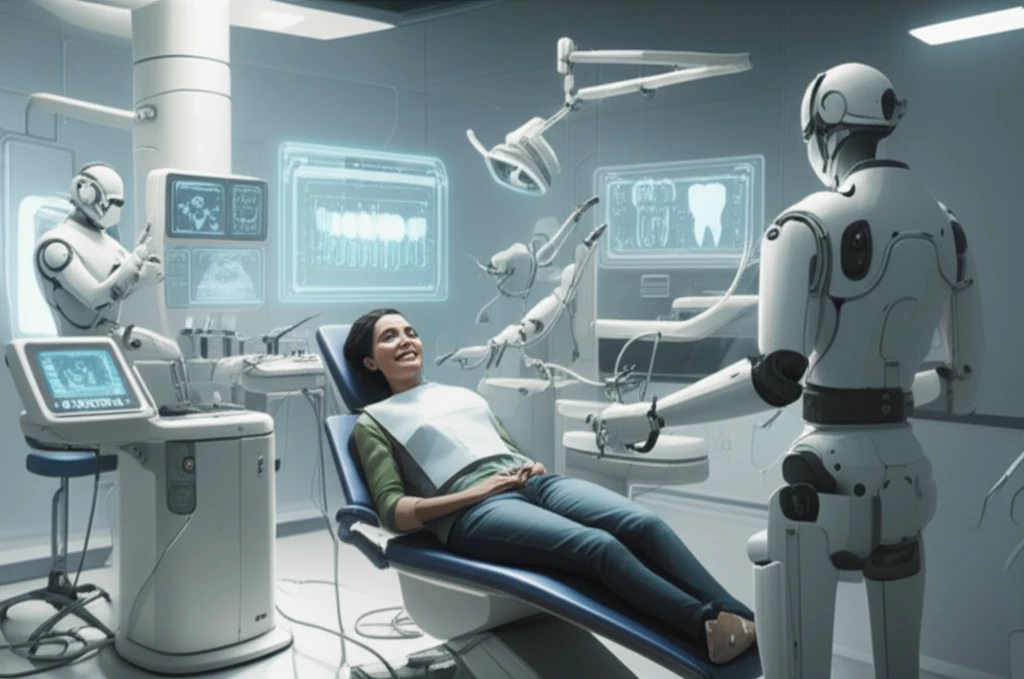
Dental Innovations That Will Transform Your Smile

"Explore the latest advancements in dental technology, from automated recalls to universal bonding agents, and discover how these innovations can enhance your oral health and experience."
The field of dentistry is constantly evolving, with new technologies and techniques emerging to improve patient care and outcomes. From streamlined practice management to enhanced restorative procedures, these innovations are transforming the way dental professionals approach treatment and helping patients achieve healthier, more beautiful smiles.
This article delves into some of the most exciting recent advancements in dental technology, highlighting their benefits for both practitioners and patients. We'll explore how automated recall systems are optimizing practice efficiency, examine the versatility of universal bonding agents, and discuss the growing importance of specialized training programs for implant restoration.
Whether you're a dental professional seeking to stay ahead of the curve or a patient curious about the latest advancements in oral care, this comprehensive overview will provide valuable insights into the future of dentistry.
Portland Dental Access and Services
Dental care in Portland, Oregon, includes family practices such as Downtown Dental Associates, which offers restorative and cosmetic dentistry. Timber Dental reports six locations serving NE Portland, SE Portland, Downtown, Bethany, Sherwood, and Lombard, with general, restorative, and cosmetic treatments available to people and families. Delta Dental of Oregon promotes access to one of the nation's largest dental networks. Its Portland dentist search identifies 100 Delta Dental dentists based on the selected search criteria.
Coverage-Based Dental Care
A standard approach to maintaining oral health includes obtaining dental insurance or another coverage arrangement that supports ongoing care. Delta Dental describes plans for individuals, families, businesses, and retirees, with options intended to help protect oral health over time. The source does not establish that insurance covers every treatment or eliminates affordability barriers. As a result, coverage can support access, but the specific benefits and limitations depend on the selected plan.
A Developing Field
The history of dentistry reflects a gradual shift from basic treatment toward prevention, restoration, and cosmetic care. Major milestones likely include improved diagnostic methods, materials, and clinical techniques, although the supplied sources do not document particular discoveries or dates. Any historical account should therefore distinguish established milestones from broader interpretations of dentistry's development.
Automated Recalls: Streamlining Patient Communication
In today's fast-paced world, staying on top of appointments and check-ups can be a challenge. Recognizing this, Dentally, a leading provider of cloud-based dental software, has introduced an innovative automated recall system designed to simplify and enhance patient communication. This new feature streamlines the process of notifying patients when they are due for a recall appointment, ensuring timely preventive care.
- Improved Efficiency: Automating the recall process saves valuable time for dental staff, freeing them up to focus on other important tasks.
- Enhanced Patient Engagement: Timely reminders help patients stay on track with their oral health, leading to better compliance with recommended treatment plans.
- Reduced No-Shows: Automated reminders can significantly reduce the number of missed appointments, improving practice revenue and efficiency.
- Customized Communication: Tailoring reminders to individual patient preferences ensures that messages are well-received and acted upon.
Evidence Still Evolving
Dental innovation is an active area of research, but the supplied material does not identify specific studies, reviews, products, or clinical outcomes. New technologies should be evaluated through published evidence rather than novelty alone. Until details such as study design, patient outcomes, and follow-up are available, claims about transformative benefits remain provisional.
Innovation Requires Scrutiny
Promising dental innovations may not work equally well for every patient or practice. Potential concerns can include uncertain long-term performance, cost, training requirements, and unequal access, although the supplied sources do not document specific failures. These limitations make independent evaluation and realistic expectations important when considering new treatments.
Comparing New and Established Care
A meaningful comparison between conventional dentistry and emerging innovations requires evidence about effectiveness, safety, cost, convenience, and durability. The supplied sources do not provide comparative studies or treatment outcome data. Readers should therefore avoid assuming that newer technology is automatically superior to established care.
Embracing Innovation for a Brighter Future
As the field of dentistry continues to advance, it is essential for practitioners and patients alike to embrace these innovations and leverage their potential to improve oral health outcomes. From automated recalls that streamline patient communication to universal bonding agents that simplify restorative procedures, these technologies are paving the way for a more efficient, effective, and patient-centered approach to dental care. By staying informed and embracing these advancements, we can all contribute to a brighter, healthier future for dentistry.
Balancing Promise and Proof
Dental innovations may improve diagnosis, treatment, or the patient experience, but their value depends on reliable evidence and appropriate clinical use. The supplied sources do not include expert commentary or named evaluations of particular innovations. A balanced synthesis should therefore recognize the potential for change while avoiding conclusions that the available material cannot support.
The Road Ahead
The future of dentistry may involve continued advances in materials, digital tools, preventive care, and personalized treatment. The supplied sources do not identify specific future products, timelines, or market forecasts. These possibilities should consequently be treated as informed areas of interest rather than confirmed predictions.
Access Shapes Innovation
The impact of dental innovation will depend not only on clinical performance but also on affordability, insurance coverage, provider availability, and geographic access. The supplied sources do not provide data measuring these systemic factors. Any broader assessment should therefore account for the possibility that technological progress may reach patients unevenly.
Patient-Centered Change
Dental innovation ultimately matters when it improves real patients' ability to receive comfortable, effective, and appropriate care. Patient preferences, trust, communication, and affordability are likely to influence whether new approaches succeed in practice. The supplied sources do not report patient-experience findings, so these effects remain important considerations rather than documented outcomes here.