
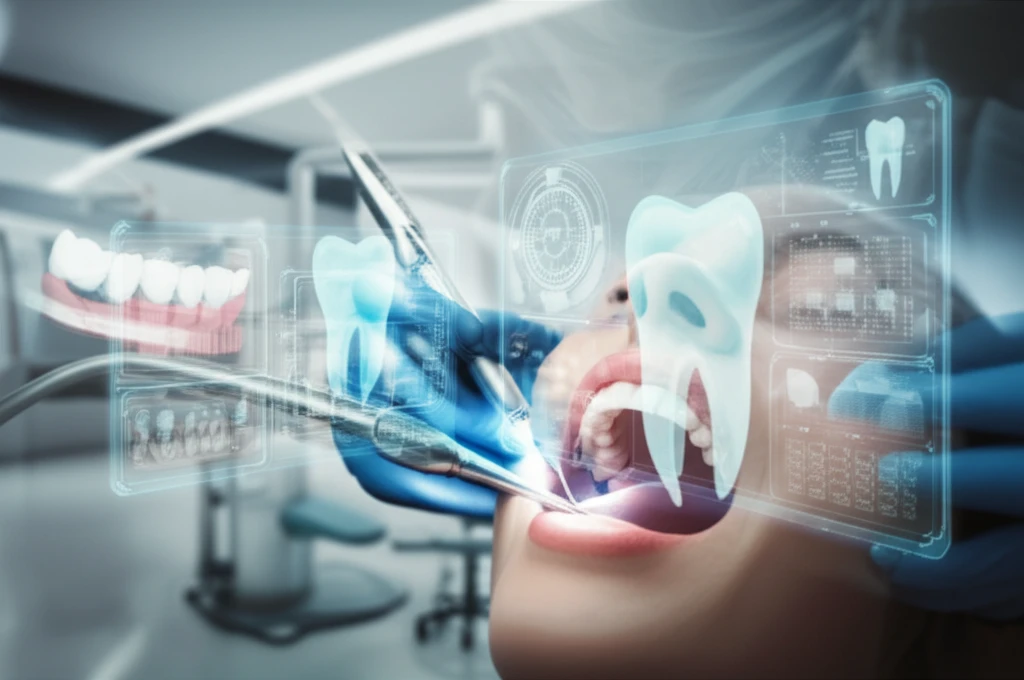
Dental Breakthroughs: Innovative Technologies Revolutionizing Patient Care

"Explore the Cutting-Edge Advancements in Dental Technology and Their Impact on Your Smile"
In the ever-evolving landscape of healthcare, the field of dentistry is experiencing a transformative revolution. Fueled by cutting-edge technology and innovative materials, dental practices are now equipped with tools that enhance precision, improve patient comfort, and deliver superior treatment outcomes. This article delves into the latest breakthroughs in dental technology, exploring how these advancements are reshaping the way we care for our smiles.
From state-of-the-art handpieces designed for optimal performance to groundbreaking composite materials that mimic the natural appearance of teeth, the dental industry is at the forefront of innovation. These advancements not only benefit dental professionals by streamlining procedures but also provide patients with a more positive and efficient experience.
Join us as we explore the key innovations driving this dental renaissance, revealing the impact of these technologies on everything from routine check-ups to complex restorative procedures. Get ready to discover how modern dentistry is transforming smiles and enhancing overall oral health.
Dental Technology’s Growing Role
Innovative technologies are increasingly influencing how dental professionals examine, plan, and deliver care. Their potential impact includes more efficient workflows, improved diagnostic support, and more personalized patient experiences. However, the extent of these benefits can vary by technology, clinical setting, and implementation quality.
Established Care and Its Limits
Dental care continues to rely on established clinical examination, diagnostic, preventive, restorative, and surgical methods. These approaches remain important, but they can be limited by practitioner access, available equipment, time, and differences in clinical experience. New technologies are generally intended to support rather than replace professional judgment.
From Ancient Tools to Digital Dentistry
Dentistry has developed from ancient tools and practices into the modern era of digital dentistry, a progression described as reflecting the resilience, innovation, and dedication of dental professionals. A detailed historical timeline covering 13,000 years and more than 350 events places dental development within the broader history of dentistry and medicine. One notable milestone came in 1819, when French dentist Christophe-Francois Delabarre created a woven wire crib fitted over the upper and lower rows of teeth, establishing an early foundation for modern braces. Historical overviews from New York University and other dental sources show how successive technologies have shaped the profession over time.
Unveiling the Latest Innovations in Dental Technology
The dental industry's commitment to progress is evident in the continuous stream of technological advancements. One such innovation is the ideal practice handpiece cover. B.A. International, certified to EN ISO 13485:2016, offers a cost-effective solution for dental practices. These covers allow for precise budgeting, tailored to the specific needs of each practice. They offer a comprehensive maintenance package that includes monthly oiling, laser marking, and are designed to last for 36 months.
- Enhanced Precision: Digital imaging, 3D printing, and guided surgery allow for more accurate diagnoses, treatment planning, and execution.
- Improved Patient Comfort: Minimally invasive techniques, such as laser dentistry and air abrasion, reduce pain, swelling, and recovery time.
- Superior Treatment Outcomes: Advanced materials, such as biocompatible implants and durable composite resins, ensure long-lasting results.
- Increased Efficiency: Digital workflows, automated systems, and streamlined procedures save time and resources for both dentists and patients.
- Personalized Care: Technology enables dentists to tailor treatments to each patient's unique needs and preferences.
An Active Research Landscape
Recent dental research is examining how digital systems, artificial intelligence, imaging, and other technologies may support diagnosis and treatment. Reviews in this area often consider both potential clinical benefits and practical limitations. Because technologies and evidence continue to develop, findings should be interpreted in the context of study quality, clinical validation, and real-world use.
Risks and Limitations of Dental AI
AI in dentistry offers potential advantages, but published discussions also identify disadvantages and limitations that require careful evaluation. Research on apical foramen localization reports both advantages and disadvantages for digital technology, while suggesting that AI may be particularly useful for working-length verification and apical-foramen detection by non-experienced or non-specialist dentists during root canal therapy. Dental technology can also fail through operational weaknesses: the 2026 Dental IT Failure Map argues that one weak link can disrupt an entire day and emphasizes identifying risks before they cause downtime. At the same time, investment has expanded, with dental oral-health AI and machine-learning funding rising from $5 million for one deal in 2014 to more than $145 million across eight deals by 2024, according to Becker’s Dental.
Balancing Innovation and Clinical Judgment
Comparing conventional and technology-assisted dental care requires looking beyond speed or novelty. Digital tools may improve information handling and workflow support, while established methods retain the value of clinician experience and direct patient assessment. The most appropriate approach can therefore depend on the procedure, the provider’s expertise, the available infrastructure, and the reliability of the technology.
The Future of Dentistry: A Bright and Innovative Outlook
The future of dentistry is brimming with promise. As technology continues to evolve, we can anticipate even more groundbreaking innovations that will further enhance patient care and transform the dental experience. From personalized treatments to advanced restorative techniques, the dental industry is poised to continue its trajectory of progress. Embrace the future of your smile, and consult with your dentist to discover how these cutting-edge technologies can benefit your oral health and overall well-being.
Technology as Clinical Support
The broader picture suggests that dental innovation is most useful when it strengthens, rather than displaces, clinical expertise. Technologies can support diagnosis, planning, communication, and practice management, but their value depends on evidence, training, and responsible implementation. A balanced perspective recognizes both the opportunities created by innovation and the risks introduced by poorly supported systems.
The Next Phase of Dental Innovation
Future dental care is likely to explore increasingly integrated digital workflows, artificial intelligence, and data-supported clinical decision-making. Further progress will depend on demonstrating that emerging tools are accurate, reliable, useful in routine practice, and accessible to providers and patients. Continued evaluation will be important as technologies move from experimentation toward broader clinical adoption.
Implementation Beyond the Clinic
Digital dentistry presents substantial financial challenges for dental schools, including the need for careful financial planning, sustainable budgeting models, and adaptation to changing technology. These implementation issues affect education, patient care, and the adaptability of the dental workforce in a technology-driven era. Adoption is also shaped by the information-system and technology factors influencing dental practices. More broadly, public-health concerns and chronic diseases such as diabetes and cardiovascular disease affect oral health and influence how dental care is integrated into the wider healthcare system.
Technology in Everyday Dental Care
Real-world case studies report that digital dental software can improve efficiency, reduce costs, and increase patient satisfaction. Align Technology provides a specific example: the company develops and manufactures Invisalign, a clear-aligner system that uses digital dentistry and artificial intelligence to straighten teeth. Another reported case, a 2020 study by Geetha and colleagues in India, used a neural network to analyze X-rays and identify early cavities. Case studies also describe larger dental groups achieving cost savings and operational synergies through AI integration, although outcomes depend on how well the technology fits clinical workflows.