
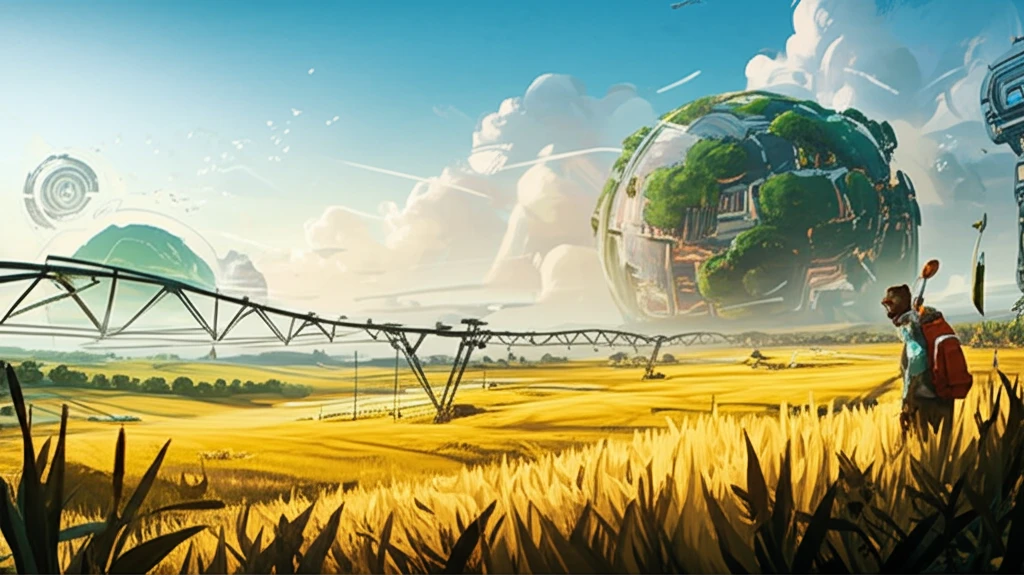
Africa's Green Revolution: Cultivating Climate Resilience for a Food-Secure Future

"Discover how climate finance and innovative agricultural strategies can transform Africa's food systems and build resilience against drought."
The challenge of achieving Sustainable Development Goal (SDG) 2—ending hunger, ensuring food security, and promoting sustainable agriculture—is particularly acute in Africa. With a rapidly growing population and increasing environmental pressures, traditional approaches to agriculture are proving insufficient. The continent faces the urgent need to enhance agricultural productivity while adapting to the harsh realities of climate change, including frequent and severe droughts. This necessitates a shift towards resilient agricultural practices that not only increase yields but also protect and improve land and soil quality.
The Asian Green Revolution offers a historical blueprint for addressing food availability and reducing rural poverty through technological and social transformations. However, sub-Saharan Africa (SSA) has struggled to replicate this success. With a significant portion of its population living in drought-prone areas, SSA requires agricultural innovations that can withstand climate variability and enhance food security. The stakes are high, as increased rainfall variability threatens to exacerbate seasonal food insecurity and undermine overall agricultural production.
Against this backdrop, innovative solutions are needed to boost agricultural output and build climate resilience, particularly through climate finance. Climate finance represents a pivotal mechanism for funding sustainable agricultural practices and reducing the vulnerability of rural communities to climate-related shocks. This article examines how strategic investments in climate finance, coupled with appropriate policies and technologies, can catalyze an African Green Revolution that is both productive and resilient.
Africa's Yield Gap and Emerging Models
Food yields on the African continent are roughly one metric ton of grain per hectare of cultivated land, a figure little changed from 50 years ago and roughly one third of the yields achieved in the rest of the world. Ethiopia's commitment to building a green and climate-resilient economy has emerged as a model for other African countries, according to the Alliance for a Green Revolution in Africa (AGRA). The poverty impact of agricultural transformation in Africa remains a subject of active estimation and research.
Political and Structural Barriers
Scholars have noted that Africa is close to self-sustainability given its agricultural resources and potential growers, and that a green revolution would be a practical agronomic reality if not for political obstacles that have often gotten in the way. Driving food security efforts forward requires increasing public-private sector partnerships, a priority highlighted at the African Green Revolution Forum following the G8 Summit's $3 billion commitment to a New Alliance for Food Security and Nutrition. The green revolution concept itself is defined as a significant increase in agricultural productivity beginning in the 1940s, though its application to Africa faces distinct structural challenges.
From the Third Agricultural Revolution to Africa's Green Legacy
The Green Revolution, also known as the Third Agricultural Revolution, was a period during which technology transfer initiatives resulted in a significant increase in crop yields globally. Unlike the Green Revolution of the 1960s, an African green revolution does not have to be based on technologies and practices that hurt the environment; land can be reclaimed through appropriate fertilization and more environmentally sensitive techniques. Ethiopia's Green Legacy Initiative represents a contemporary milestone, with more than 6.5 billion seedlings already planted during the current Ethiopian year, leaving another 1.5 billion to reach the seasonal target of 8 billion seedlings.
Unlocking Africa's Agricultural Potential: Climate Finance and Strategic Interventions
Africa's failure to launch a Green Revolution comparable to Asia's stems from a complex interplay of factors, including underinvestment in the agricultural sector, limited access to essential inputs, and inadequate infrastructure. While Asia benefited from readily available fertilizers, effective water management, and high-yielding seed varieties, African agriculture often lacks these critical components. Credit use for purchasing fertilizers, pesticides, and improved seeds remains exceedingly low, hindering productivity and perpetuating cycles of low yields.
- Ecosystem-Based Adaptation (EBA): Harnessing biodiversity and ecosystem services to enhance climate resilience and support sustainable agricultural practices.
- Microfinance and Remittances: Improving access to financial services and leveraging remittances to support drought resilience and promote sustainable livelihoods.
- Technology Transfer: Facilitating the adoption of climate-smart technologies and practices to enhance agricultural productivity and reduce environmental impact.
Innovation Adoption and Persistent Yield Deficits
Africa can achieve self-sufficiency in food production through adoption of innovations in the agriculture sector, and numerous soil fertility and crop production technologies have been generated through research, however, wide adoption has remained low. Food yields on the continent remain roughly one metric ton of grain per hectare, a figure little changed from 50 years ago and approximately one third of yields achieved elsewhere in the world. The gap between available agricultural technology and on-farm implementation continues to define the challenge facing researchers and policymakers.
Biodiversity Loss and Structural Critiques
The Green Revolution has been criticized for relying on an agricultural model centered on a few staple and market-profitable crops, pursuing a model that limited biodiversity in regions where it was implemented. Norman Borlaug, widely regarded as a foundational figure in the movement, dismissed certain claims of critics but did take other concerns seriously, acknowledging that his work represented a change in the right direction but not a complete solution. The tension between productivity gains and ecological sustainability remains a central point of debate in discussions of Africa's agricultural future.
Limitations of Available Comparative Data
The source materials provided for this subsection do not contain substantive comparative analysis of African agricultural systems, green revolution outcomes, or regional case studies. The available references consist of general-purpose comparison platforms and unrelated historical analyses that do not address agricultural productivity, food security, or climate resilience in Africa. A meaningful comparative analysis of Africa's green revolution would require dedicated agricultural research sources examining yield data, policy frameworks, or technology adoption rates across different African regions.
A Resilient Future for African Agriculture
Climate change presents formidable challenges to achieving food security in sub-Saharan Africa. However, by strategically leveraging climate finance and implementing innovative agricultural practices, Africa can transform its food systems and build resilience against climate-related shocks. Reducing post-harvest losses, promoting ecosystem-based adaptation, and improving access to microfinance are essential steps towards creating a more sustainable and food-secure future for the continent. By prioritizing these interventions, Africa can pave the way for an African Climate Resilient Green Revolution that not only feeds its growing population but also protects its environment and empowers its communities.
Water Security as the Next Imperative
Experts have unanimously agreed that a blue revolution focused on water management must follow the green revolution so that human possibilities for development are not compromised. Asia's vulnerabilities to food shortages, a looming problem as global production falls and diets become richer, must inspire the region to lead a second green revolution. The sequencing of agricultural and water revolutions represents a critical synthesis point for policymakers seeking sustainable food systems.
Continental Targets and Institutional Commitments
The African Green Revolution Forum, held in Addis Ababa, focused on delivering agriculture-led economic growth in sub-Saharan Africa. The African Union issued a declaration to double food productivity and halve poverty by 2025, setting an ambitious institutional target for continental transformation. These commitments represent the most concrete forward-looking benchmarks established by African leadership for agricultural development.
Investment Models and Systemic Gaps
Impact investing combines social impact and the expectation of financial returns in a way that is mutually reinforcing, offering benefits for investors, implementers, and recipients beyond traditional philanthropy. Research published in the Proceedings of the National Academy of Sciences has examined the impacts, limits, and path ahead of the Green Revolution, providing a scholarly framework for understanding systemic challenges. African-led solutions to systemic challenges in higher education and institutional capacity building represent complementary efforts needed to support agricultural transformation.
Environmental Footprints of Industrial Transformation
The Industrial Revolution's environmental impact on greenhouse gas emissions provides historical context for understanding the ecological consequences of large-scale economic transformation. Any green revolution in Africa must contend with the lesson that industrialization and agricultural intensification carry measurable environmental costs that shape long-term sustainability. Reversing or mitigating these effects requires deliberate policy choices that balance productivity with ecological stewardship.