
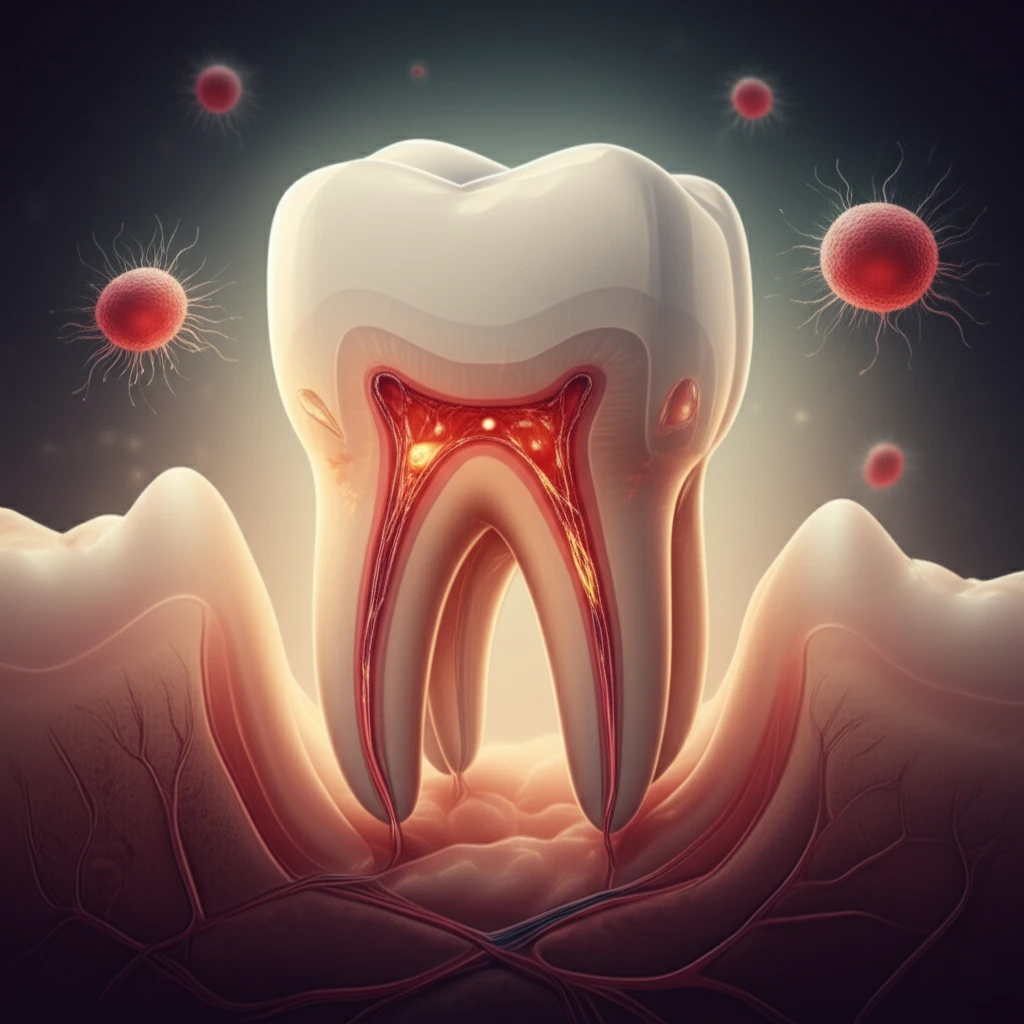
Root Canal Revolution: How Stem Cells Could Change Dental Care

"Regenerative endodontics is transforming how we treat infected teeth, offering hope for natural healing and long-term tooth survival."
Root canals, dreaded by many, may be on the verge of a major upgrade. For years, traditional root canal therapy has focused on removing infected tissue and sealing the tooth, but a new approach is gaining momentum: regenerative endodontics. This innovative field aims to harness the body's natural healing abilities to regenerate damaged dental tissues.
Regenerative endodontic procedures (REPs) have demonstrated promising results, including resolution of disease symptoms and increased tooth survival. However, these procedures still face challenges, such as inconsistent root development and the formation of tissues that don't fully replicate the original pulp-dentin complex. New research is focusing on how to improve the predictability and effectiveness of REPs, particularly by understanding the role of stem cells.
Stem cells, with their remarkable ability to differentiate into various cell types, hold the key to true dental regeneration. Scientists are exploring how to optimize the environment within the tooth to encourage stem cells to rebuild damaged tissues, restore tooth vitality, and ultimately provide more natural and lasting solutions for dental health.
Current Impact
The potential impact of stem-cell approaches in dental care remains an emerging research question rather than a settled clinical reality. Researchers are exploring whether regenerative strategies could eventually address damaged dental tissues, but their practical benefits, risks, and availability are still being established. Current evidence should therefore be interpreted cautiously.
Regenerative Medicine Today
Regenerative medicine is a developing field that seeks therapies resembling the body's own self-healing mechanisms, according to WebMD's October 1, 2021 overview. Current research spans fundamental cell biology through clinical translational engineering, with attention to signaling pathways involved in tissue morphogenesis, cellular differentiation, and scarless wound healing. The broader regenerative concept emphasizes restoring natural vitality and resource health, although the listed sources do not establish a standardized stem-cell treatment for dental care.
A Developing Field
The historical development of stem-cell dentistry is best understood as part of the broader evolution of regenerative medicine. Foundational work has gradually connected cell biology with efforts to guide tissue formation and healing. However, the available material does not identify specific dental milestones, dates, or discoveries, so any historical account remains necessarily general.
The Power of Stem Cells in Regenerative Endodontics
The apical papilla, located at the tip of developing teeth, is emerging as a crucial player in regenerative endodontics. This area is rich in mesenchymal stem cells, which can differentiate into various cell types needed for tooth repair and regeneration. Research suggests that the apical papilla can withstand infection and inflammation, making it a valuable resource for stem cell-based therapies.
- Disinfection and Detoxification: Thoroughly cleaning and removing harmful substances from the root canal is essential for creating a healthy environment for stem cells.
- Stem Cell Delivery: Techniques for effectively delivering stem cells to the treatment area are constantly being refined.
- Scaffolds: Materials that support cell growth and tissue formation are important components of regenerative procedures.
- Growth Factors: These substances stimulate cell proliferation and differentiation, guiding stem cells to rebuild damaged tissues.
Research Frontiers
Recent discussion of regenerative medicine presents the field as spanning basic cell biology, engineering, and possible clinical translation. Research focuses on understanding and manipulating the signaling pathways that guide tissue morphogenesis, cellular differentiation, and scarless wound healing. These directions may inform future dental applications, but the available material does not document a specific root-canal study or clinical result.
Evidence Gaps
A central limitation is that promising regenerative concepts do not automatically demonstrate safe or effective dental treatments. The field remains developing, and translating biological mechanisms into reliable clinical therapies can involve unresolved scientific and practical challenges. Because no subsection-specific sources describe particular failures, complications, or trial outcomes, those issues cannot be stated more specifically here.
Comparing Approaches
Regenerative approaches differ from conventional care in their underlying goal: they seek to encourage the body's healing mechanisms rather than simply manage damaged tissue. The available sources describe regenerative medicine as an area spanning cell biology, engineering, and clinical translation. They do not provide enough dental evidence to compare stem-cell treatment outcomes directly with established root-canal procedures.
Looking Ahead: The Future of Root Canal Therapy
Regenerative endodontics holds immense potential for transforming dental care, offering a more natural and effective approach to treating infected teeth. As research continues to advance, we can expect to see more predictable and successful regenerative procedures, leading to improved outcomes and long-term tooth survival for patients of all ages. The future of root canal therapy is bright, with stem cells paving the way for a new era of dental regeneration.
Careful Interpretation
Taken together, the available material portrays regenerative medicine as a promising but still developing area. Its scientific focus on cell differentiation, tissue formation, and healing provides a framework for considering future dental applications. It does not, however, establish that stem-cell procedures are ready to replace current root-canal care.
What Comes Next
Future work will likely depend on better control of the biological signals that guide tissue development and cellular differentiation. Progress must also connect fundamental research with engineering and clinical translation. The available material supports this direction in general terms but does not provide specific timelines, products, or confirmed dental breakthroughs.
Beyond the Laboratory
Regenerative medicine operates across a broad spectrum, from fundamental cell biology to clinical engineering. That breadth means scientific discoveries must be translated into dependable therapies before they can affect routine dental care. The sources provided do not address costs, access, regulation, or health-system implementation, so those systemic challenges remain outside the available evidence.
Patient Implications
For patients, the appeal of regenerative dentistry lies in the possibility of care that works with the body's own healing mechanisms. Yet the field's developing status means expectations should remain measured until dental therapies are demonstrated through appropriate clinical translation. The available material does not establish current patient outcomes or confirm broad real-world availability.