
Stem Cell Niches: How These Microenvironments Impact Disease

"Unlocking the secrets of stem cell pathology to improve diagnostics, regenerative medicine, and cancer treatment."
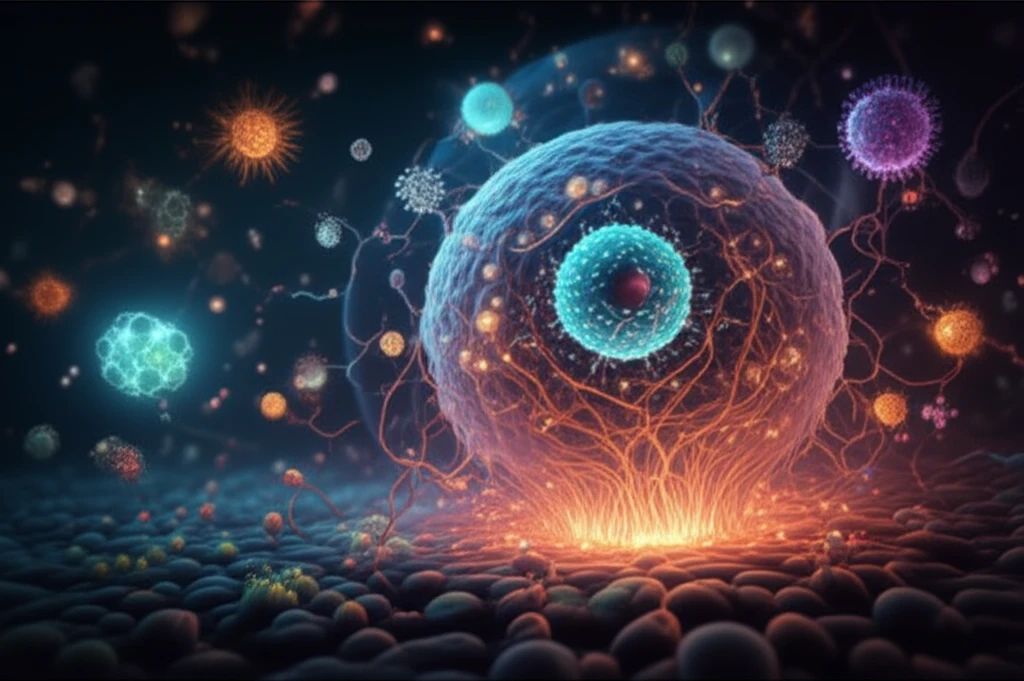
Stem cells, with their unique ability to self-renew and differentiate, hold immense potential in understanding and treating diseases. These cells reside in specific microenvironments called niches, which protect them and influence their fate. Understanding these niches is key to unraveling how diseases develop and finding new ways to intervene.
Stem cell research is a rapidly evolving field, with breakthroughs in areas like induced cell reprogramming and regenerative medicine. These advances have led to new insights into the origins of diseases like cancer, diabetes, and neurodegeneration, opening up exciting possibilities for therapeutic intervention.
Now, advanced tools and techniques are enabling us to study stem cell niches with unprecedented detail. Techniques like lineage tracing in genetically modified mice are revealing how these niches function in various tissues and how their dysfunction contributes to disease. This review explores how stem cell pathology, a field dedicated to studying stem cells in disease, is helping us interpret these novel findings and develop better diagnostic and therapeutic strategies.
Current Research Momentum
The Tulane Center for Stem Cell Research and Regenerative Medicine develops new therapies for a series of common diseases and maintains a guide covering statistics, outcomes, and transplant numbers. A Gitnux report states that 1,225 stem cell therapy trials were registered on ClinicalTrials.gov as of January 1, 2024. WorldMetrics and Gitnux describe their 2026 reports as examining current research statistics, funding, trial momentum, growth rates, and outcomes.
Methods and Translation Limits
Ex vivo cell- and tissue-based models are described as an essential step in pathophysiology studies, assay development, disease modeling, drug discovery, and personalized therapeutic strategies. A 2025 Frontiers editorial focuses on current methods for detecting and diagnosing stem cell pathogenesis and their translation into contemporary disease and technology landscapes. A 2026 Frontiers review identifies standardization as a challenge for mesenchymal stromal cells and reports induced-pluripotent-stem-cell-derived MSCs as a proposed alternative because of their unlimited proliferation capacity without loss of therapeutic function.
Stem Cell Niches and Their Role in Disease
Stem cell pathology focuses on understanding how stem cells contribute to disease, evaluating the effects of stem cell transplantation, and assessing the safety of genetic and epigenetic modifications. Pathologists, with specialized training, can provide informed evaluations of stem cell niche defects, even in routine tissue samples. These evaluations can be further validated with immunohistochemistry, providing a foundation for functional studies conducted in collaboration with stem cell researchers.
- Immunodetection with markers like CD44 and CD49f can highlight potential stem cells, but isn't always specific enough on its own.
- Functional assays that measure enzymatic activity (like ALDH) or compound efflux aren't specific.
- Label retention assays can point to slowly cycling cells, but some stem cells divide quickly.
- Sphere and organoid formation in the lab are valuable, but might not fully mimic stem cell behavior in the body.
Stem Cells in Disease Research
The review Stem Cell Pathology examines stem cells in relation to disease mechanisms and pathology. A review of renal damage and diabetic kidney disease defines stem cells as undifferentiated cells with self-renewal and differentiation capabilities. Research on aggressive serous carcinomas reports that ovarian surface epithelial cells in a stem or progenitor state may have a high propensity for malignant transformation, comparable to cancer-prone stem cells described in hematopoietic tissue, the intestinal tract, and skin.
Clinical and Biological Challenges
A clinical-limitation review reports that expectations for mesenchymal stem cell therapy are high, while efficacy remains difficult to assess because diseases have varied etiologies. Stem cell disorders can produce severe consequences, including hematologic malignancies and bone marrow failure syndromes. A 2025 review describes stem cell therapy as potentially useful for degenerative diseases and injuries but emphasizes continuing problems alongside recent developments and future possibilities.
The Future of Stem Cell Pathology
While much of stem cell niche research has focused on animal models, it's crucial to delineate these niches in human tissues as well, considering the anatomical and physiological differences. Furthermore, there's a need for new animal models that allow specific targeting of cell types and stages, from stem cells to differentiated progeny.
From Niches to Clinical Insight
Stem cell biology and regenerative medicine have created opportunities to improve understanding of disease pathogenesis and develop diagnostic, prognostic, and treatment approaches. Many stem cell niches are anatomically well defined, allowing routine pathological evaluation during disease initiation and progression. Patient-specific induced pluripotent stem cells can provide human-associated information about pathogenesis and drug responses, while post-transplant relapse remains a significant challenge because it can arise from residual leukemic stem cells or donor stem cells carrying pathogenic mutations.
Expanding Therapeutic Possibilities
Recent advances in stem cell technology are opening possibilities for patients with diseases and disorders that have not yet been treated. Stem cell-based therapies use regenerative capacity to address the underlying pathophysiology of neurological illnesses. Current research also highlights mesenchymal stem cells, including their immunosuppressive abilities, as important to regenerative-medicine investigations and the development of treatments for disease.
Clinical Stories and Patient Impact
A 2026 case-study report describes documented stem cell therapy outcomes involving blood cancers, blindness, diabetes, neurological damage, and autoimmune disease. It identifies bone marrow transplantation for leukemia as the oldest application and reports that it has decades of survival data. Other case-study sources describe umbilical cord cells being used to treat leukemia and studied in clinical trials for stroke, brain injury, and autism.
As regenerative medicine advances, pathology must play a greater role in systematically assessing complications of stem cell transplantation. Side effects of genetic and epigenetic manipulations also need careful evaluation. Pathologists are also needed to discover stem cell niches and understanding why stem cell populations reside in specific locations, like transitional zones.
To meet these growing needs, specialized training in stem cell pathology is essential. Diagnostic pathology sections specializing in this area, staffed by comparative pathologists experienced in animal models, would greatly facilitate research. These sections would focus on accurate specimen collection and evaluation, as well as the development of multiplexed approaches for detecting stem cells. Ultimately, integrating stem cell pathology with animal modeling and in vivo imaging will significantly advance our understanding of diseases associated with stem cell niche disorders.