
Unlock the Power of Resorcinarenes: The Future of Surface Customization is Here!

"Inspired by nature's ingenuity, explore how resorcinarenes are revolutionizing surface functionalization and patterning, offering unprecedented control and versatility for advanced material design."
Nature has long been a source of inspiration for scientists seeking innovative solutions to complex challenges. The remarkable adhesive properties of plant polyphenols and catecholamines, found in mussel foot proteins, have spurred the development of various nanocoatings and adhesive precursors. These natural compounds offer the advantage of substrate-independent coatings, but also come with limitations such as non-uniformity, complex modification processes, and restricted post-functionalization options.
Now, a new class of molecules is stepping into the spotlight: resorcinarenes. Inspired by the binding prowess of natural polyphenols, researchers have turned to these macrocyclic compounds to revolutionize surface modification. Resorcinarenes promise a simpler, more versatile approach to creating tailor-made surfaces for a wide array of applications.
This article delves into the exciting potential of resorcinarenes, exploring how these molecules are being used to create advanced, multifunctional nanocoatings. We'll explore the science behind their unique properties, their applications, and what this innovation means for the future of materials science.
Surface Functionalization's Growing Importance
Surface functionalization has emerged as a pivotal practice across multiple scientific and engineering disciplines. In biotechnology, it is critical for enhancing cell adhesion in advanced tissue engineering, regenerative medicine, and various biotechnological applications. Researchers are also applying functionalization techniques to improve the surface properties of materials such as biochar, nanofibrillated cellulose, and ceramic membranes, demonstrating the breadth of its impact. The hydrothermal functionalization process, for instance, has been used to improve surface functionalities of biochar derived from oil palm empty fruit bunch using nitric acid as a functionalization agent.
Established Methods and the Need for Standardization
Surface functionalization strategies encompass physical, chemical, and biological approaches, each crucial for improving biocompatibility, mechanical strength, and overall functionality of engineered structures. Despite these proven methods, standardizing functionalization procedures and regulatory frameworks remains critical for assuring safety and efficacy, particularly in tailored medicinal applications such as 3D-printed bio-inspired scaffolds. The lack of universal standards poses challenges for translating laboratory successes into consistent, reproducible clinical and industrial outcomes.
Origins and Foundational Work
The history of surface functionalization traces back to foundational efforts to control the wetting behavior of nanostructured materials. Early research demonstrated that surface functionalization could be used to tune hydrophobicity and hydrophilicity of carbon films through vapor deposition processes, establishing core principles still used today. These pioneering studies laid the groundwork for the diverse functionalization techniques now applied across nanotechnology, materials science, and biomedical engineering.
Resorcinarenes: Nature-Inspired Versatility
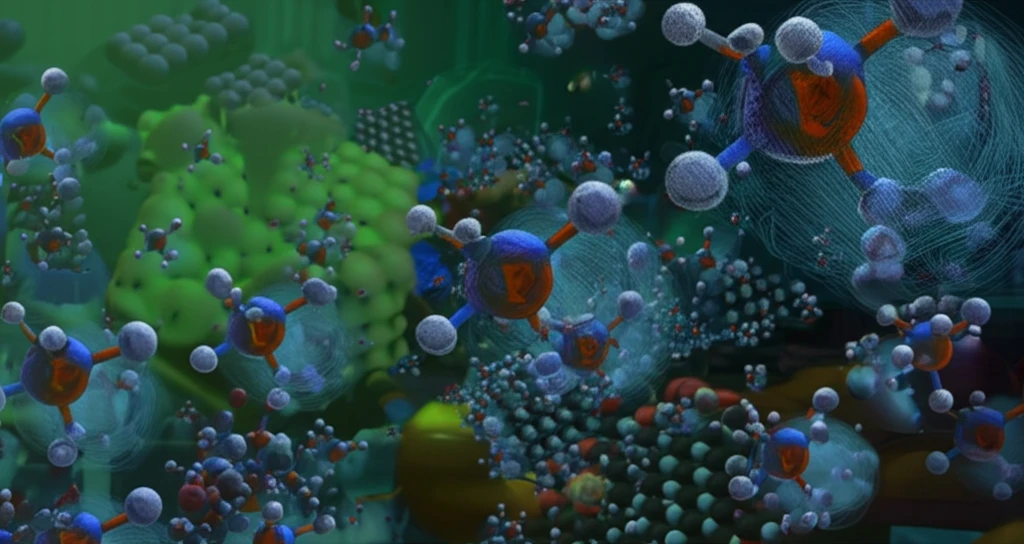
Resorcinarenes are macrocyclic polyphenols known for their unique structure and ability to modify surfaces. Imagine tiny, customizable donuts that can stick to a variety of materials. That’s essentially what a resorcinarene does.
- One-Step Modification: Simplify surface functionalization by depositing resorcinarenes in one go.
- Versatile Functionality: Customizable lower rims allow tailored surface properties.
- Broad Applicability: Compatible with various substrates, including metals, plastics, and oxides.
- Post-Functionalization: Further tweak surfaces with techniques like thiol-ene photoclick chemistry.
Cutting-Edge Functionalization Applications
Recent research has expanded surface functionalization into diverse high-impact domains. The surface functionalization of silver nanoparticles by Raman reporters has stimulated wide interest for designing Surface-Enhanced Raman Spectroscopy (SERS) labels, enabling highly sensitive diagnostic tools. Meanwhile, antibiofilm surface functionalization of catheters using magnesium fluoride nanoparticles represents a promising strategy to combat medical device infections. Researchers continue to explore new functionalization approaches for glass and other substrates, customizing surfaces to integrate with emerging research objectives.
Consequences of Skipping Surface Treatment
Without proper surface functionalization, materials can experience significant performance failures. When untreated polythene is printed or glued, common problems include ink smudging or peeling, poor lamination bond strength, delamination during handling, and print fading after rubbing. These failures can also manifest under moisture or heat exposure, underscoring the necessity of surface treatment for reliable adhesion and durability in practical applications.
Comparing Functionalization Regimes
Researchers use thermogravimetric analysis to distinguish between surface functionalization regimes, with specific infrared peaks at 720–725 cm⁻¹ and 1147, 1248, and 1350 cm⁻¹ indicating the presence of C–H and C–F groups, respectively. These analytical tools allow for precise comparison of functionalization outcomes across different treatment conditions. Additionally, studies on graphitic carbon nitrides reveal that while surface functionalization promotes catalytic properties, it has rarely been investigated with 2D carbon nitrides such as poly(heptazine imide) (PHI) and poly(triazine imide) (PTI), despite their significant application potential.
The Future of Surface Design
Resorcinarenes are more than just a new class of molecules; they represent a paradigm shift in how we approach surface design. By offering a simple, versatile, and customizable approach to surface modification, they empower scientists and engineers to create materials with unprecedented functionality. From advanced biomedical devices to high-performance materials, the possibilities are endless.
Expert Perspectives on Surface Design
Experts in the field note that shape and surface area significantly affect grafting density, which in turn determines whether functional groups adopt mushroom or brush conformations on a surface. Bioinspired tough gel sheaths represent a notable advance, offering robust and versatile surface functionalization that markedly reduces surface stiffness, friction, and drag when interfacing with tissues, without compromising tensile strength. Such innovations demonstrate how functionalization can simultaneously address multiple performance requirements in complex biological environments.
Emerging Technologies and Future Directions
Laser-based surface functionalization using LIPSS (Laser-Induced Periodic Surface Structures) continues to expand into new industries, structuring technical surfaces at nano- and micro-scales to mimic natural textures that provide hydrophobic, anti-bacterial, or anti-reflective properties. Electrospinning technology, which forms fibers under high-voltage electric fields, is also advancing surface functionalization of membranes for filtration and biomedical applications. Future research on functionalized magnetic nanoparticles aims to address current challenges through improved synthesis techniques, eco-friendly modifications, and enhanced biocompatibility, with integration of AI and smart materials expected to drive further innovation.
Addressing Systemic Barriers
Plasma treatment technologies are increasingly used to prepare plastic surfaces for subsequent processes, addressing the specific challenges that different plasma technologies pose when interacting with plastic surfaces. In two-dimensional materials, surface functionalization serves as an effective strategy for precise control of electronic surface states, as demonstrated in covalent functionalization of MoS₂ nanosheets. These approaches highlight the ongoing need for tailored solutions that account for the unique chemistry and structure of each material class.
Practical Applications and Tangible Benefits
Surface functionalization is translating into real-world solutions across multiple sectors. Oil palm empty fruit bunch biochar functionalized via hydrothermal processes with nitric acid improves surface functionalities for environmental applications. In nanotechnology, surface-specific functionalization of nanoscale metal-organic frameworks using 1,2-dioleoyl-sn-glycero-3-phosphate (DOPA) enables precise modification of zirconium-based nanoMOFs, opening pathways for targeted drug delivery and advanced materials design.