
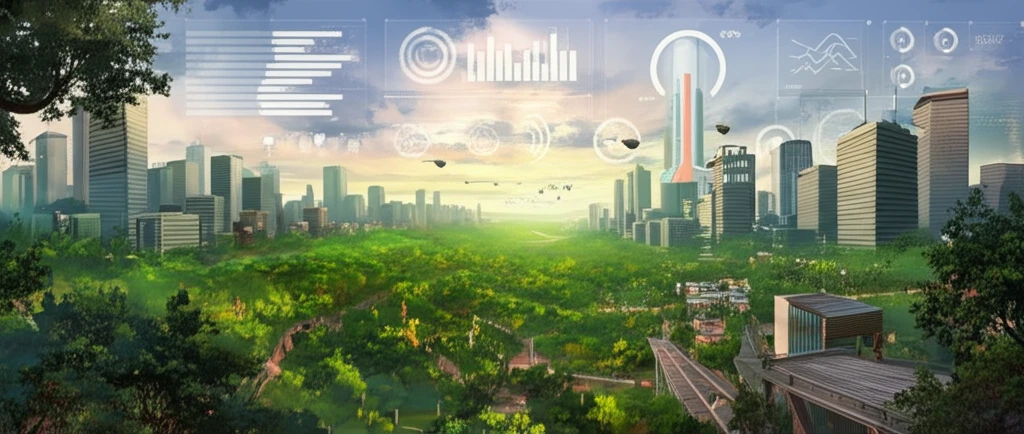
Is Your City Ready for the Heat? Unveiling Climate Change Risks and Green Solutions

"A new study reveals how climate change and aging populations are creating dangerous heat risks, but green spaces offer a surprising solution."
As the globe continues to warm, the threat of extreme heat is becoming an increasingly urgent concern, especially for vulnerable populations. A groundbreaking study sheds light on the intersection of climate change, demographic shifts, and public health, focusing on the specific risks faced by communities within Austria. The research highlights a critical connection between rising temperatures, aging populations, and the often-overlooked potential of green spaces to act as a buffer against these dangers.
The study paints a stark picture: heat-related health outcomes are set to worsen in the coming years, driven by the dual forces of climate change and an aging population. Researchers have found a direct link between heatwaves and increased mortality, particularly in districts with a high percentage of elderly residents. But there's also a glimmer of hope. The research reveals that areas with ample green infrastructure such as parks, gardens, and tree-lined streets can significantly reduce the deadly impact of heat.
This isn't just an academic exercise. The findings offer actionable insights for policymakers and urban planners, providing a roadmap for building more resilient and livable cities. By understanding the specific vulnerabilities within their communities and harnessing the power of nature, cities can take concrete steps to protect their residents from the growing threat of extreme heat.
Heat in Numbers
Extreme heat events are becoming more frequent and intense across many urban areas worldwide, posing growing risks to public health, infrastructure, and ecosystems. While precise global figures vary by reporting period and methodology, the general trajectory points toward rising temperatures and more prolonged heatwaves in cities. The urban heat island effect—where built environments trap and amplify heat—compounds these trends, making cities particularly vulnerable. Understanding the scale of these impacts is a critical first step for communities assessing their own readiness.
How We Measure and Model Climate Risk
Climate risk assessment typically relies on historical weather data, climate models, and vulnerability indices to gauge a city's exposure to heat and other hazards. These methods have proven useful for establishing baselines and identifying trends, but they come with notable limitations. Models can vary significantly in their projections depending on emissions scenarios and spatial resolution, and historical data may not fully capture emerging extremes. Additionally, standard approaches often struggle to integrate localized factors such as neighborhood-level land use, socioeconomic disparities, and infrastructure age.
The Evolving Understanding of Urban Climate
The scientific study of climate has roots stretching back centuries, with early meteorological observations gradually giving way to systematic long-term data collection. The concept of averaging weather patterns over 30-year periods became a foundational standard for defining a region's climate. Over time, researchers identified the urban heat island effect and began linking land-use changes to localized temperature increases. These discoveries laid the groundwork for modern climate science and the growing recognition that human activity is reshaping the conditions under which cities operate.
Why Are Heatwaves Becoming Deadlier?
The study's core findings revolve around the impact of heat on mortality rates across Austrian districts. By analyzing data from 2015 to 2022, researchers established a clear correlation between days reaching 30 degrees Celsius and a significant increase in deaths. This link becomes even more pronounced in areas with a higher proportion of residents over the age of 65.
- Physiological Vulnerability: Elderly individuals have a reduced capacity to regulate body temperature.
- Pre-existing Conditions: Higher prevalence of cardiovascular diseases and other heat-sensitive ailments.
- Demographic Shifts: Europe's aging population is increasing the number of people at risk.
- Urban Heat Island Effect: Cities trap heat, making urban areas significantly warmer than surrounding rural areas.
Climate Defined: What Urban Planners Need to Know
Climate is understood as the long-term weather pattern in a region, typically averaged over 30 years, encompassing both the mean and variability of meteorological variables over periods ranging from months to millions of years. Understanding this baseline is essential for assessing how cities like Redmond, Washington, may face shifting heat profiles. Redmond's climate is classified as warm and temperate under the Köppen-Geiger system (Cfb), with significant rainfall even in its driest months and average summer highs ranging from the mid-70s to low 80s°F. These established climate characteristics provide the reference point against which future changes and their urban impacts can be measured.
Technology-Driven Adaptation in Agriculture
Some stakeholders argue that technological innovation, rather than policy intervention alone, offers a practical pathway for adapting to changing climate conditions. Digital farming platforms such as Climate FieldView represent this approach, offering all-in-one solutions that help agricultural producers make data-driven decisions to maximize yields. While these tools demonstrate how technology can build resilience in specific sectors, their applicability to broader urban heat challenges remains limited. The focus on individual optimization rather than systemic change raises questions about whether such solutions can adequately address the scale and complexity of citywide climate risks.
Comparing Urban Heat Responses Across Regions
Cities around the world are adopting varied strategies to address rising heat risks, ranging from green infrastructure and cool-roof programs to early warning systems and revised building codes. The effectiveness of these approaches depends heavily on local climate conditions, urban density, existing infrastructure, and available resources. While some cities have made notable progress in reducing heat exposure through coordinated action, others face significant barriers including limited funding, fragmented governance, and competing development priorities. Direct comparisons are complicated by differences in how heat risk is measured and reported across jurisdictions.
Turning Up the Green: A Path to Cooler Cities
While the challenges posed by climate change and aging populations are significant, the study offers a powerful message of hope: green spaces can make a tangible difference. By analyzing satellite data, researchers discovered that districts with a higher concentration of green vegetation in residential areas experienced a significantly reduced relationship between heat and mortality. This suggests that investing in green infrastructure is not just an aesthetic choice but a vital public health intervention.
What the Evidence Tells Us
The available research underscores that climate is defined by long-term patterns and variability, making short-term observations insufficient for comprehensive risk planning. Experts generally agree that cities must establish robust baseline data before they can meaningfully prepare for shifting heat conditions. The case of Redmond, Washington, illustrates how even cities with moderate, temperate climates classified as Cfb carry significant year-round precipitation and temperature ranges that could be altered by broader climatic shifts. Synthesizing these findings suggests that preparedness requires both understanding current conditions and planning for a range of plausible future scenarios.
Looking Ahead: Urban Heat Preparedness
As climate science continues to advance, higher-resolution modeling and improved data collection methods are expected to sharpen our ability to predict localized heat impacts in cities. Emerging approaches such as neighborhood-scale climate mapping and real-time sensor networks could fill gaps left by traditional 30-year averaging methods. Integration of climate data with public health surveillance and infrastructure monitoring represents another promising frontier. These developments may help cities move from reactive responses to proactive, evidence-based heat preparedness strategies.
The Bigger Picture: Beyond Individual Cities
Urban heat preparedness does not exist in isolation—it is intertwined with broader systemic challenges including energy access, transportation planning, housing affordability, and environmental justice. Cities with limited financial resources or aging infrastructure face compounded risks, as the populations most vulnerable to heat are often those with the fewest resources to adapt. International frameworks for climate action provide guidance, but translating global goals into local implementation remains a persistent challenge. Addressing urban heat at scale will likely require coordinated action across multiple sectors and levels of governance.
How Heat Affects People on the Ground
Behind the data and models, extreme heat has tangible consequences for individuals and communities—disproportionately affecting outdoor workers, the elderly, children, and those without access to cooling. Heat-related illness and mortality place strain on healthcare systems, while power grid stress during heatwaves can disrupt essential services. The human experience of heat is also shaped by the built environment: neighborhoods with less tree canopy and more pavement tend to be significantly hotter than greener, more shaded areas within the same city. Understanding these lived realities is essential for ensuring that climate preparedness efforts reach those who need them most.