
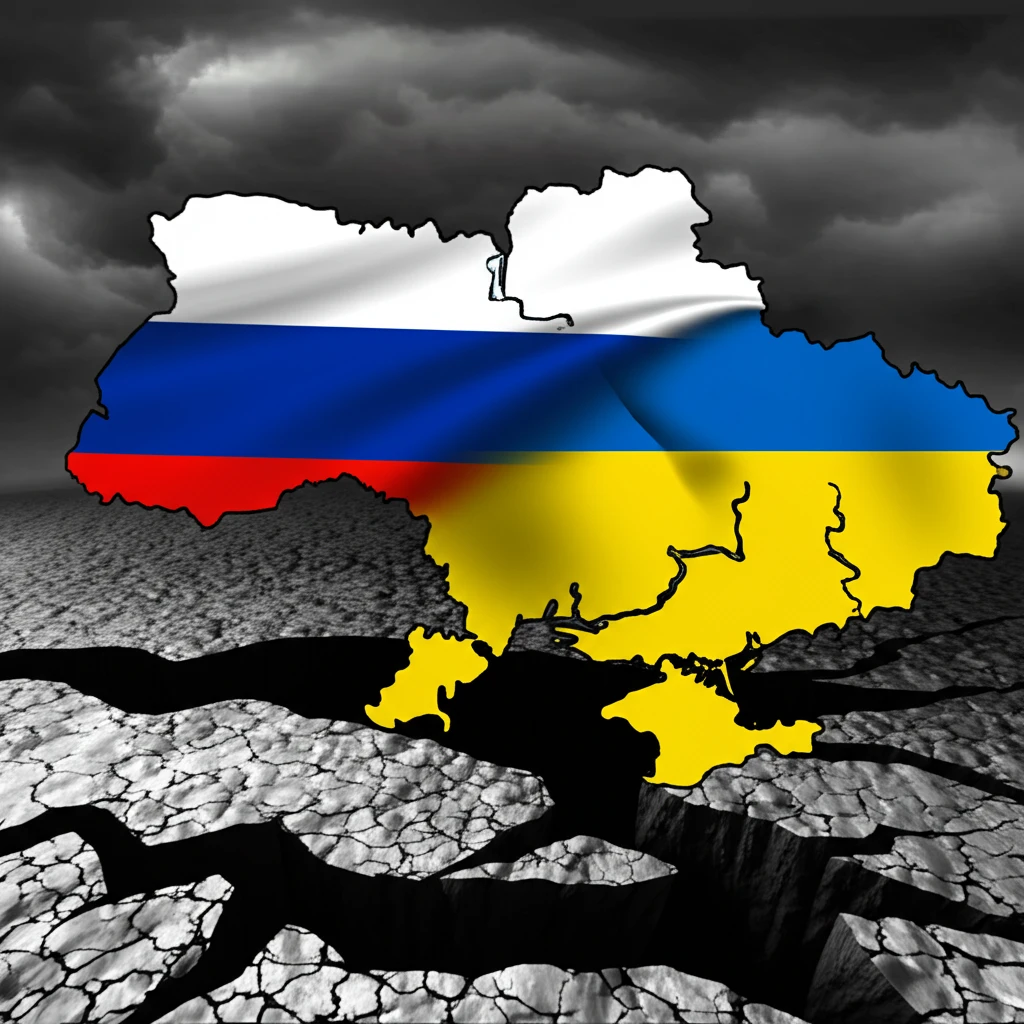
Ukraine Conflict: Decoding the Rebellion - How Context and Culture Ignited a War

"Explore the key factors that led to the pro-secessionist rebellion in Eastern Ukraine, from Russian propaganda to cultural beliefs."
The conflict in Eastern Ukraine during 2013-2014 was more than just a series of military clashes; it was a complex interplay of socio-political, economic, and cultural factors that drove individuals to take up arms. Understanding this intricate web is crucial for anyone seeking to grasp the dynamics of modern rebellions and secessionist movements. This article delves into the heart of the Ukrainian conflict, examining the contextual elements that fueled the pro-secessionist rebellion.
Existing rational choice theories, while valuable, often fall short of capturing the full picture. By building a contextual choice model, this analysis accounts for both the rational cost-benefit calculations and the deeply ingrained behavioral considerations that influenced the decisions of Pro-Russian militants and rebels in the Donbass region. The aim is to identify the specific characteristics of the socio-political-cultural landscape that are most likely to spark and sustain similar hierarchical rebel movements.
This article explores the impact of Russian propaganda, the role of fear and intimidation, and the consolidation of power following events such as the annexation of Crimea. By understanding these factors, we can gain valuable insights into how conflicts ignite, escalate, and potentially be mitigated in the future.
The War's Devastating Toll
The Russia-Ukraine war has inflicted massive humanitarian and economic costs, displacing millions and disrupting global food and energy markets. Casualty figures remain difficult to verify independently, but the conflict has clearly produced one of Europe's largest displacement crises since World War II. The full economic toll—on infrastructure, trade, and regional stability—is still unfolding and remains subject to ongoing assessment.
Framing the Conflict: Governance, Economy, and Coverage
Ukraine operates as a unitary semi-presidential republic, and its transition economy had the lowest nominal GDP per capita in Europe as of 2024, providing important context for understanding its wartime resilience and vulnerabilities en.wikipedia.org. Major international outlets including Reuters, the BBC, and Al Jazeera maintain continuous on-the-ground coverage, offering verified reporting, expert analysis, and updated mapping of territorial changes reuters.com. However, the sheer volume of real-time information can make it difficult for audiences to distinguish verified developments from unconfirmed claims, highlighting the limitations of even the most rigorous open-source reporting methods.
Journalism and Independence: A Living History
The story of journalism in independent Ukraine is itself a lens through which to understand the country's political evolution—from the emergence of free press after 1991 through successive waves of change and new challenges kyivpost.com. Outlets like the Kyiv Post have documented how media independence became intertwined with national identity and democratic aspirations. This history of press freedom, pressure, and adaptation offers foundational context for interpreting how the current conflict is reported and understood both domestically and internationally.
The Spark: Propaganda, Fear, and Power in Eastern Ukraine
Several key factors converged to create a fertile ground for rebellion in Eastern Ukraine. These elements, working in tandem, shaped the perceptions, motivations, and ultimately the actions of individuals in the Donbass region.
- Distorted Reality: Pro-Russian media presented a skewed vision of life in Russia, emphasizing its strengths and downplaying its weaknesses.
- Victim Mentality: Ethnic Russians were portrayed as victims of discrimination and injustice, fueling resentment towards the Ukrainian government.
- Unified Identity: Propaganda reinforced a sense of belonging to Russia, blurring the lines between national identities.
Evolving Assessments of the Conflict
Scholarly and policy-oriented analyses of the Ukraine war continue to evolve as the conflict progresses, with researchers reassessing assumptions about military strategy, alliance cohesion, and escalation risks. The speed of developments on the ground often outpaces formal peer-reviewed research, meaning that the most current assessments tend to come from think tanks, military analysts, and policy briefs rather than traditional academic journals. This creates a tension between the need for rapid analysis and the rigor that deeper research provides.
Competing Narratives and Analytical Gaps
The conflict has generated significant counter-narratives from various political and media ecosystems, with some perspectives framing the war primarily through the lens of great-power competition rather than Ukrainian sovereignty. Early predictions about the war's trajectory—from swift Russian victory to rapid Ukrainian counteroffensive success—have frequently proven incomplete or inaccurate, underscoring the limitations of forecasting in complex conflicts. These analytical failures highlight the difficulty of applying standard geopolitical frameworks to a war shaped by local identity, culture, and morale.
Placing the War in Global Context
Comparing the Ukraine conflict to other post-Cold War wars reveals both parallels and unique features, from the role of information warfare to the patterns of international coalition-building. The war has prompted renewed comparison to earlier European conflicts, though the nuclear dimension and the involvement of major powers set it apart from most recent proxy wars. Such comparisons, while useful, risk oversimplifying a conflict that is deeply rooted in specific historical, cultural, and political circumstances unique to the region.
Lessons Learned: Preventing Future Conflicts
The conflict in Eastern Ukraine offers valuable lessons for preventing similar crises in other post-Soviet bloc countries. By addressing the underlying factors that fueled the rebellion, the international community can work to mitigate the risk of future conflicts. This includes promoting free and unbiased information, protecting vulnerable populations, and fostering inclusive governance.
Integrating Context, Culture, and Conflict
Expert commentary on the Ukraine war increasingly emphasizes that military and diplomatic analysis alone is insufficient without understanding the cultural and historical forces that shaped the conditions for war. Scholars of post-Soviet politics note that identity, language, and collective memory played critical roles in both the lead-up to and the conduct of the conflict. A comprehensive understanding requires integrating political science, history, cultural studies, and military analysis—disciplines that often operate in silos.
Uncertain Trajectories and Open Questions
The war's future trajectory remains deeply uncertain, with scenarios ranging from prolonged attrition to negotiated settlement to further escalation, each carrying distinct implications for European and global security. Key variables include the sustainability of Western military and economic support, domestic political dynamics in both Russia and Ukraine, and the evolving role of non-Western actors. Research frontiers include understanding the long-term societal impacts of prolonged warfare and the reconstruction challenges that will follow.
Systemic Pressures on Global Order
The Ukraine conflict has exposed and intensified systemic challenges in the international order, from the fragility of energy supply chains to the strain on multilateral institutions designed for a different era. Food security, particularly for nations dependent on Ukrainian and Russian grain exports, has become a direct casualty of the war with far-reaching consequences. These cascading effects demonstrate that a conflict rooted in specific regional dynamics can rapidly become a systemic global crisis.
Lives Disrupted, Communities Transformed
Behind the strategic calculations and geopolitical maneuvering, the war's most profound impact is on the millions of Ukrainian civilians whose lives have been upended—displaced from homes, separated from family, and subjected to the daily realities of conflict. Cultural institutions, educational systems, and community networks have all been disrupted, with consequences that will outlast the fighting itself. The human cost extends to soldiers on both sides and to the global communities absorbing refugees and grappling with the economic fallout of the war.