
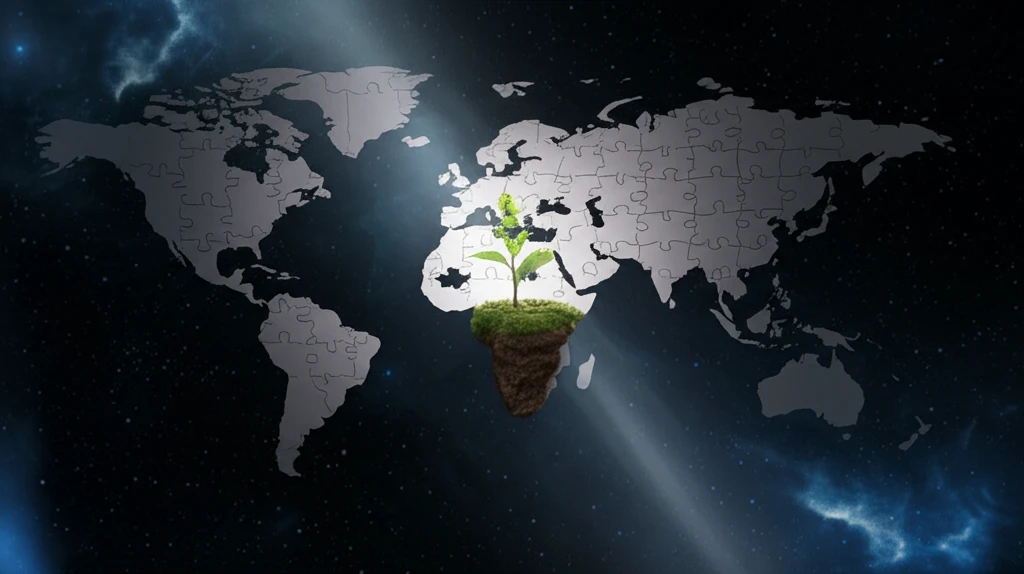
Beyond Order vs. Anarchy: Finding Stability in Today's Geopolitical Chaos

"A Deep Dive into Global Conflict and the Search for International Law"
The world often feels like it’s teetering on the edge of chaos. Conflicts erupt, alliances shift, and international norms seem to crumble under pressure. Understanding the roots of this instability is crucial, not just for policymakers, but for anyone trying to make sense of our complex global landscape. Many theories have tried to explain why chaos seems to be perpetual, but how useful are they today?
This article analyzes current global conflicts, drawing insights from classic political thinkers like Thomas Hobbes and John Locke. By comparing their perspectives, we can gain a clearer understanding of the forces driving conflict and the challenges of establishing a stable international order. What makes these older philosophical works still very relevant today?
Using contemporary examples like the war in Iraq and the Russia-Georgia conflict, we’ll explore the strengths and limitations of international law as a tool for maintaining peace. We will raise tough questions about the role of state power, the impact of morality, and the potential for a more orderly world.
Geography and Power: The Core of Geopolitics
Geopolitics is generally understood as the analysis of geographic influences on power relationships in international relations, situating terrain and location at the center of how states compete and cooperate. The discipline has deep historical roots, with Mackinder and the Heartland Theory forming one of its foundational frameworks for explaining global power dynamics. Contemporary coverage reflects how broad the field has become, spanning global news and analysis on current geopolitical issues as well as the shifting reach of major powers' armed forces. Ongoing reporting, such as European Union enlargement talks complicated by domestic interests and the lengthening reach of China's military, illustrates that geographic and strategic considerations remain woven into today's headlines.
Beyond the Headlines: Taking Terrain Seriously
A core premise of geopolitics is that before ideology, economics, or any leader's speech, there is terrain, and the discipline takes geography seriously as a cause of political outcomes rather than merely a backdrop to them. This geographic-first emphasis is a central method, filtering international events through spatial and strategic realities. The limitation of this approach, however, is that geography alone cannot account for the full complexity of world affairs, and geopolitics must be weighed alongside ideology, economics, and leadership to explain real outcomes. Its value lies in providing a durable, underlying logic to the constantly shifting surface events reported in the news.
An Evolving Lens on Global Order
The field of geopolitics has developed gradually, shaped by successive scholars and thinkers who tied state behavior to geographic and strategic realities. Foundational ideas emerged long before modern media coverage, establishing concepts that continue to inform how analysts interpret power and territory. Because the historical record here is broad and evolving, specific milestones should be treated cautiously rather than as a settled chronology. Overall, geopolitics offers a long-running framework for understanding why stability and conflict in world affairs follow geographic patterns.
The Inescapable State of War: Is Hobbes Right for Today's World?
Hobbes argued that, without a strong central authority, life becomes a "war of all against all." This isn't just about physical battles; it's a constant state of competition and fear, where individuals (or, in the international arena, states) prioritize their own survival above all else. Consider today's global landscape. Are nations primarily driven by a desire for security and self-preservation?
- Self-Interest Reigns: States prioritize their own security and needs.
- Morality is Secondary: Ethical considerations are often overshadowed by strategic advantage.
- Power is Key: A strong state is essential for survival in a chaotic world.
An Ongoing, Incompletely Mapped Field
Current scholarship on geopolitics continues to extend well beyond the discipline's classical foundations, exploring new sources of power and instability on a changing global map. Research increasingly examines how factors such as shifting military reach and regional integration reshape strategic calculations. Because the field is broad and continually evolving, findings should be read as an open and developing conversation rather than a settled body of conclusions. As new developments emerge, the underlying geographic logic of international relations remains a recurring theme in this research.
The Limits of Geographic Determinism
Geopolitics has drawn criticism for overemphasizing geography at the expense of other driving forces in world affairs. By foregrounding terrain and location, the approach can understate the role of ideology, economics, and individual leadership in shaping outcomes. Critics would point out that no single geographic framework fully predicts the course of international relations. A balanced reading therefore treats geopolitics as one important lens among several, rather than a complete explanation of global stability and conflict.
One Lens Among Many
When set alongside other frameworks for understanding international relations, geopolitics stands out for its emphasis on spatial and strategic factors as root causes. Other approaches prioritize economic incentives, ideological alignment, or institutional rules, offering complementary rather than competing explanations. Because each lens captures only part of the picture, analysts typically combine them to reach a fuller understanding of events. Geopolitics thus functions best as a foundational perspective layered together with other methods of analysis.
Beyond Idealism: Can We Find a Path to Stability?
The pursuit of a stable international order remains a complex and ongoing challenge. While Locke's vision of inherent reason and cooperation offers an appealing ideal, Hobbes's emphasis on power and self-interest often seems more aligned with the realities of global politics. Finding a balance between these perspectives is essential for navigating the complexities of our interconnected world and fostering a more peaceful future.
Uniting Geography with the Day's Events
Viewed together, the discipline's foundational ideas and its contemporary coverage suggest that geography continues to exert a constant influence beneath the surface of daily headlines. Analysts generally treat this geographic logic as a stabilizing thread that helps explain why certain powers pursue particular strategies. At the same time, commentary cautions against treating geography as the whole story, since leadership, economics, and ideology also matter. The result is a pragmatic view that combines geographic reasoning with attention to current events.
Where the Geographic Lens Is Heading
Looking ahead, the geographic lens of geopolitics is likely to be applied to an ever-wider set of global issues, from expanding military reach to regional integration debates. Emerging challenges will test whether classical geographic frameworks can adapt to a more interconnected and fast-moving world. Because these developments are still unfolding, any projections should be treated with appropriate caution rather than as settled forecasts. The core question of how terrain and location shape order will likely remain central.
Stability in a Shifting Global Map
The search for stability amid geopolitical chaos plays out against a backdrop of shifting power and contested territory. Systemic challenges arise because geographic realities interact with economic, ideological, and institutional forces in ways that are difficult to untangle. This complexity is reflected in broad global coverage that spans many regions and issue areas at once. Addressing these challenges requires weighing geographic logic alongside the wider forces that shape world affairs.
From Maps to Real-World Consequences
Beneath abstract maps of power and territory lie concrete, real-world consequences for communities and nations as strategic decisions play out. Geopolitical analysis ultimately matters because it helps explain the pressures that shape people's lives and the choices governments face. Dedicated global outlets exist in part to make these connections visible to a general audience. In this sense, geopolitics is not purely academic but deeply tied to lived experience and international outcomes.