
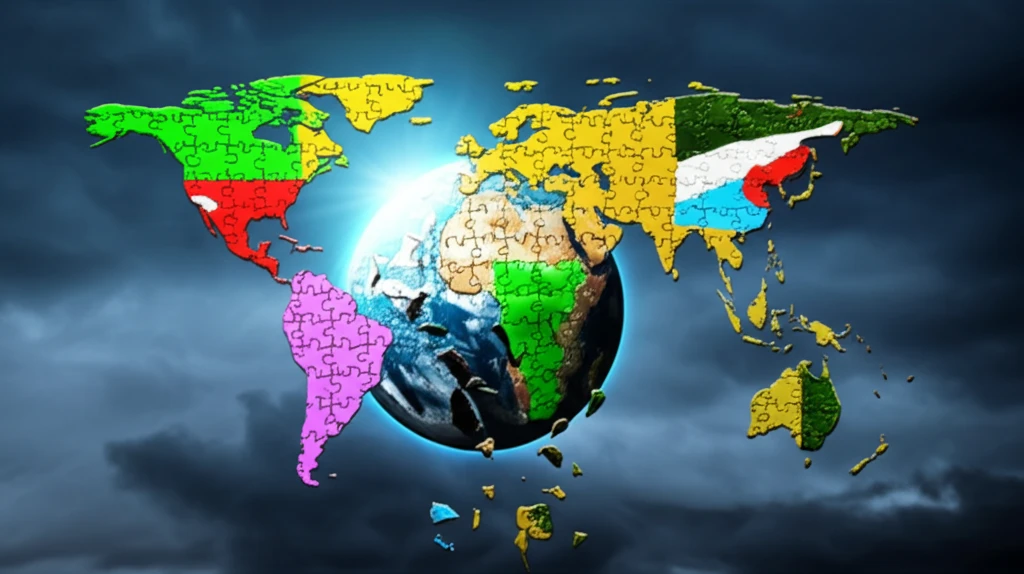
The Uneven Price of Pollution: How Global Attitudes Impact the Social Cost of Carbon

"New research reveals a stark divide in how the world values climate action, challenging current approaches to environmental policy."
The social cost of carbon (SCC) is a critical metric used to estimate the economic damages resulting from each ton of carbon dioxide emitted into the atmosphere. It's a figure that guides policy decisions, informs regulations, and shapes international agreements aimed at mitigating climate change. However, the SCC isn't just a number; it's a reflection of our values, priorities, and beliefs about the future.
Traditionally, SCC estimates have been heavily influenced by data and perspectives from North America and Western Europe. This raises a fundamental question: Does a carbon price shaped by Western values fairly represent the global community, especially when the impacts of climate change are felt differently across various regions? New research is challenging this established norm, revealing significant disparities in how different cultures perceive the urgency and importance of climate action.
This article explores the groundbreaking findings of a recent study that recalibrates the social cost of carbon using data from 76 countries, capturing a broader range of attitudes towards time, risk, and economic development. The results expose a striking divide, highlighting the ethical and practical implications of using a one-size-fits-all approach to global climate policy.
Why Your Location Matters: Unveiling the Geographical Bias in Climate Economics
Imagine trying to set a global price on pollution when people in different parts of the world have vastly different ideas about its impact. That's the challenge at the heart of the social cost of carbon. Traditionally, the experts calculating this cost have been primarily based in North America and Western Europe. While these researchers bring expertise and sophisticated models, their perspectives may not fully capture the values and priorities of the entire world.
- The "Western" Standard: Most existing estimates rely on economic models calibrated with data from North America and Europe. This means the assumptions about how much we value future benefits versus current costs are based on Western preferences.
- Global Disparities: The study reveals that people in different countries have significantly different attitudes toward time and risk, which directly affects their perception of the social cost of carbon.
- The Ethical Question: Is it fair to impose a carbon price based on one set of values onto the entire world, especially when the consequences of climate change are unevenly distributed?
Moving Towards a Fairer Climate Policy
The path forward requires a more inclusive and representative approach to calculating the social cost of carbon. By incorporating a wider range of values and priorities, we can create climate policies that are not only effective but also perceived as fair and equitable across the globe. This means listening to diverse voices, considering regional differences, and recognizing that the fight against climate change is a shared responsibility that demands a truly global perspective.