
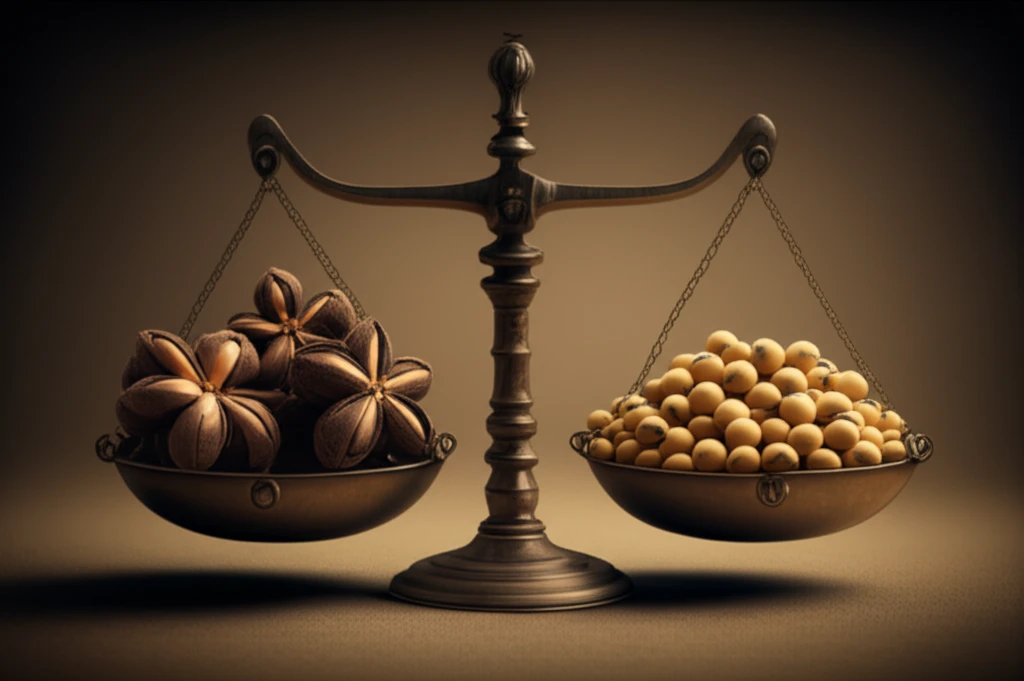
Balanced scale showcasing sacha inchi nuts and soy beans, symbolizing a nutritional comparison between the two plant proteins.

Sacha Inchi vs. Soy: Which Plant Protein Reigns Supreme for Your Body?

"Uncover the truth about Sacha Inchi and soy protein in a head-to-head comparison. Learn how these plant-based powerhouses impact your nitrogen balance, muscle health, and overall well-being."


In a world increasingly focused on plant-based diets, the quest for high-quality protein sources is more critical than ever. While many are familiar with soy protein, a lesser-known contender, Sacha Inchi, is gaining traction. But how do these two plant proteins truly compare when it comes to their impact on your body?

Sacha Inchi, a nut native to the Peruvian Amazon, is celebrated for its oil's lipid-lowering effects. However, the flour made from the remaining material boasts a high protein content, sparking interest in its potential as a valuable protein source. Yet, questions remain about how our bodies utilize this protein compared to more established options like soy.

This article dives into the science behind Sacha Inchi and soy protein, exploring a randomized study that investigated their effects on nitrogen balance – a key indicator of how well our bodies absorb and use protein. By understanding the research, you can make informed choices about incorporating these plant-based proteins into your diet.

Nitrogen Balance: The Key to Protein Utilization

Balanced scale showcasing sacha inchi nuts and soy beans, symbolizing a nutritional comparison between the two plant proteins.

Nitrogen balance is a crucial measure of protein metabolism. When you consume protein, your body breaks it down into amino acids, which contain nitrogen. The balance between nitrogen intake and nitrogen excretion (through urine, feces, and skin) indicates whether your body is building more protein than it's breaking down (positive nitrogen balance), breaking down more than it's building (negative nitrogen balance), or maintaining an equilibrium.

A study published in Toxicology Mechanisms and Methods directly compared the effects of Sacha Inchi flour and soy flour on nitrogen balance in adult men and women. Researchers conducted a double-blind cohort study, where participants were randomly assigned to consume either 30g of Sacha Inchi flour or 30g of soy flour. Their nitrogen balance was then carefully monitored.

  • The study found that both Sacha Inchi and soy flour resulted in a negative nitrogen balance in participants.
  • This means that, on average, participants excreted more nitrogen than they consumed during the study period.
  • Importantly, there was no significant difference in nitrogen balance between the Sacha Inchi and soy flour groups.
While the negative nitrogen balance might seem concerning, it's essential to consider the study's context. Participants consumed a standardized diet that was slightly lower in protein on the day of the experiment. However, the key takeaway is that Sacha Inchi protein appears to be utilized by the body in a way comparable to soy protein under these conditions.

The Verdict: Sacha Inchi Holds Its Own

The research suggests that Sacha Inchi flour is a viable plant-based protein source, performing comparably to soy in terms of nitrogen balance. This is promising news for individuals seeking diverse protein options, especially those with soy sensitivities or those looking to explore the nutritional benefits of lesser-known superfoods.

Beyond nitrogen balance, the study also revealed that Sacha Inchi flour had a similar impact on insulin levels, lipid profiles, and inflammatory markers as soy flour. Participants reported comparable levels of acceptability and no serious adverse effects, indicating that Sacha Inchi is generally well-tolerated.

While further research is always valuable, the current evidence suggests that Sacha Inchi can be a valuable addition to a balanced diet. As with any dietary change, it's best to consult with a healthcare professional or registered dietitian to determine the appropriate amount of protein for your individual needs and health goals. Diversifying your protein sources can provide a wider range of nutrients and contribute to overall well-being.

About this Article -

This article was crafted using a human-AI hybrid and collaborative approach. AI assisted our team with initial drafting, research insights, identifying key questions, and image generation. Our human editors guided topic selection, defined the angle, structured the content, ensured factual accuracy and relevance, refined the tone, and conducted thorough editing to deliver helpful, high-quality information.See our About page for more information.

This article is based on research published under:

DOI-LINK: 10.1080/15376516.2017.1373880, Alternate LINK

Title: Nitrogen Balance After A Single Oral Consumption Of Sacha Inchi (Plukenetia Volúbilis L.) Protein Compared To Soy Protein: A Randomized Study In Humans

Subject: Health, Toxicology and Mutagenesis

Journal: Toxicology Mechanisms and Methods

Publisher: Informa UK Limited

Authors: Gustavo F. Gonzales, Jennifer Tello, Alisson Zevallos-Concha, Luis Baquerizo, Lidia Caballero

Published: 2017-09-18

Everything You Need To Know

1

What exactly does 'nitrogen balance' mean, and why is it important for understanding how our bodies use protein?

Nitrogen balance is a measure used to evaluate protein metabolism. It compares the amount of nitrogen consumed (from protein intake) with the amount of nitrogen excreted from the body through urine, feces, and skin. A positive nitrogen balance indicates that the body is building more protein than it's breaking down, while a negative nitrogen balance suggests the opposite.

2

How did the study comparing Sacha Inchi and soy protein work, and what were the key aspects of its design?

The study compared the effects of Sacha Inchi flour and soy flour on nitrogen balance in adult men and women. Participants were randomly assigned to consume either 30g of Sacha Inchi flour or 30g of soy flour. Researchers then monitored their nitrogen balance to see how well each protein source was utilized by the body. The study context is important because participants consumed a standardized diet that was slightly lower in protein on the day of the experiment.

3

What were the actual results of the nitrogen balance study comparing Sacha Inchi flour to soy flour?

The study found that both Sacha Inchi flour and soy flour resulted in a negative nitrogen balance in participants, and there was no significant difference in nitrogen balance between the two groups. This suggests that, under the conditions of this specific study, Sacha Inchi protein is utilized by the body comparably to soy protein.

4

What does it mean practically that Sacha Inchi performs similarly to soy in terms of nitrogen balance?

The finding that Sacha Inchi performs comparably to soy in terms of nitrogen balance suggests that Sacha Inchi flour is a viable plant-based protein source. This is beneficial for individuals seeking diverse protein options, particularly those with soy sensitivities or those interested in exploring the nutritional benefits of less common superfoods. More research would be useful to determine the effects in different conditions and populations.

5

What other aspects of Sacha Inchi and soy protein were not addressed in the study about nitrogen balance?

The study focused specifically on nitrogen balance as a measure of protein utilization. However, it did not delve into other potential health benefits or drawbacks of Sacha Inchi and soy, such as their effects on muscle protein synthesis, satiety, digestibility, or long-term health outcomes. Further research is needed to comprehensively evaluate the overall health impacts of each protein source.

Newsletter Subscribe

Subscribe to get the latest articles and insights directly in your inbox.