
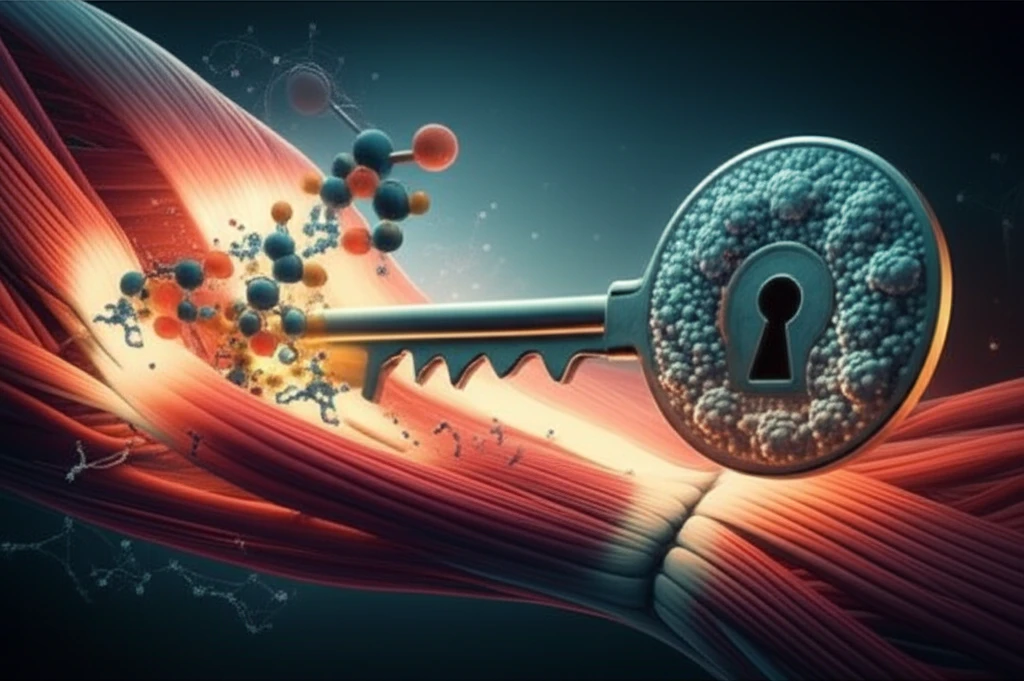
Unlocking Muscle Growth: How Insulin Supercharges Protein Synthesis

"Discover the surprising link between insulin, protein production, and the vital eIF5A factor for better muscle health and overall wellness."
Insulin, a hormone famous for regulating blood sugar, is also a major player in how your body handles proteins. Think of it as the starting gun for muscle growth: it tells your cells to grab amino acids and start building new proteins. This process, known as protein synthesis, is essential for repairing and growing muscle tissue, but insulin's role goes even deeper.
Insulin triggers a series of signals inside your cells, activating pathways like Akt/PkB, mTOR, and S6Ks. These pathways are like express lanes for protein production, and insulin makes sure they're running at full speed. It also influences various translation factors, which are essential to kickstarting and continuing protein creation. But there's one factor, eIF5A, that hasn't been fully explored in connection with insulin, until now.
New research sheds light on how insulin directly impacts eIF5A, a protein crucial for cell growth and muscle regeneration. This article breaks down the findings, explaining how insulin's action on eIF5A affects protein synthesis and what it means for your muscle health.
Insulin's Critical Role in Muscle Health
Insulin-like growth factor I (IGF-I) may play a role in muscle growth and reduce the risk of muscle weakness and loss in community-dwelling older adults. Skeletal muscle is the principal tissue for insulin-stimulated glucose disposal and uniquely responds to muscle contraction with increased sensitivity to subsequent insulin stimulation. Correction of poor glycemic control and use of insulin were significantly associated with increased skeletal muscle mass or gait speed in patients with type 2 diabetes.
Measuring Insulin Resistance and Its Clinical Challenges
To realize the full therapeutic potential of insulin-like growth factors, a better understanding of their physiology and mechanisms of action must be established, particularly in skeletal muscle where IGF-I deficiency impairs normal development. Measuring insulin resistance in clinical settings involves evaluating its effects across muscle, liver, and adipose tissue using various methodologies. Insulin protocols used in bodybuilding represent a powerful strategy for maximizing muscle growth, but require caution and professional guidance to minimize health risks.
Foundations of Insulin and Muscle Biology
Research into insulin's relationship with muscle growth has evolved significantly over decades, with early discoveries establishing the hormone's fundamental role in nutrient metabolism. Scientists have progressively uncovered how insulin signaling pathways regulate protein synthesis and cellular growth mechanisms. These foundational insights continue to inform modern therapeutic approaches and athletic performance strategies.
The Insulin-eIF5A Connection: Fueling Muscle Protein Synthesis
Researchers investigated how insulin influences eIF5A expression and its modification (hypusination) in muscle cells. They discovered that insulin increases the amount of eIF5A transcripts—the blueprints for making the eIF5A protein. This effect was seen whether or not cells were deprived of serum, indicating that insulin has a direct, positive influence separate from other serum components.
- eIF2B: Insulin kicks this factor into gear via the PI3-kinase pathway, boosting the formation of essential eIF2-GTP complexes.
- eIF4E: Insulin ramps up the phosphorylation of eIF4E and its inhibitor, 4E-BP1, freeing eIF4E to form critical complexes for protein synthesis.
- eIF2: Insulin stimulates eIF2 by dephosphorylation, which helps in the formation of 43S complexes.
- eIF3: Insulin strengthens the connection between eIF3 and eIF4G through mTOR, improving translation initiation.
- eIF4G: Through the mTOR pathway, insulin enhances the formation of eIF4G-eIF4E complexes.
- eIF4B: Insulin boosts the phosphorylation of eIF4B by S6K, fostering its interaction with eIF3 and eIF4G, which are vital for translation.
- eEF2: Insulin prevents eEF2K inhibition via S6K, promoting protein content.
Recent Advances in Insulin-Muscle Interactions
Recent findings suggest that food intake during the active phase enhances insulin-mediated mitochondrial energy supply rhythm, thereby promoting skeletal muscle growth. Comprehensive reviews examine the biochemical mechanisms of glucose uptake into skeletal muscle and its physiological regulation in response to insulin and muscle activity. Insulin acts as a critical anabolic signal, regulating nutrient uptake and protein synthesis essential for muscle growth and effective recovery.
Limitations and Risks of Insulin for Muscle Growth
Excessive insulin release, often from high-sugar diets, can lead to insulin resistance, diminishing its effectiveness in muscle growth. A comparative analysis reveals that insulin's role in protein synthesis is not uniform across all age groups, suggesting individual variability in response. The potential benefits of insulin use must be weighed against serious health risks, particularly when used outside medical supervision.
Evaluating Insulin Approaches Across Different Contexts
Different approaches to insulin management yield varying outcomes for muscle growth depending on individual metabolic profiles and health conditions. Medical insulin therapy for diabetic patients differs substantially from performance-enhancing protocols used by athletes. Understanding these distinctions is crucial for evaluating the evidence behind insulin's muscle-building claims.
The Takeaway: Insulin's Impact on Muscle Building
This research highlights insulin's significant role in modulating eIF5A and, consequently, in controlling the machinery of protein synthesis within cells. By understanding how insulin affects eIF5A expression and hypusination, we gain deeper insights into optimizing muscle growth and overall metabolic health. Further studies are needed to explore the full extent of insulin's effects on eIF5A in various physiological conditions.
Integrating Current Evidence on Insulin and Muscle
Current evidence supports insulin's important role in muscle maintenance and growth, though its effects are mediated through complex metabolic pathways. Experts emphasize the need for balanced approaches that consider individual health status rather than blanket recommendations. The relationship between insulin sensitivity, exercise, and nutrition remains central to optimizing muscle health outcomes.
Emerging Research and Market Developments
Insulin, as a master regulator of energy metabolism, continues to be a focus of research in endocrinology and metabolic science. The global insulin market is projected to grow significantly, with North America maintaining a leading position through 2034. Future research directions include exploring insulin's role in mitochondrial function and developing more targeted therapeutic interventions for muscle-related conditions.
Challenges in Translating Insulin Research to Practice
Translating insulin research findings into practical muscle-building strategies faces several systemic challenges, including individual metabolic variability and safety concerns. Access to proper medical supervision and personalized protocols remains limited for many individuals seeking to optimize muscle growth. The distinction between therapeutic insulin use and performance enhancement continues to present regulatory and ethical considerations.
Practical Implications for Muscle Health
For individuals seeking to optimize muscle growth through insulin-related strategies, understanding personal health status and risks is essential. The human body's response to insulin varies based on genetics, age, diet, and activity level, making one-size-fits-all approaches inadequate. Real-world outcomes depend heavily on proper implementation under appropriate guidance and monitoring.