
Unlocking Muscle Mysteries: How Scientists are Mapping the Sodium Channel

"Groundbreaking research creates detailed models of the hNav1.4 sodium channel, paving the way for new treatments for muscle disorders."
Imagine your muscles failing you, a frustrating and frightening reality for individuals with conditions like muscular dystrophy and certain types of paralysis. At the heart of these conditions often lies a tiny gatekeeper known as the voltage-gated sodium channel. These channels are critical for muscle function, acting like switches that control electrical signals that cause our muscles to contract. When these channels malfunction, it can lead to a cascade of problems.
For years, scientists have strived to understand the intricate workings of these sodium channels. However, their complexity has proven to be a significant hurdle. Traditional methods have fallen short, leaving researchers with an incomplete picture of how these channels function at the molecular level. This lack of knowledge has hindered the development of targeted therapies for muscle disorders.
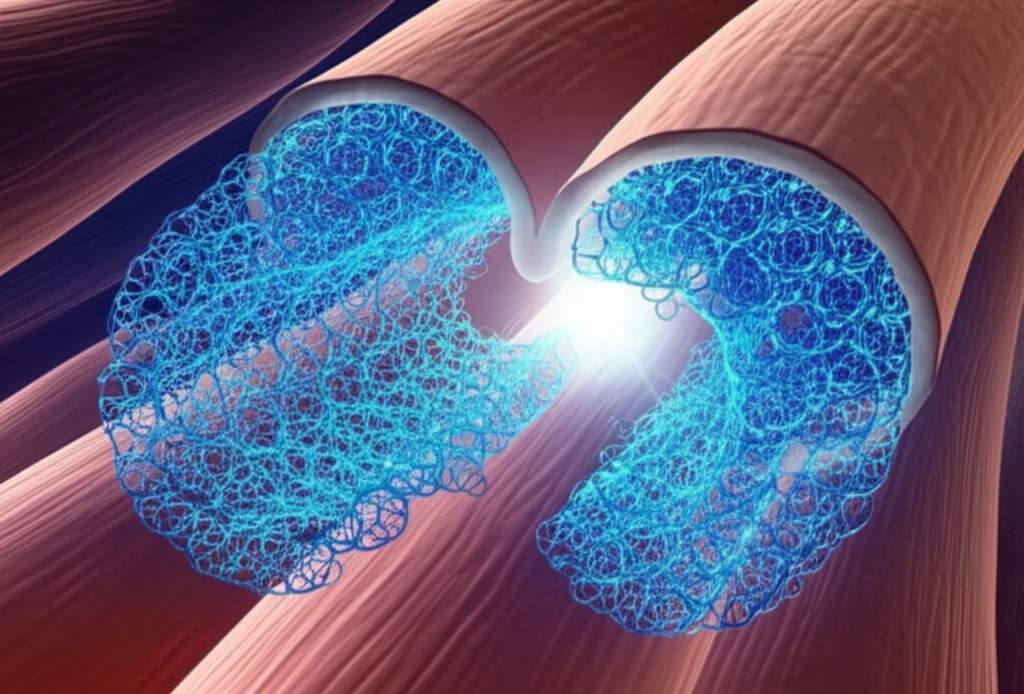
Now, a team of researchers has achieved a major breakthrough by creating detailed 3D models of a key sodium channel found in skeletal muscle, called hNav1.4. By leveraging advanced techniques and structural data from similar channels, they have constructed the most accurate representations yet of hNav1.4 in both its closed and open states. This achievement promises to revolutionize our understanding of muscle function and open doors to new and innovative treatments.
From Broad Assessment to Channel Biology
Muscle health is best assessed through multiple dimensions rather than a single outcome measure. The ICF model connects these dimensions to body systems and structures, activities, and participation, supporting patient-centered assessment. For sodium channel disorders, diagnostic approaches must also account for the broad phenotypes and mechanisms associated with muscle and brain sodium channelopathies.
The Nav1.4 Milestone
The first identified ion channelopathy was hyperkalemic periodic paralysis, an inherited skeletal-muscle disorder caused by mutations in SCN4A. SCN4A encodes Nav1.4, the alpha subunit of a voltage-gated sodium channel whose expression is limited to skeletal muscle fibers. More broadly, voltage-gated sodium channels were first predicted in squid and later identified through molecular biology in the electric eel, establishing a foundation for studying their role in excitability.
Cracking the Code: What Makes hNav1.4 So Important?
Voltage-gated sodium channels are essential for generating and transmitting electrical signals in our muscles. Think of them as tiny doors that open and close in response to changes in electrical voltage. When a signal from the brain reaches a muscle cell, these channels open, allowing sodium ions to flow into the cell. This influx of sodium ions creates an electrical current that triggers muscle contraction. The hNav1.4 channel is specifically responsible for this process in our skeletal muscles, the muscles we use for movement.
- Hyperkalemic Periodic Paralysis: A condition characterized by episodes of muscle weakness or paralysis triggered by high levels of potassium in the blood.
- Paramyotonia Congenita: A genetic disorder that causes muscle stiffness and weakness, particularly in cold temperatures.
- Myotonia Congenita: Another genetic condition leading to muscle stiffness, but often improving with repeated movements.
- Certain Forms of Muscular Dystrophy: Some types of muscular dystrophy, a group of inherited diseases that cause progressive muscle weakness and loss, are linked to sodium channel dysfunction.
Modeling the Human Skeletal-Muscle Channel
Fernandes, Bleicher, and Beirão reported closed- and open-state models of the human skeletal muscle sodium channel. Their work was published in 2018 in Biochemical and Biophysical Research Communications, volume 506, issue 4, pages 826–832. The models focus specifically on the structural states of the human skeletal muscle sodium channel.
When Excitability Goes Wrong
Non-dystrophic myotonias are rare skeletal-muscle disorders marked by delayed relaxation of muscle force or increased muscle contraction. Genetic defects in sodium and chloride channels expressed in muscle fibers can produce these conditions. Sodium-channel mutations can also affect brain-related disorders, including epilepsy, migraine, autism, and related comorbidities, showing that channel dysfunction does not produce a single uniform clinical outcome.
One Channel Family, Different Clinical Targets
Activation of sodium channels produces membrane depolarization and initiates Phase 0 of the cardiac action potential. Sodium-channel blockers are clinically used in several excitability disorders, including epilepsy, cardiac arrhythmias, chronic pain, and non-dystrophic myotonia. In skeletal muscle, ion channels regulate excitability, excitation-contraction coupling, and contraction, making them targets for potential precision therapies.
The Future of Muscle Therapies: A New Era Dawns
The detailed hNav1.4 models created by this research team represent a significant step forward in our understanding of muscle function and disease. By providing a clearer picture of the sodium channel's structure and how it operates, these models pave the way for the development of targeted therapies that can address the root cause of many muscle disorders. This breakthrough could ultimately lead to new treatments that alleviate symptoms, improve quality of life, and potentially even cure debilitating muscle conditions.
Sodium and Normal Muscle Function
The European Food Safety Authority concluded that sodium contributes to the maintenance of normal muscle function. Its assessment treated maintenance of normal muscle function as a beneficial physiological effect. This conclusion concerns the general population and addresses sodium's contribution to normal function rather than a specific sodium-channel disorder.
Toward Targeted Muscle Therapies
Detailed hNav1.4 models are presented as a significant step toward understanding muscle function and disease. By clarifying the channel's structure and operation, these models may support the development of targeted therapies. The proposed direction is to address the root causes of muscle diseases rather than relying only on broad symptomatic approaches.
Why Genetic Diagnosis Matters
Muscle and brain sodium-channel mutations can produce different physiological consequences. Those differences may substantially affect the appropriate therapeutic choice. The review therefore emphasizes obtaining a genetic diagnosis even when the initial clinical presentation appears generic.
Measuring Muscle Consequences
A February 13, 2023 study quantitatively documented greater fat fraction in a large cohort of patients with skeletal-muscle sodium-channel disorders. It also described differences in muscle contractility in these patients. The findings connect sodium-channel disorders with measurable changes in muscle composition and performance.