
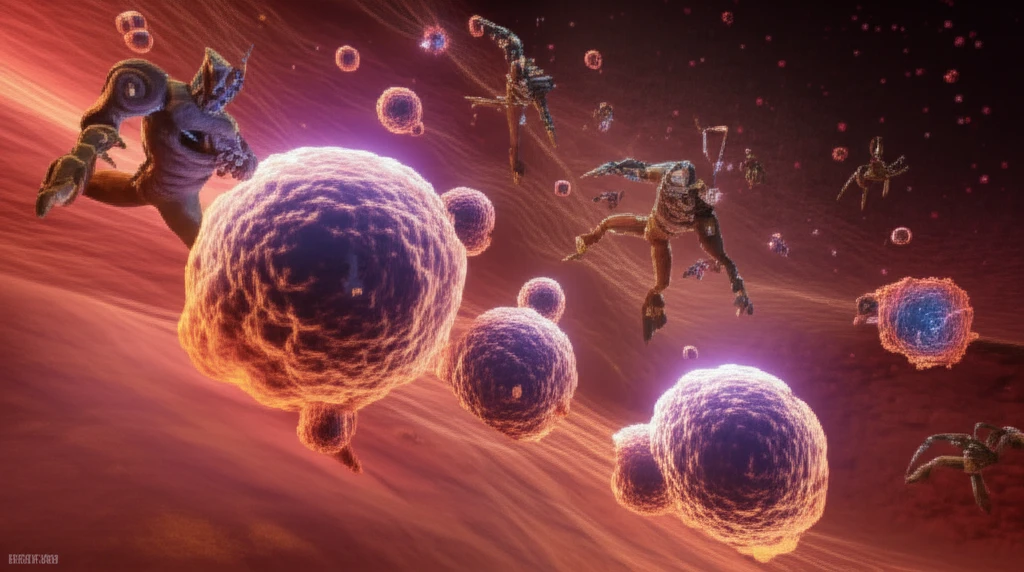
Natural Killer Cells: The Unsung Heroes of Cancer Immunotherapy?

"Unlock the potential of NK cells in revolutionizing cancer treatment: How these immune cells are being harnessed to fight tumors and improve patient outcomes."
The human body possesses an intricate defense system known as the immune system. Environmental factors and inflammation can mold Natural Killer (NK) cells, which is crucial for genes to differentiate and develop these cells. Among its many components, Natural Killer (NK) cells stand out for their ability to target and destroy cancerous cells without prior sensitization. This unique capability has positioned NK cells as a focal point in the burgeoning field of cancer immunotherapy, which seeks to harness the power of the immune system to combat cancer.
Unlike T and B cells, which require specific antigen recognition to mount an attack, NK cells can recognize and eliminate stressed or abnormal cells directly. Their activity is governed by a delicate balance of signals received from activating and inhibitory receptors. This allows them to distinguish between healthy cells and those that pose a threat, such as tumor cells or virus-infected cells.
Recent advances in immunotherapy involve using Interleukin (IL) to induce NK cell production in clinical trials. Furthermore, genetic engineering techniques have been developed to enhance the specificity and potency of NK cells, making them even more effective at targeting and destroying cancer cells. These modified NK cells, known as CAR-NK cells, represent a new frontier in cancer treatment, offering the potential for more targeted and less toxic therapies.
How NK Cells Work: An Innate Lymphoid Cell
NK cells patrol the body, acting as first responders to potential threats. Part of the innate immune system, NK cells prevent cancer development. They're like the security guards of your body, quickly identifying and eliminating suspicious characters before they can cause serious trouble.
- Direct Cytotoxicity: NK cells release cytotoxic granules containing proteins like perforin and granzymes, which induce apoptosis (programmed cell death) in target cells.
- Antibody-Dependent Cellular Cytotoxicity (ADCC): NK cells express the CD16 receptor, which binds to antibodies coating target cells. This triggers NK cell activation and target cell lysis.
- Cytokine Production: NK cells produce cytokines like interferon-gamma (IFN-γ) and tumor necrosis factor-alpha (TNF-α), which enhance the immune response and directly inhibit tumor growth.
The Future of NK Cell Immunotherapy: Overcoming Challenges and Realizing Potential
NK cell-based immunotherapies hold immense promise, challenges remain in translating this potential into widespread clinical success. One major hurdle is the immunosuppressive tumor microenvironment, which can inhibit NK cell activity and promote tumor growth. Strategies to overcome this include:
Despite these challenges, the field of NK cell immunotherapy is rapidly evolving. Ongoing research is focused on optimizing NK cell expansion and activation protocols, developing novel CAR-NK cell constructs, and identifying biomarkers to predict patient responses. As our understanding of NK cell biology deepens, we can expect to see even more innovative and effective NK cell-based therapies emerge in the years to come.
From direct tumor cell lysis to adaptive immune enhancement and genetic modification, NK cells offer a multifaceted approach to fighting cancer. As research progresses and clinical trials yield more promising results, NK cells may well become a cornerstone of future cancer treatment, offering new hope for patients worldwide.