
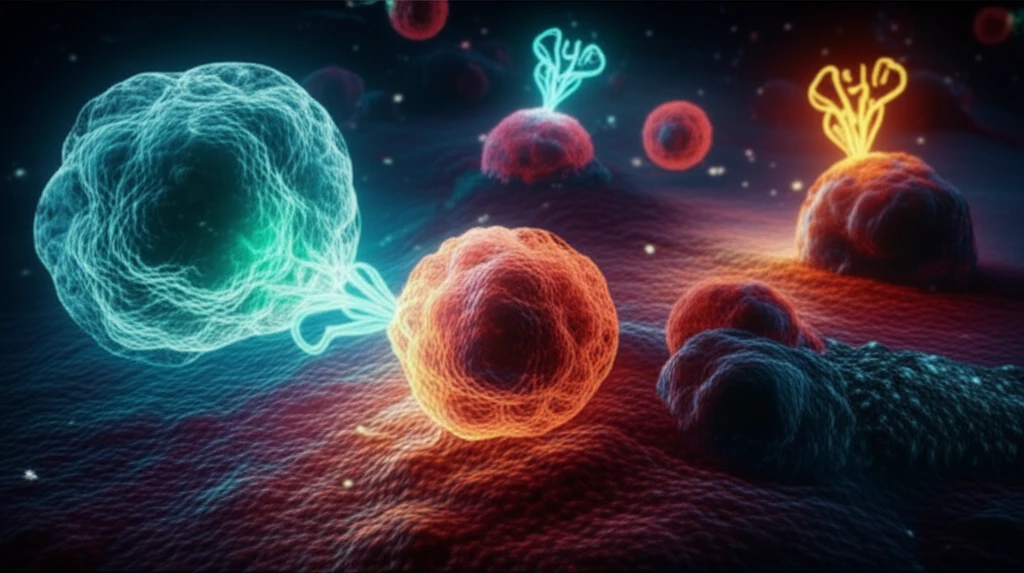
CAR-T Cell Therapy: A Personalized Cancer Immunotherapy Game Changer?

"Explore how CAR-T cell therapy is revolutionizing cancer treatment with personalized immunotherapy, offering new hope for patients with leukemia and lymphoma."
In the realm of cancer treatment, personalized medicine is rapidly transforming the landscape, offering targeted therapies that are tailored to an individual's unique genetic makeup and disease characteristics. Among these innovative approaches, CAR-T cell therapy stands out as a groundbreaking form of immunotherapy that harnesses the power of a patient's own immune system to fight cancer.
Tisagenlecleucel (Kymriah) and axicabtagene ciloleucel (Yescarta), two CAR-T cell therapies, have already been licensed for the treatment of specific patient populations with leukemia or lymphoma, marking a significant milestone in the field of personalized cancer treatment. These therapies represent the forefront of a new wave of innovative approaches that are revolutionizing how we combat cancer.
This article delves into the intricate details of CAR-T cell therapy, exploring its innovative mechanism of action, clinical trial results, potential adverse effects, and its anticipated future role in cancer treatment. Discover how this personalized immunotherapy approach is offering new hope to patients with previously limited treatment options.
Current Impact and Response Rates
CAR-T cell therapy has become a significant approach for hematological malignancies, while research into its use for solid tumors has gained momentum. Biology Insights reports complete remission rates of roughly 80 to 90 percent among children and adults with relapsed or treatment-resistant B-cell acute lymphoblastic leukemia (ALL), although response rates vary substantially by cancer type. In the United States, CAR-T therapy is one of several major cancer immunotherapy categories, alongside immune checkpoint inhibitors, cancer vaccines, cytokine therapies, monoclonal antibodies, and tumor-infiltrating lymphocyte therapies.
Established Therapy and Its Limits
CAR-T cell therapy has produced remarkable clinical responses in certain subsets of B-cell leukemia and lymphoma and has become a personalized immunotherapeutic approach for hematologic malignancies. However, treatment failure still occurs for a significant proportion of patients, and further studies are needed to extend its use to other hematologic cancers. Reviews also describe ongoing efforts to improve clinical efficacy in both hematological malignancies and solid tumors by addressing current limitations of CAR-T-cell engineering and treatment.
From Immunotherapy to CAR-T
The evolution of CAR-T therapy reflects major immunotherapy milestones beginning with vaccination in the 18th century and extending to successful clinical trials for solid tumors and applications beyond cancer in 2024. In the 21st century, CAR-T therapy has provided innovative and life-saving treatments for previously untreatable diseases, with clinical-trial expansion into solid tumors such as prostate cancer and glioblastoma. The approach uses genetically engineered T lymphocytes programmed to recognize and kill tumor cells without major histocompatibility complex (MHC) restriction.
How Does CAR-T Cell Therapy Work?
CAR-T cell therapy is a highly personalized treatment approach that involves modifying a patient's own T cells, a type of immune cell, to target and destroy cancer cells. This process begins with harvesting T cells from the patient's blood, followed by genetic modification in the laboratory to express a chimeric antigen receptor (CAR) on their surface.
- Harvesting T Cells: T cells are collected from the patient's blood through a process called apheresis.
- Genetic Modification: In the laboratory, a viral vector is used to introduce the gene encoding the CAR into the T cells. This allows the T cells to express the CAR on their surface.
- CAR-T Cell Expansion: The modified T cells, now called CAR-T cells, are expanded in the laboratory to generate a large number of cells.
- Infusion into Patient: The expanded CAR-T cells are infused back into the patient's bloodstream.
- Cancer Cell Recognition: The CAR-T cells circulate throughout the body, recognizing and binding to the CD19 antigen on cancer cells.
- Immune Response Activation: Upon binding to the cancer cells, the CAR-T cells become activated, triggering an immune response that leads to the destruction of the cancer cells.
Why CAR-T Does Not Work for Everyone
CAR-T cell therapies do not work for every patient, despite producing complete disease eradication in some people with very advanced cancer, often for long periods. Their defining distinction from other immunotherapies and cancer treatments is that they are made from a patient’s own T cells, the body’s primary killers of infected and other diseased cells. The U.S. Food and Drug Administration approved the first CAR-T cell therapy in 2017 for children with acute lymphoblastic leukemia (ALL), but the treatment’s benefits are not universal.
The Future of CAR-T Cell Therapy
CAR-T cell therapy is a rapidly evolving field with immense potential to transform cancer treatment. While it has shown remarkable success in treating certain types of leukemia and lymphoma, ongoing research is focused on expanding its application to other cancers, including solid tumors. Overcoming the challenges associated with targeting solid tumors, such as limited CAR-T cell infiltration and immunosuppressive microenvironments, is a key area of investigation.
Engineering the Next Generation
Future CAR-T research is addressing the limitations of conventional therapy, including severe treatment-related toxicities, patient-specific manufacturing, and limited efficacy against solid tumors. These challenges have stimulated development of chimeric antigen receptor-engineered natural killer (CAR-NK) cells as an alternative adoptive immunotherapy platform. Other emerging directions include multifunctional CAR-T strategies, multiantigen targeting, and approaches designed to improve safety and efficacy across registered clinical studies.
Expanding Beyond Blood Cancers
CAR-T cell therapy has rapidly emerged as a groundbreaking treatment approach, particularly for hematologic malignancies. Its application in solid tumors remains challenging, indicating that the therapy’s broader expansion is not yet straightforward. Reviews of CAR-T technology therefore emphasize both its development in blood cancers and the obstacles that must be addressed before comparable use in solid tumors becomes more broadly feasible.