
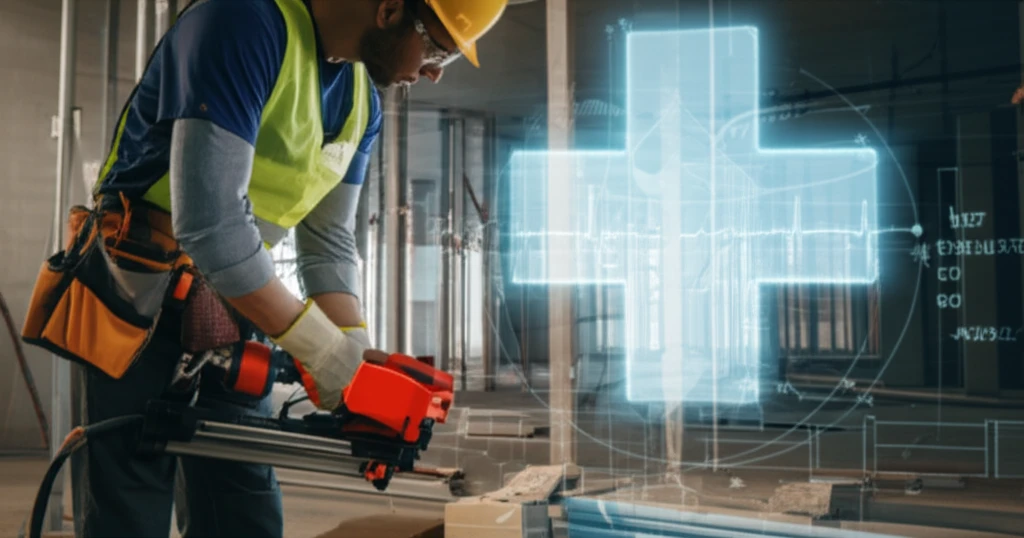
Nail gun safety illustration

Nail Gun Safety: Are We Really Protecting Workers?

"Discover why, despite safety standards, nail gun injuries persist among residential contractors and what can be done to promote a safer work environment."


Nail guns have become indispensable tools in residential construction, increasing productivity by rapidly driving nails into various materials. While these tools offer efficiency, they also pose significant safety risks. The power and speed that make nail guns so effective can lead to severe injuries if not handled properly.

Despite the existence of safety standards and training programs, nail gun injuries remain a persistent problem, especially among residential contractors. A study examining the perspectives of contractors reveals critical insights into why these injuries continue to occur and what can be done to mitigate them.

This article delves into the findings of the study, shedding light on the attitudes, behaviors, and knowledge gaps that contribute to nail gun injuries. We’ll explore the importance of proper training, the role of tool design, and the impact of safety perceptions on creating a safer work environment for construction professionals.

Why Are Nail Gun Injuries Still Happening?

Nail gun safety illustration

A study conducted between 2005 and 2008 surveyed residential contractors about their experiences with nail gun safety. The survey explored tool usage, training practices, perceptions of injury risk, and awareness of the American National Standards Institute (ANSI) standard, which calls for pneumatic nail guns used in wood framing to be shipped with sequential actuation triggers.

The findings revealed a concerning trend: even with some awareness of factors like inexperience, inadequate training, speed, and tool design contributing to injuries, a significant 55% of contractors consistently attributed injuries to worker carelessness. This perception highlights a potential gap in understanding the underlying causes of nail gun incidents.

  • Lack of Awareness: After five years, only 16% of contractors reported being aware of the voluntary ANSI standard. This raises questions about the effectiveness of voluntary standards in promoting safety.
  • Underreporting: Many contractors believed their employees had better safety experiences than those in other residential firms, potentially leading to underreporting of incidents.
  • Carelessness Bias: The prevalent belief that injuries result from carelessness may overshadow other critical factors such as inadequate training or unsafe tool design.
The study underscores that simply having standards in place isn't enough. The attitudes and perceptions of contractors play a crucial role in implementing effective safety measures. Addressing the “carelessness” bias and promoting a deeper understanding of risk factors are essential steps in reducing nail gun injuries.

What Can Be Done to Improve Nail Gun Safety?

Based on the research, several recommendations can be made to improve nail gun safety in residential construction. By shifting the focus from blaming workers to addressing systemic issues, we can create a safer and more productive work environment for everyone:

About this Article -

This article was crafted using a human-AI hybrid and collaborative approach. AI assisted our team with initial drafting, research insights, identifying key questions, and image generation. Our human editors guided topic selection, defined the angle, structured the content, ensured factual accuracy and relevance, refined the tone, and conducted thorough editing to deliver helpful, high-quality information.See our About page for more information.

This article is based on research published under:

DOI-LINK: 10.2190/ns.20.3.g, Alternate LINK

Title: Perspectives Of Residential Contractors On Nail Gun Safety

Subject: General Medicine

Journal: NEW SOLUTIONS: A Journal of Environmental and Occupational Health Policy

Publisher: SAGE Publications

Authors: H. J. Lipscomb, J. Nolan, D. Patterson

Published: 2010-10-13

Everything You Need To Know

1

What are nail guns, and why are they used in construction?

Nail guns are tools used extensively in residential construction to drive nails into various materials quickly and efficiently. Their effectiveness comes from their power and speed, but this also makes them a significant safety risk if not handled properly. Using them increases productivity but can lead to severe injuries if safety protocols are not followed.

2

What is the significance of the ANSI standard in nail gun safety?

The American National Standards Institute (ANSI) standard is a voluntary safety standard, specifically addressing pneumatic nail guns used in wood framing. This standard mandates that nail guns be shipped with sequential actuation triggers. However, its significance is undermined by low awareness among contractors, as evidenced by the study where only 16% of contractors were aware of it five years after its implementation. This suggests that simply establishing standards is not enough to ensure worker safety.

3

How do contractors' attitudes affect nail gun safety?

Contractors' attitudes and perceptions significantly impact the effectiveness of safety measures. The study found that a prevalent belief is that injuries result from worker carelessness, overshadowing other critical factors like training and tool design. This "carelessness" bias can hinder improvements because it deflects attention from addressing systemic issues that contribute to nail gun incidents. To improve safety, it's crucial to shift focus from blaming workers to understanding and mitigating underlying risk factors.

4

How does training influence nail gun safety?

Inadequate training contributes to nail gun injuries. The study showed a need for better education on safe tool use, including the importance of proper handling, maintenance, and understanding of injury risks. Addressing the knowledge gaps and providing comprehensive training are critical steps toward reducing injuries.

5

What steps can be taken to improve nail gun safety?

Several recommendations include shifting the focus from blaming workers to addressing systemic issues in residential construction. This involves promoting deeper understanding of risk factors, encouraging better training, and potentially reevaluating tool designs to prioritize safety. Overcoming the "carelessness" bias and fostering a culture of safety is essential in creating a safer and more productive work environment. This proactive approach to worker safety can mitigate nail gun injuries.

Newsletter Subscribe

Subscribe to get the latest articles and insights directly in your inbox.