
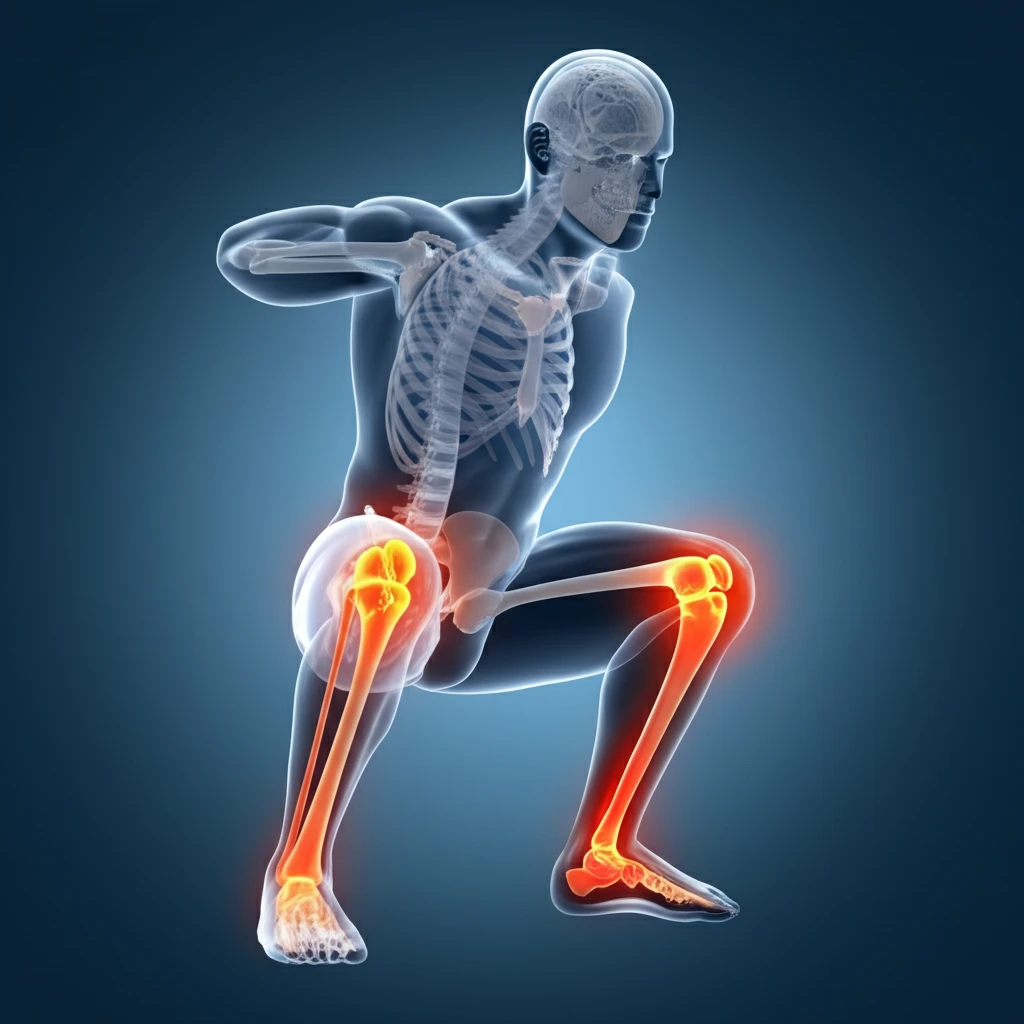
Squat Right, Play Strong: How to Sidestep Injury with Proper Form

"Uncover the link between your squat technique and injury risk, and learn how to safeguard your athletic performance."
For athletes, the squat is more than just a gym exercise; it's a foundational movement pattern that mirrors activities across a multitude of sports. Whether you're a basketball player leaping for a rebound or a soccer player powering through a sprint, the ability to squat correctly translates to enhanced performance and reduced injury risk. But what happens when squat form falters? Recent research sheds light on the connection between squat technique and injury rates, particularly among young athletes.
A study published in 'Physical Therapy in Sport' investigated the relationship between double-leg and single-leg squat performance and injury incidence among incoming NCAA Division I athletes. The findings suggest that athletes with poor movement quality during squats are more susceptible to lower extremity injuries. This underscores the importance of proper squat mechanics, not only for strength gains but also for injury prevention.
This article breaks down the key findings of this research and translates them into practical advice. You'll learn how to identify potential squatting flaws, understand their impact on injury risk, and discover strategies to optimize your squat form for long-term athletic success. Whether you're a seasoned athlete or just starting your fitness journey, this information will empower you to train smarter and play stronger.
The Cost of Getting Squat Form Wrong
Getting your squat form right is essential for receiving strength benefits and preventing injury. According to fitness experts, over-extending during squats can lead to lower back pain, a common complaint among lifters who neglect proper spinal alignment. The biomechanics of movements like the Bulgarian split squat and standard split squat also demand careful attention, as the front leg bears disproportionate load when the rear leg carries more weight than intended. Poor form across squat variations remains one of the most preventable causes of training-related injury.
Why Standard Squat Advice Falls Short
Conventional wisdom recommends squat variations as corrective movements, but this advice has notable blind spots. For people who sit all day, popular guidance to perform '10 squats every hour' can actually feed more spinal compression into the body rather than reversing it, especially if squat form is not clean. Physical limitations such as limited ankle dorsiflexion, stiff hips, a rounded upper back, and weight shifted into the heels make squat form unstable and pull body weight behind the feet. On the gym floor, tight ankles and heels that want to lift are among the most frequently observed issues limiting proper execution.
Defining the Squat
The word 'squat' is defined as sitting in a low or crouching position with the legs drawn up closely beneath or in front of the body, or sitting on one's haunches or heels. This fundamental human movement pattern predates formal exercise science, having served as a basic resting and laboring posture across cultures for centuries. Understanding the squat's linguistic and cultural roots underscores that proper form is not a modern invention but a refinement of a deeply instinctive movement pattern.
The Squat-Injury Connection: What the Research Reveals
The study, conducted with 111 incoming NCAA Division I athletes across 10 varsity sports teams, assessed squat performance using specific criteria for both double-leg squats (DLS) and single-leg squats (SLS). Assessors categorized athletes as having 'poor' or 'non-poor' movement quality based on observed errors during the squat. Lower extremity injury data was then collected over the following year to determine any correlation.
- Poor movement quality during squats may increase the risk of lower extremity injuries in athletes.
- Both double-leg and single-leg squats can be valuable assessments of movement quality.
- Addressing squatting flaws through targeted interventions may reduce injury risk.
What the Research Says About Squat Benefits
Research published in the BMC Sports Science, Medicine and Rehabilitation journal has found that squatting can help build muscle in the lower body. Squat form for glute engagement specifically requires conscious muscle activation, as simply going through the motion does not guarantee target muscle recruitment. These findings reinforce that squats are a valuable tool for building functional strength, but only when performed with deliberate attention to form and muscle engagement.
When Form Criticism Misses the Mark
Fitness professionals debate the line between helpful form correction and counterproductive criticism, noting that the context of an individual's sport and goals matters significantly. Rigidly applying one idealized squat form to all lifters ignores individual anatomical differences, training backgrounds, and performance objectives. The conversation around squat form quality is evolving, with growing recognition that blanket prescriptions can do more harm than good when they fail to account for personal variation.
Squat Varieties and Knee Safety
The question of whether squats are bad for your knees has prompted exploration of alternatives such as Spanish squats, which are promoted as a safer option for knee health. Meanwhile, front squats and back squats differ significantly in technique demands and muscle activation patterns, with each style carrying its own form requirements and injury risk profile. Choosing the right squat variation depends on individual joint health, mobility, and training goals rather than a one-size-fits-all recommendation.
Optimize Your Squat, Optimize Your Performance
While more research is needed to fully understand the intricacies of the squat-injury relationship, this study provides valuable insights for athletes, coaches, and trainers. By prioritizing proper squat mechanics and addressing movement flaws, you can enhance athletic performance, reduce the risk of injury, and ensure long-term participation in the sports you love. Remember, it's not just about how much you lift; it's about how well you move.
The Depth Debate: Is 90 Degrees Enough?
Ongoing discussion among fitness professionals questions whether squatting to 90 degrees is sufficient or whether deeper squats are necessary for optimal gains and performance. Proponents of deeper squats argue that greater range of motion recruits more muscle fibers and builds functional mobility, while others caution that depth without form quality can increase injury risk. The consensus emerging from this debate is that proper squat form at any depth outweighs the benefits of achieving depth at the expense of alignment and control.
Trends Shaping Squat Training
The fitness industry continues to evolve its approach to squat training, with emerging trends in movement screening and individualized programming gaining traction. Technology-assisted form analysis and wearable feedback devices are beginning to offer real-time corrections that were previously available only through in-person coaching. These developments point toward a future where proper squat form is more accessible to lifters of all experience levels.
The Credibility Gap in Fitness Guidance
The broader fitness industry faces systemic challenges in delivering evidence-based squat guidance, as unqualified advice proliferates across social media and content platforms. Distinguishing credible, research-backed form recommendations from marketing-driven or anecdotal claims requires critical evaluation by both professionals and consumers. Addressing this credibility gap is essential for ensuring that squat form advice actually serves injury prevention rather than contributing to confusion and risk.
Squatting as a Universal Human Movement
The act of squatting extends far beyond the gym, manifesting in housing movements and communal living arrangements where the concept of squatting carries social and political significance. In the fitness context, the human element remains central: individuals with different bodies, histories, and goals interact with squat form guidance in deeply personal ways. Real-world impact ultimately depends on making proper form education inclusive, practical, and responsive to the diverse needs of all people who squat.