
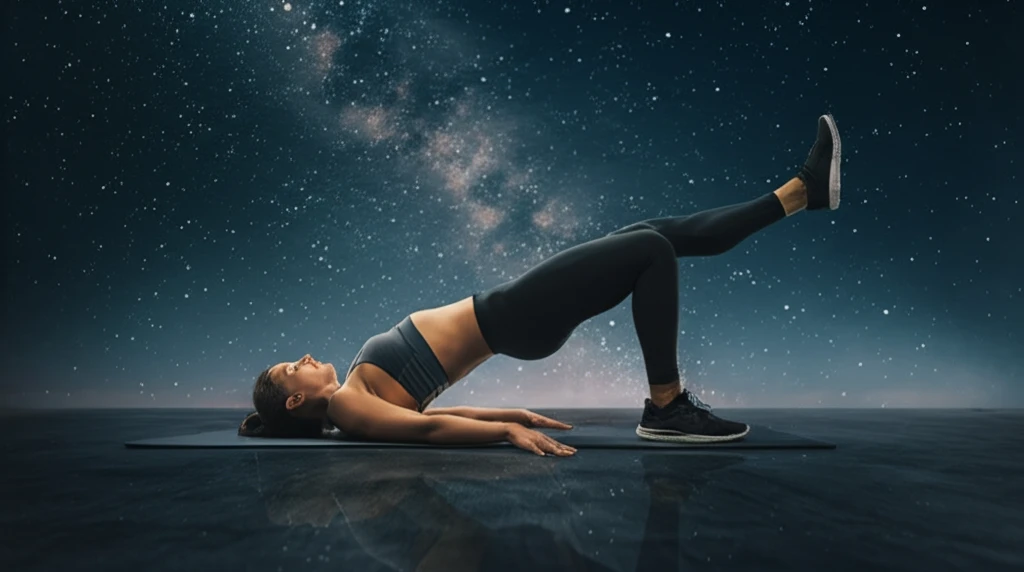
Unlock Glute Power: The Single-Leg Glute Bridge for a Stronger, Injury-Proof You

"Discover how this often-overlooked exercise can revolutionize your lower body strength, stability, and athletic performance."
In the quest for a strong and resilient body, it’s easy to get caught up in popular exercises like squats and deadlifts. But what about the unsung heroes – the exercises that quietly build a foundation of strength and stability? Enter the single-leg glute bridge, a powerhouse movement that targets your glutes, hamstrings, and core, all while enhancing balance and coordination.
Often overshadowed by its barbell-loaded cousin, the hip thrust, the single-leg glute bridge offers a unique advantage: it forces each side of your body to work independently, exposing weaknesses and imbalances that can lead to injuries. By mastering this exercise, you'll not only sculpt a firmer backside but also bulletproof your body against common aches and pains.
Whether you're a seasoned athlete, a fitness enthusiast, or simply someone looking to improve their overall well-being, the single-leg glute bridge deserves a place in your workout routine. Let's dive into the technique, benefits, and variations of this game-changing exercise.
A Big Muscle, a Unilateral Fix
The glutes are the largest muscle group in the body, yet YouTube creator content aimed at people over 50 warns that weak glutes may be too weak to protect the hips and spine as we age. The single-leg glute bridge is a bodyweight strength move that targets the gluteus maximus while also recruiting the hamstrings (semitendinosus, semimembranosus, and biceps femoris) and spinal erector muscles (spinalis thoracis, longissimus thoracis, and iliocostalis), according to the Calistree exercise database. Its dynamic, one-legged nature makes it a practical way to strengthen these supporting muscles without equipment. Because much of the available guidance exists as short-form video and exercise-library entries rather than large population studies, the strongest claims rest on what individual sources report.
Form, Stabilizers, and the Knee-Angle Variable
The standard single-leg glute bridge is a conventional glute bridge performed with one leg extended straight out, which shifts more of the body's weight to one side and raises intensity without needing additional weight (Inspire US). Lifting one leg also forces the stabilizer muscles to activate to a greater extent, including the abductors and gluteus medius (SET FOR SET). Practitioners note the move looks simple but that getting it right makes all the difference when it comes to feeling the glutes do the work (TikTok). Research adds a refinement: flexing the active knee to 135 degrees instead of 90 degrees minimizes hamstring activity while maintaining high levels of gluteal activation, making the bridge better suited for preferential gluteal activation (PubMed).
From Simple Bridge to Loaded Progressions
Early instructional material focused on the basic bridge, but the single-leg version quickly became a building block for more advanced progressions. The single-leg yoga ball glute bridge, for example, is described as an advanced variation in which one leg stabilizes the lower body on an exercise ball while the other leg is held up off the ball (Inspireful Women). Gym-based adaptations have also emerged, such as a Smith machine single-leg glute bridge designed to isolate the mid and upper divisions of the gluteus maximus and improve pelvic control (Pinterest). These progressions show a trajectory from simple bodyweight bridges toward loaded, stability-challenged variations.
Why Single-Leg Glute Bridges?
The single-leg glute bridge is a variation of the barbell hip thrust that involves unilateral hip extension. Glute bridge exercises are used as a means of strengthening the hip extensors: the gluteal and hamstring muscle groups. In addition to activating the posterior musculature of the hip, single-leg glute bridges require stabilization of both the hip abductors and core muscles through isometric contraction. Because strong gluteal and hamstring muscle groups are imperative in lateral stabilization and explosive linear movement, the single-leg glute bridge is beneficial to the general population and athletes in a variety of sports, such as soccer, football, and rugby.
- Gluteus Maximus: The prime mover for hip extension and lateral rotation.
- Gluteus Medius & Minimus: Essential for hip abduction and pelvic stability.
- Hamstrings (Biceps Femoris, Semitendinosus, Semimembranosus): Assist with hip extension and knee flexion.
- Core Muscles (Lumbar Erector Spinae, Lumbar Multifidus): Provide spinal stability and prevent excessive arching.
New Variations and Runner-Focused Cues
Current guidance continues to expand the single-leg bridge into new variations, including the elevated single-leg glute bridge and the single-leg glute bridge hold (Pinterest; Mindcore Fitness). The hold version is described as a glute bridge held on one leg that doubles the load through a single glute while adding a balance challenge (Mindcore Fitness). Form cues emphasize bridging up, extending one leg straight, and keeping the hips level so the free side does not drop (Mindcore Fitness). Reviews also position the exercise within strength training for runners, connecting single-leg bridge work to strength training and distance-running goals (Pinterest).
Where a Bridge May Fall Short
According to Nutracheck's move-of-the-month feature, a classic glute bridge on two legs will target the hamstrings and glutes, with the lower body doing most of the work and less use of the core muscles. The source recommends repeating the single-leg version for 2-3 sets on each leg. Because this evaluation focuses on which muscles are emphasized, it serves as a reminder that the single-leg bridge's value depends on the training goal, such as glute and hamstring strength versus core activation. Only one source informs this subsection, so these points reflect that source's reporting rather than a settled consensus.
Bridges vs. Squats and Frog Pumps
A bodyweight comparison from Womens Best suggests pairing up-and-down squats with glute bridge abductions or single-leg glute bridges to intensify a workout without adding weights (TikTok). A separate comparison notes that frog pumps isolate the glutes a bit more than a standard glute bridge, whereas the glute bridge activates both the glutes and other muscles (Pinterest). Taken together, the single-leg glute bridge sits between these options: it keeps the compound, multi-muscle nature of a bridge while concentrating load onto one working leg. Sources differ in emphasis, so these are presented as reported comparisons rather than head-to-head results.
Elevate Your Training
The single-leg glute bridge is more than just an exercise; it's an investment in your long-term health, performance, and well-being. By incorporating this movement into your routine and progressing strategically, you'll unlock a new level of lower body strength, stability, and resilience. So, ditch the excuses, embrace the challenge, and get ready to feel the power of your glutes like never before!
What the Evidence Collectively Suggests
Across the available material, the single-leg glute bridge is consistently described as a versatile, equipment-free way to load one glute at a time and challenge stability. Commentary broadly agrees that unilateral bridge work can support glute development and injury prevention, though the specific claims vary by source. Readers should treat named benefits and cues as guidance from individual coaches, databases, and fitness publishers rather than as findings from large controlled trials.
Growing Popularity and Injury-Prevention Promise
Single-leg glute bridge content continues to grow in popularity, with exercise-benefit collections and runner-focused roundups featuring the movement prominently (Pinterest; Runner's World). Runner's World includes the single-leg glute bridge among 13 hamstring exercises recommended to help build strength and ward off injury (Runner's World). Interest is also expanding into related progressions such as the feet-elevated glute bridge (Pinterest). These patterns suggest the unilateral bridge will remain a staple in glute- and hamstring-focused training programs.
Access, Consistency, and Real Constraints
While the single-leg glute bridge is widely recommended, the broader picture is shaped by real-world constraints such as limited access to gyms and equipment, which is partly why bodyweight variations remain popular. Consistency and proper form, rather than any single exercise, are generally what drive results in glute training. Without dedicated research cited for this subsection, these points should be read as general observation rather than verified findings.
A Beginner-Friendly Movement Anyone Can Start
BB Company's practical guide emphasizes how accessible the single-leg glute bridge is: lie on the floor face up with knees bent and feet flat, place hands at your sides so your fingertips come close to grazing your heels, and engage the core to press the low back against the floor. This step-by-step setup makes the exercise easy for beginners to start without any equipment. Such guidance reflects the exercise's real-world appeal, a simple, repeatable movement anyone can use to work toward the glute development the source promotes.