
Laser Texturing on Aluminum Alloy Surface

Laser Texturing: How It's Changing Aluminum Surfaces

"Discover how laser technology can modify aluminum alloy surfaces, enhancing their properties and expanding their potential uses."


In recent years, the manipulation of surface properties has garnered significant attention across various scientific and industrial sectors. The ability to control how a material interacts with its environment—whether it's repelling water, resisting corrosion, or reducing friction—opens up a wide array of possibilities. From self-cleaning surfaces to advanced aerospace components, the potential applications are vast and transformative.

Among the various techniques available for surface modification, laser texturing stands out as a promising method. This process involves using laser beams to create precise patterns and textures on a material's surface, altering its physical and chemical characteristics. Unlike traditional methods, laser texturing offers a non-contact, cost-effective, and highly customizable approach to surface engineering.

This article explores the use of laser texturing to modify aluminum alloy surfaces, specifically focusing on how this technology can enhance their properties and broaden their applications. We'll delve into the science behind laser texturing, examine the factors that influence its effectiveness, and discuss the potential impact of this innovative technique on industries ranging from transportation to aerospace.

What is Laser Texturing and How Does It Work?

Laser Texturing on Aluminum Alloy Surface

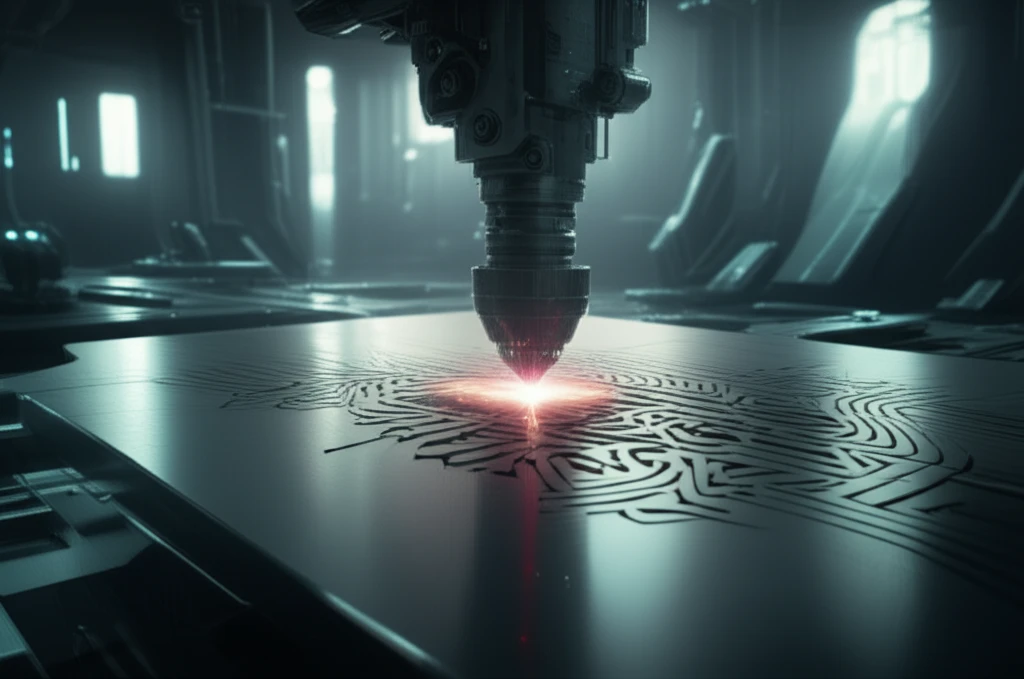
Laser texturing is a surface modification technique that utilizes laser radiation to create controlled patterns on a material's surface. The process involves directing a focused laser beam onto the material, causing localized heating, melting, and vaporization. By carefully controlling the laser's parameters, such as power, speed, and pulse duration, it's possible to create a wide range of textures, from micro-grooves to complex three-dimensional structures.

The key advantage of laser texturing lies in its versatility and precision. Unlike traditional methods, such as chemical etching or mechanical abrasion, laser texturing offers a non-contact approach that minimizes the risk of contamination or damage to the underlying material. Additionally, the process can be easily automated and customized, allowing for the creation of unique surface textures tailored to specific applications.

Here are some common texturing methods:
  • Chemical Deposition: Deposition from the gas phase to create nanotubes or nanorods.
  • Electrochemical Methods: Depositing clusters of metals or metal oxides.
  • Sol-Gel Materials: Using sol-gel materials based on metal alkoxides.
  • Template Methods: Employing membranes with ordered pores.
  • Chemical Modification: Altering the surface with hydrophobic molecules.
  • Reactive Ion Etching: Using reactive plasma etching with chemical protection.
  • Double Texturing: Combining micro- and nanoscale textures.
  • Lithographic Methods: Using templates to define surface topology.
  • Laser Irradiation: Changing surface morphology with pulsed laser radiation.
The effectiveness of laser texturing depends on several factors, including the properties of the material being treated, the parameters of the laser beam, and the surrounding environment. By carefully optimizing these variables, it's possible to achieve a wide range of surface modifications, from increased hydrophobicity (water-repellency) to enhanced adhesion.

The Future of Laser-Textured Surfaces

Laser texturing represents a significant advancement in surface engineering, offering a versatile and precise method for modifying material properties. As research continues and technology evolves, we can expect to see even more innovative applications of laser texturing across a wide range of industries. From enhancing the performance of aerospace components to creating self-cleaning surfaces for everyday use, the possibilities are endless.

About this Article -

This article was crafted using a human-AI hybrid and collaborative approach. AI assisted our team with initial drafting, research insights, identifying key questions, and image generation. Our human editors guided topic selection, defined the angle, structured the content, ensured factual accuracy and relevance, refined the tone, and conducted thorough editing to deliver helpful, high-quality information.See our About page for more information.

Everything You Need To Know

1

What is Laser Texturing, and how does it fundamentally differ from traditional surface modification techniques?

Laser texturing is a surface modification technique that utilizes laser radiation to create controlled patterns on a material's surface. Unlike traditional methods like chemical etching or mechanical abrasion, Laser Texturing is a non-contact process. This non-contact approach minimizes the risk of contamination or damage to the underlying material. This method also offers a highly customizable approach to surface engineering, allowing for the creation of unique surface textures tailored to specific applications.

2

How does Laser Texturing enhance the properties of Aluminum alloy surfaces?

Laser texturing enhances Aluminum alloy surfaces by creating specific patterns using a focused laser beam, which causes localized heating, melting, and vaporization. This process can alter the surface's physical and chemical characteristics. The modification can result in improved properties like increased hydrophobicity (water-repellency) and enhanced adhesion. These modifications open up possibilities for a wide range of applications, from improving corrosion resistance to enhancing the performance of aerospace components.

3

What are the key factors that influence the effectiveness of Laser Texturing on materials like Aluminum alloys?

The effectiveness of Laser Texturing depends on several factors. These include the properties of the material being treated, the parameters of the laser beam (such as power, speed, and pulse duration), and the surrounding environment. The material properties influence how the laser interacts with the surface, the laser parameters control the precision and type of texture created, and the environment can affect the process by influencing heat dissipation and other reactions on the surface.

4

Can you provide a few examples of how Laser Texturing is being applied or could be applied in different industries?

Laser Texturing has diverse applications across several industries. In aerospace, it can enhance the performance of components by improving their resistance to wear and corrosion. In transportation, it could create self-cleaning surfaces on vehicles or improve the efficiency of engine parts. Furthermore, in various sectors, the creation of micro-grooves or complex three-dimensional structures using Laser Texturing can lead to advanced material solutions.

5

How does Laser Texturing compare to other surface texturing methods mentioned, and what are its primary advantages?

Laser Texturing differs from other texturing methods like Chemical Deposition, Electrochemical Methods, Sol-Gel Materials, Template Methods, Chemical Modification, Reactive Ion Etching, Double Texturing, Lithographic Methods, and Laser Irradiation primarily in its precision, versatility, and non-contact nature. Compared to Chemical Deposition and Electrochemical Methods, Laser Texturing offers greater control over the texture created. Unlike methods using Sol-Gel Materials and Template Methods, Laser Texturing is a direct process that doesn't require the creation of materials or templates. The primary advantages of Laser Texturing include the ability to create unique, customized textures; it is non-contact, reducing contamination risks; and it can be easily automated. This makes it ideal for industries that require high precision and customization in their materials.

Newsletter Subscribe

Subscribe to get the latest articles and insights directly in your inbox.