
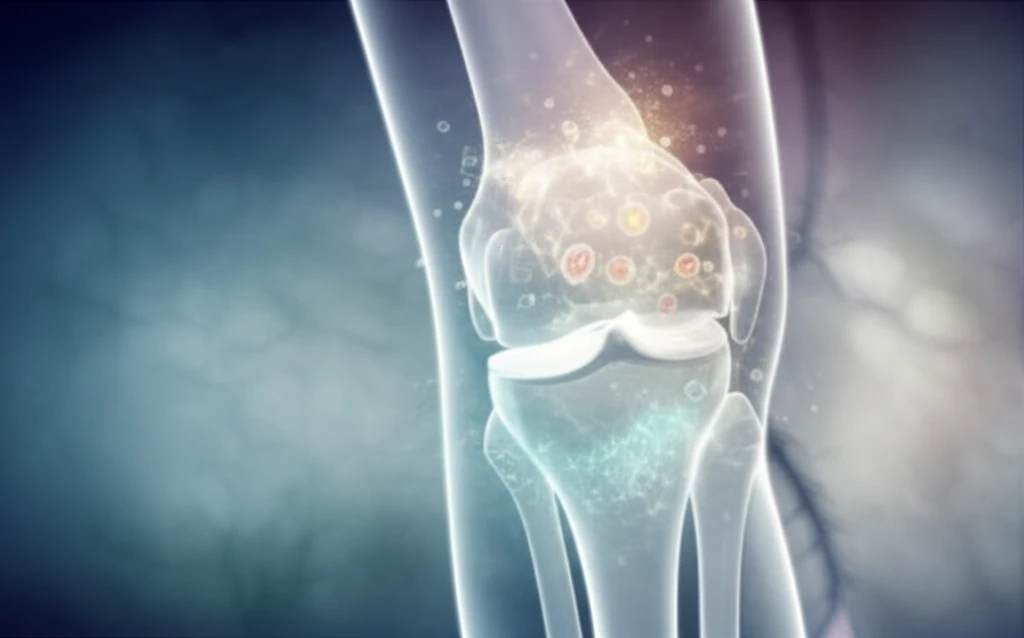
Knee joint being healed by orthobiologics.

Knee Cartilage Repair: Can Orthobiologics Help You Heal?

"Exploring the use of orthobiologics for focal articular cartilage defects and how they could revolutionize knee treatment."


Knee pain can really put a damper on your day-to-day life, especially when it stems from cartilage issues. Focal articular cartilage defects, those small but mighty problem spots in your knee, are super common. Left unchecked, they can lead to more than just discomfort; we're talking dysfunction, joint deterioration, and even osteoarthritis. Traditional treatments have their limits, which is why there's so much buzz around biologic augmentation—using your body's own healing powers to fix things up.

Orthobiologics are emerging as a promising approach to treating these defects. These treatments aim to enhance the body's natural healing processes to repair damaged cartilage. Whether used as a standalone treatment or to boost the effects of surgery, orthobiologics offer a range of options for those seeking relief from knee cartilage issues.

In this article, we'll explore how orthobiologics are used to treat focal chondral defects, examining the latest research and offering recommendations to help you understand if this innovative approach is right for you. We'll cover everything from bone marrow aspirate concentrate (BMAC) to platelet-rich plasma (PRP), giving you a clear picture of what these treatments involve and what they can achieve.

Understanding Focal Articular Cartilage Defects

Knee joint being healed by orthobiologics.

Focal articular cartilage defects are localized areas of damage to the cartilage in the knee. These defects can result from injury, overuse, or general wear and tear. The cartilage, a smooth, protective tissue that covers the ends of bones in a joint, allows for nearly frictionless movement. When this cartilage is damaged, it can lead to pain, swelling, and reduced joint function.

These defects are more common than you might think. Studies show a significant percentage of people undergoing knee arthroscopies have chondral lesions, with a large portion classified as localized focal osteochondral lesions. If left untreated, these lesions can worsen, leading to further cartilage degeneration and the onset of osteoarthritis.

  • Common Symptoms: Pain, swelling, and stiffness in the knee.
  • Potential Causes: Injury, repetitive stress, or age-related degeneration.
  • Risk Factors: High-impact activities, obesity, and previous knee injuries.
  • Why Early Intervention Matters: Prevents further damage and reduces the risk of osteoarthritis.
Given that cartilage has limited ability to heal on its own, early intervention is key. The goal of treatment is to regenerate natural hyaline cartilage, which is well-integrated with the surrounding healthy tissue. Orthobiologics offer a way to achieve this by stimulating the body’s own repair mechanisms.

The Future of Knee Cartilage Repair

Orthobiologics are revolutionizing the treatment of focal articular cartilage defects, offering new hope for those seeking to avoid or delay more invasive surgeries. While the research is promising, more studies are needed to fully understand the long-term benefits and optimal applications of these treatments. The future of knee cartilage repair looks bright, with orthobiologics leading the way toward more effective, natural, and personalized solutions.

About this Article -

This article was crafted using a human-AI hybrid and collaborative approach. AI assisted our team with initial drafting, research insights, identifying key questions, and image generation. Our human editors guided topic selection, defined the angle, structured the content, ensured factual accuracy and relevance, refined the tone, and conducted thorough editing to deliver helpful, high-quality information.See our About page for more information.

This article is based on research published under:

DOI-LINK: 10.1016/j.csm.2018.09.001, Alternate LINK

Title: Orthobiologics For Focal Articular Cartilage Defects

Subject: Physical Therapy, Sports Therapy and Rehabilitation

Journal: Clinics in Sports Medicine

Publisher: Elsevier BV

Authors: Taylor M. Southworth, Neal B. Naveen, Benedict U. Nwachukwu, Brian J. Cole, Rachel M. Frank

Published: 2019-01-01

Everything You Need To Know

1

What exactly are focal articular cartilage defects and why are they a problem?

Focal articular cartilage defects are localized areas of damage to the cartilage in the knee, often resulting from injury, overuse, or general wear and tear. The cartilage, a smooth, protective tissue, allows for nearly frictionless movement. When damaged, it leads to pain, swelling, and reduced joint function. Untreated focal articular cartilage defects can lead to further cartilage degeneration and the onset of osteoarthritis. Early intervention using orthobiologics aims to regenerate natural hyaline cartilage, which integrates well with surrounding healthy tissue. Orthobiologics stimulate the body’s own repair mechanisms.

2

Why is there so much interest in orthobiologics for treating knee cartilage issues?

Orthobiologics are important because they offer a promising approach to treating focal articular cartilage defects by enhancing the body's natural healing processes. These treatments, such as platelet-rich plasma (PRP) and bone marrow aspirate concentrate (BMAC), can be used alone or to boost surgical outcomes. They aim to regenerate natural hyaline cartilage, which is well-integrated with the surrounding healthy tissue, potentially avoiding or delaying more invasive surgeries.

3

What are platelet-rich plasma (PRP) and bone marrow aspirate concentrate (BMAC), and how do they work?

Platelet-rich plasma (PRP) and bone marrow aspirate concentrate (BMAC) are types of orthobiologics used to treat focal articular cartilage defects. PRP involves concentrating platelets from your own blood and injecting them into the damaged area to stimulate healing. BMAC involves extracting bone marrow, concentrating the stem cells, and injecting them into the defect to promote cartilage regeneration. Both treatments aim to enhance the body's natural healing processes and regenerate hyaline cartilage. More research is needed to determine the long-term benefits and optimal applications of each treatment.

4

What is the ultimate aim of using orthobiologics to treat cartilage defects in the knee?

The main goal of using orthobiologics like platelet-rich plasma (PRP) and bone marrow aspirate concentrate (BMAC) is to regenerate natural hyaline cartilage in the knee. Hyaline cartilage is well-integrated with the surrounding healthy tissue and allows for nearly frictionless movement. Orthobiologics offer a way to achieve this by stimulating the body’s own repair mechanisms. Regenerating hyaline cartilage can help reduce pain, swelling, and stiffness, and prevent further cartilage degeneration and the onset of osteoarthritis.

5

Are orthobiologics a guaranteed fix for knee cartilage problems, or are there limitations to consider?

While the existing research on orthobiologics for treating focal articular cartilage defects is promising, it's important to remember that it's not a one-size-fits-all solution. Factors such as the size and location of the defect, your age, and overall health can influence the success of the treatment. More research is needed to fully understand the long-term benefits and optimal applications of these treatments, including platelet-rich plasma (PRP) and bone marrow aspirate concentrate (BMAC). Discuss your specific situation with an orthopedic specialist to determine if orthobiologics are the right option for you.

Newsletter Subscribe

Subscribe to get the latest articles and insights directly in your inbox.