
Eagle's Syndrome: A Comprehensive Guide to Symptoms, Diagnosis, and Effective Treatments

"Navigate the complexities of Eagle's Syndrome with insights into identifying symptoms and exploring surgical and non-surgical solutions for lasting relief."
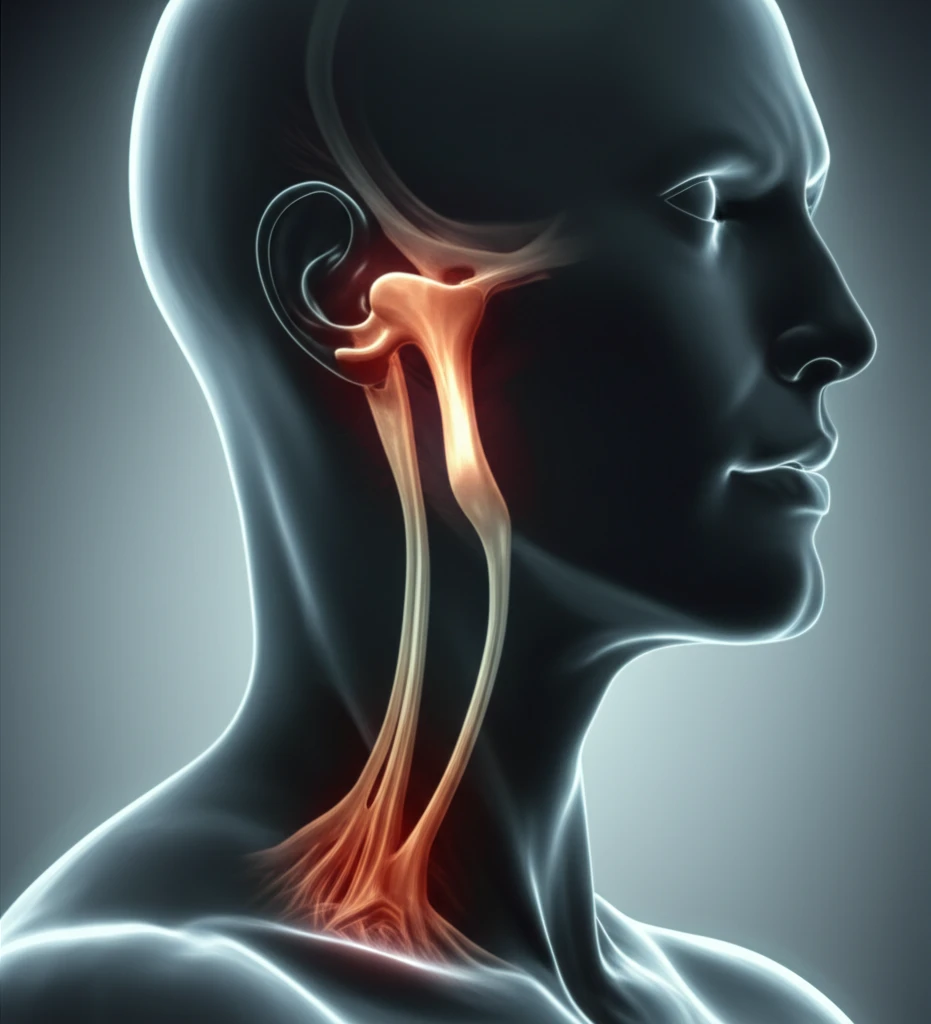
Eagle's Syndrome, first identified in 1937, encompasses a variety of symptoms affecting the cervicopharyngeal region. This condition occurs when patients experience neck pain, globus sensation (the feeling of a lump in the throat), difficulty turning the head, dysphagia (difficulty swallowing), or other discomforts. These symptoms are often linked to an elongation or enlargement of the styloid bone, or calcification of the stylohyoid ligament.
While radiographic findings might reveal styloid elongation or abnormalities, only a small fraction of those with these findings will actually experience symptoms. The challenge lies in identifying and effectively treating those who do.
Since Dr. Eagle's original work, styloidectomy—surgical removal of the styloid process—has become a well-documented treatment for alleviating Eagle's Syndrome symptoms. However, there remains a need for more information on optimal patient selection and formalized outcome tracking. This guide provides insights from a recent five-year study on patients undergoing styloidectomy for Eagle's Syndrome.
Clinical Presentation and Treatment
Eagle syndrome is associated with elongation of the styloid process or calcification of the stylohyoid ligament. Reported symptoms include orofacial pain, neck or throat pain, pain radiating to the ear, and dysphagia. The Cleveland Clinic reports that surgery can often cure the condition, although the clinical presentation may include nerve pain in the face, throat, or neck.
Origins of Eagle Syndrome
Watt W. Eagle first described Eagle syndrome in 1937, noting a correlation between pain and abnormalities in the stylohyoid complexes. The condition is generally characterized by an elongated styloid process greater than 25 mm and/or calcification of the stylohyoid ligament. Later imaging descriptions have documented ossification of the stylohyoid complex, including a 2022 report of a 47-year-old man whose CT scan showed a left-sided ossified complex merged with the lesser cornu of the hyoid bone.
Understanding Eagle's Syndrome: Symptoms, Diagnosis, and Demographics
A retrospective review was conducted, examining data from 32 patients who underwent styloidectomy for Eagle's Syndrome between November 2010 and June 2015. The data collected included age, sex, race, BMI, affected side, and tonsillectomy history. In addition to the retrospective data, a prospective survey was administered to patients undergoing surgery for Eagle's Syndrome from late 2013 through June 2015. This survey utilized a scale to assess 17 symptoms, ranging from 0 (no problem) to 4 (problem as bad as it can be).
- Demographics: The majority of patients were female (68.8%) and Caucasian (90.6%). The mean age was 46.0 years, with a mean BMI of 26.1 kg/m². A history of tonsillectomy was reported in 31.3% of patients.
- Common Symptoms: The most severe preoperative symptoms included neck pain, otalgia (ear pain), globus sensation, facial pain, headache, and discomfort when turning the neck.
- Styloid Length: The average styloid length was 45.3 mm.
Current Evidence and Outcomes
Recent literature describes Eagle syndrome across classical pharyngeal, vascular, and jugular phenotypes, with styloidectomy identified as the most consistently supported definitive intervention in the cited scoping review. That review reports symptom-improvement rates of 94–97% for minimally invasive cervical approaches and 94.4% sensitivity for lidocaine infiltration testing in predicting surgical outcome. A single-center retrospective study of minimally invasive cervical styloidectomy reported significant pain reduction in 94.2% of patients and overall success in 97.1%.
Diagnosis and Radiological Findings
A comparison of intraoral and extraoral approaches emphasizes the importance of a thorough history of present illness and a comprehensive review of temporomandibular joint signs and symptoms. The same source reports that pain elicited during the relevant examination is pathognomonic of Eagle syndrome or stylohyoid-process elongation. However, radiological elongation or calcification may sometimes be an incidental finding rather than the cause of symptoms.
Making Informed Decisions About Eagle's Syndrome Treatment
This study confirms that styloidectomy can effectively and reliably improve symptoms associated with Eagle's Syndrome when patients are appropriately selected. If you are experiencing symptoms such as neck pain, difficulty swallowing, or globus sensation, consult with a healthcare professional to explore diagnostic and treatment options.
Neurological and Vascular Presentations
Eagle syndrome can result from an elongated styloid process affecting the carotid arteries and cranial nerves. Reported symptoms include pain, dysphagia, tinnitus, and paresthesia in the classic subtype, while the vascular subtype may involve neurovascular events. Symptoms may be triggered by head movements or occur spontaneously, and the condition remains underappreciated in the neurological community.
Symptoms in Individual Cases
Case reports illustrate how Eagle syndrome can produce varied cervicofacial symptoms through compression of adjacent neurovascular structures. A 45-year-old man was reported with chronic headaches, cervical pain worsened by head movements, and pain during mastication. Other reported presentations include recurrent throat pain, foreign-body sensation, dysphagia, facial pain, and pain provoked by chewing, swallowing, or phonation.