
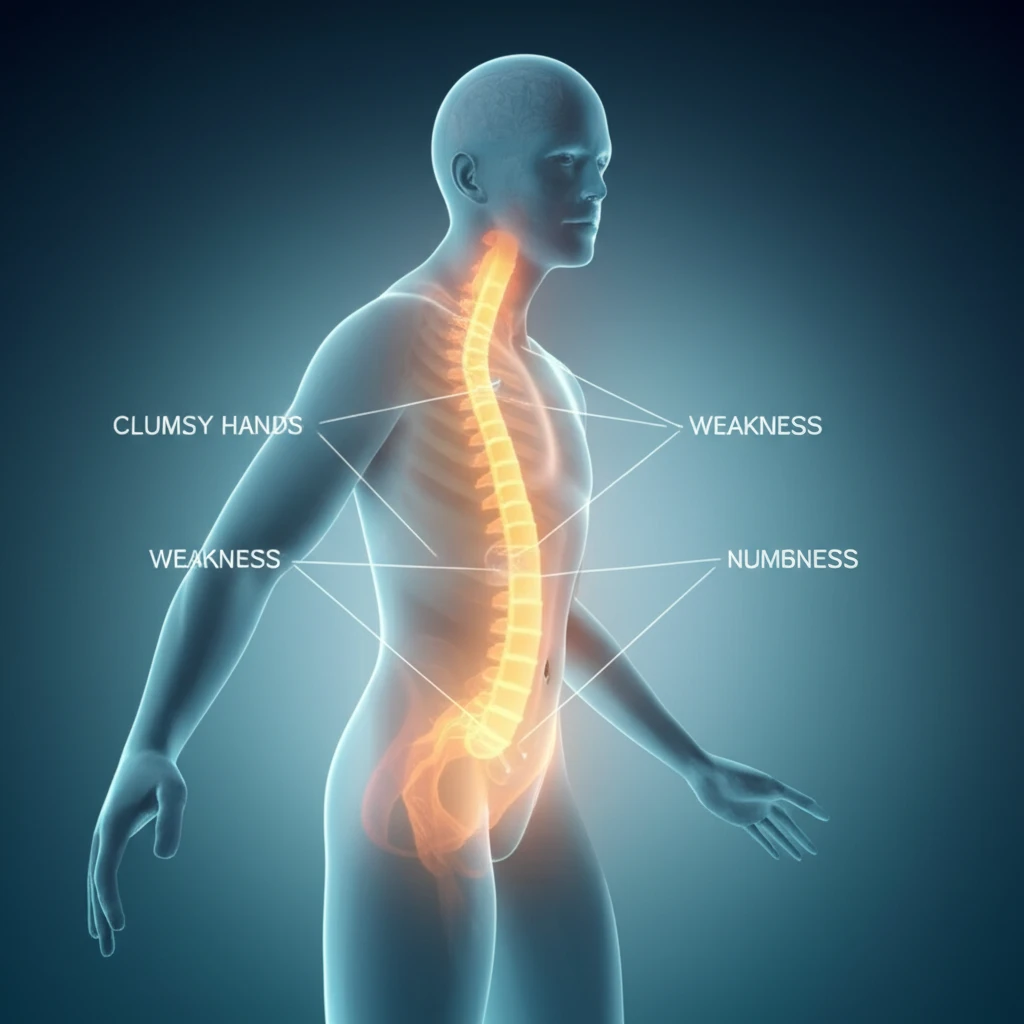
Is It Just a Stiff Neck? How to Spot Cervical Spondylotic Myelopathy Early

"A simple 4-question quiz could help you identify early warning signs of CSM, a condition that can lead to serious spinal cord issues if left untreated."
That nagging neck stiffness... is it just a part of getting older, or could it be something more? Cervical spondylotic myelopathy (CSM) is a condition where the spinal cord in your neck gets compressed, often due to age-related changes. This compression can lead to neuronal damage and all sorts of problems with movement, sensation, and even balance.
The tricky thing about CSM is that it often creeps up slowly. Recognizing it early is crucial, as early intervention can make a huge difference in preventing further decline. While it's not something to panic about, being informed can empower you to take proactive steps for your health.
Researchers at the University of Southern California have developed a simple, 4-question screening tool, nicknamed the DOWN questionnaire, to help identify individuals who may be at risk for CSM. Let’s dive into this tool and understand how it can help you stay ahead of potential spinal cord issues.
Cervical Spine Context
The cervical spine consists of the first seven stacked vertebral bones and is commonly called the neck. Cervical pain is common and may result from muscle strain, poor posture, injury, or underlying medical conditions. Cervical spine injuries are often reported around C4 and C5, while neurological injury is described as uncommon in injuries at the second cervical vertebra.
Clinical Assessment
Assessment of neck symptoms generally requires attention to the patient's history, symptom pattern, and physical findings. However, a short description of stiffness alone may not establish the underlying cause. Because neck discomfort can arise from several conditions, clinical interpretation may remain limited without a fuller evaluation.
Recognizing Cervical Disorders
Descriptions of cervical spine disorders have developed around conditions such as cervical radiculopathy, cervical spondylosis, and cervical disc herniation. These categories help organize different causes of neck pain and related symptoms. Treatment options depend on the cause identified.
The DOWN Questionnaire: 4 Questions That Could Change Everything
The DOWN questionnaire is designed to be a quick and easy way to assess your risk of CSM. It focuses on common symptoms that people with CSM often experience. Think of it as a first step – not a definitive diagnosis, but a helpful flag that suggests further evaluation might be needed.
- Dropping things or feeling clumsy in your hands?
- Feeling off-balance or unsteady?
- Weakness in one or both arms or hands?
- Numbness or tingling in your arms or hands?
Evolving Evidence
Current discussions of cervical spondylotic myelopathy should be interpreted cautiously because evidence and clinical understanding can vary. Research reviews may help clarify how symptoms, examinations, and imaging fit together, but no single finding necessarily explains every patient's experience. Ongoing evaluation remains important when symptoms change or persist.
Limits of Simple Explanations
Not every stiff or painful neck reflects the same underlying problem. Symptoms may overlap across different neck conditions, which can make early interpretation difficult. A simple explanation based only on discomfort may therefore miss clinically important differences.
Comparing Presentations
Comparing neck complaints requires more than measuring pain intensity alone. The pattern, persistence, and accompanying symptoms may distinguish one cervical problem from another, although these features are not always definitive by themselves. Careful comparison can support evaluation without replacing clinical judgment.
Empower Yourself: Early Detection for a Healthier Spine
CSM can significantly impact your quality of life, affecting everything from your ability to perform everyday tasks to your emotional well-being. The DOWN questionnaire offers a simple yet powerful tool for early detection, prompting timely discussions with your healthcare provider and potentially preventing further progression of the condition. Don't let neck stiffness and subtle changes hold you back – take control of your spinal health!
Putting Symptoms in Context
A stiff neck should be considered in the broader context of the person's symptoms and medical history. Cervical conditions can share overlapping features, so isolated discomfort may provide limited information. A balanced interpretation avoids assuming that every neck symptom has one cause.
Future Directions
Future work may improve how clinicians recognize meaningful symptom patterns at an earlier stage. Better integration of history, examination, and diagnostic information could support more consistent assessment. Until such approaches are established, early concerns should be interpreted carefully rather than through symptoms alone.
Challenges in Recognition
Recognizing cervical disease can be difficult because neck symptoms are common and may have multiple explanations. This overlap can complicate decisions about when a complaint requires further evaluation. Clear communication about changing or persistent symptoms remains an important part of care.
Living With Neck Symptoms
Neck pain and stiffness can affect daily comfort and raise understandable concerns about what the symptoms mean. People may initially attribute these sensations to posture, strain, or a minor injury. Paying attention to the overall pattern of symptoms can help support a more informed conversation with a healthcare professional.