
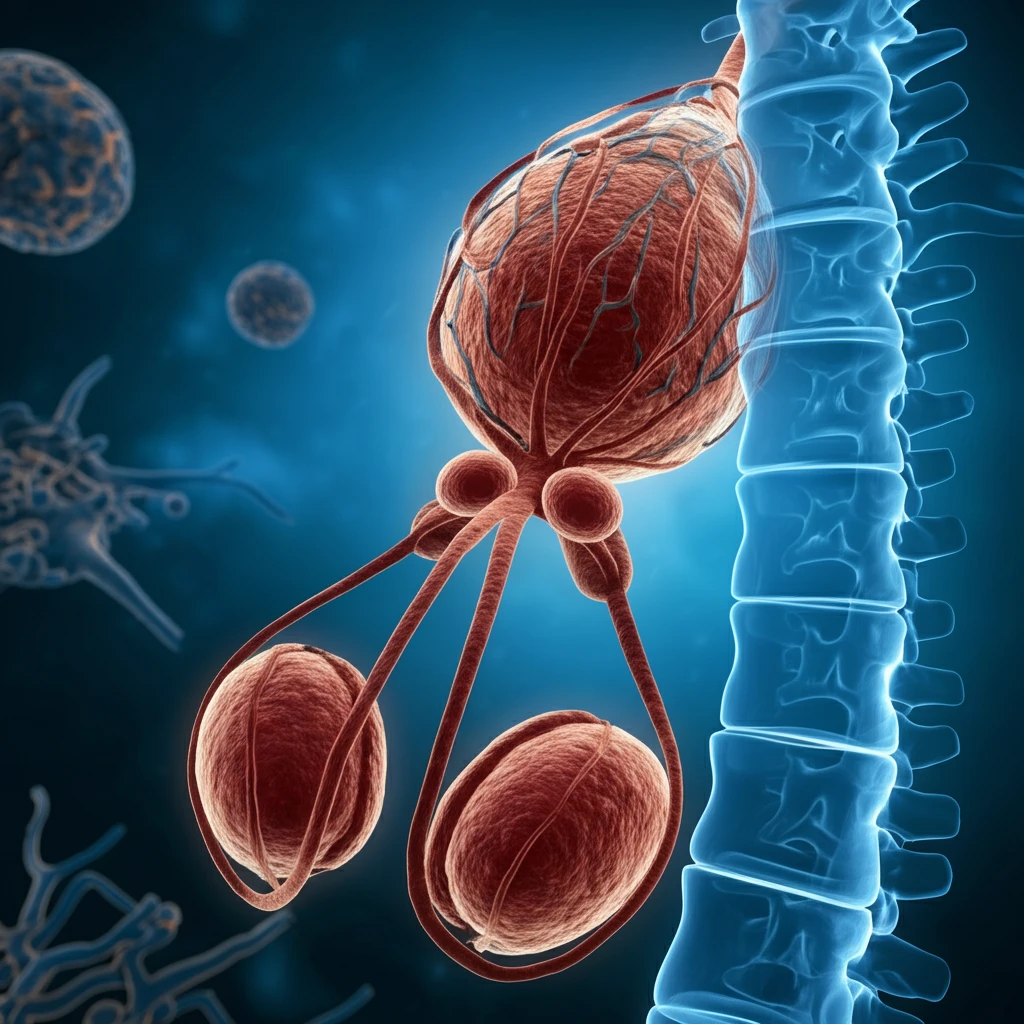
Uncommon Cancer Presentations: When Testicular Cancer Mimics Spinal Cord Issues

"A Case Study Unveils the Importance of Recognizing Atypical Cancer Symptoms for Timely Intervention and Improved Outcomes."
Cancer is notorious for its diverse manifestations, often challenging diagnostic accuracy. While many cancers follow typical patterns of spread and symptom presentation, some can present in extremely unusual ways, leading to delays in diagnosis and treatment. One such rare occurrence is malignant spinal cord compression syndrome (MSCCS) arising as the first sign of testicular cancer. This article delves into a case study that underscores the importance of considering atypical presentations to improve patient outcomes.
Malignant spinal cord compression syndrome (MSCCS) affects a small percentage of cancer patients, ranging from 2.5% to 5%. In a smaller subset, about 20%, MSCCS is the first indication of an underlying malignancy. Germ cell tumors (GCTs), particularly testicular cancer, are infrequent causes of MSCCS, occurring in only about 1.7% of patients. Prompt diagnosis and intervention are critical in these cases to prevent irreversible neurological damage and improve the chances of successful treatment.
This article presents a case of a young man whose initial symptoms pointed towards spinal cord issues but were ultimately traced back to testicular cancer. This scenario emphasizes the necessity for a broad diagnostic approach, especially in younger individuals, to ensure timely and effective management of such rare cancer presentations.
Evidence Limitations
No subsection-specific sources were provided for current statistics or impact. Therefore, no reliable cancer incidence, diagnostic-delay, or patient-impact figures can be stated here. The clinical significance of testicular cancer mimicking spinal cord issues requires evidence from appropriate medical sources.
Source Mismatch
The supplied sources describe Microsoft Corporation, an American multinational technology company headquartered in Redmond, Washington, rather than approaches to diagnosing or treating testicular cancer. Microsoft offers products and services including Microsoft 365, Copilot, Teams, Xbox, Windows, Azure, and Surface. These materials do not establish accepted medical methods or limitations for evaluating spinal cord-like symptoms.
Historical Evidence Limitations
No subsection-specific historical sources were provided. As a result, this subsection cannot reliably identify milestones, foundational discoveries, or changes in the understanding of testicular cancer presentations. Appropriate medical and historical references would be needed to support those claims.
The Case: A Young Man's Unusual Symptoms
A 24-year-old man sought medical help at the emergency department, reporting a four-month history of pain and swelling in his left testicle. In the week before his visit, he developed progressive edema in his lower limbs, followed by dysesthesia (abnormal sensation) and paraparesis (partial paralysis) in the 48 hours leading up to his admission. He also reported urinary incontinence. The patient’s medical history was unremarkable, and he denied alcohol or drug use.
- Hemoglobin: 9.13 g/dL
- Leukocyte count: 11.9 K/μL
- Platelet count: 252 K/μL
- Glucose: 148 mg/dL
- BUN: 38 mg/dL
- Creatinine: 1.3 mg/dL
- AFP: 11.28 ng/mL
- LDH: 1687 U/L
- hCG: 10.05 IU/mL
Research Evidence Limitations
No subsection-specific research or review sources were provided. Accordingly, no claims about current studies, diagnostic advances, or recent reviews can be responsibly attributed here. Medical literature focused on testicular cancer and spinal or neurologic presentations would be required.
Limits of General Health Evidence
The supplied sources discuss probiotics rather than testicular cancer or spinal cord symptoms. Harvard Health reports potential probiotic benefits in conditions including diarrhea, irritable bowel syndrome, ulcerative colitis, and Crohn's disease, while Cleveland Clinic describes ongoing research and promising initial results for possible gut, skin, and vaginal health effects. These sources do not establish whether probiotics prevent, diagnose, or treat cancer, and they cannot support conclusions about failures in managing testicular cancer.
Insufficient Comparative Evidence
No subsection-specific sources were provided for comparative analysis. There is therefore no supported basis here for comparing diagnostic pathways, outcomes, or treatment strategies for testicular cancer with those for spinal cord disorders. Any such comparison should rely on directly relevant clinical evidence.
The Takeaway: Why Atypical Symptoms Matter
This case underscores the critical need for vigilance and a broad diagnostic consideration when evaluating patients with spinal cord compression symptoms, particularly in younger men. While MSCCS is a devastating condition, recognizing it as a potential initial manifestation of testicular cancer can lead to earlier diagnosis and treatment, ultimately improving patient outcomes. Maintaining a high index of suspicion and conducting thorough physical examinations, including genital exams, are essential steps in ensuring timely and appropriate care.
Synthesis Limitations
No subsection-specific sources were provided for synthesis or expert commentary. A supported synthesis cannot be made from the available material without introducing facts from outside the designated source list. Expert interpretation would require relevant oncology, neurology, and diagnostic literature.
Planning Rather Than Clinical Outlook
The supplied sources concern digital calendars rather than future directions in cancer diagnosis or treatment. Outlook provides access to a calendar for managing schedules, Google Calendar describes organizing plans and appointments, and Time and Date provides calendars for years and months worldwide. These materials do not support predictions about next frontiers in recognizing testicular cancer with spinal cord-like symptoms.
Contextual Evidence Limitations
No subsection-specific sources were provided for broader context or systemic challenges. Consequently, this subsection cannot substantiate claims about healthcare access, diagnostic systems, referral patterns, or disparities. Those issues require directly relevant health-services and oncology sources.
Organizational Human Impact
The supplied sources describe Softchoice, an IT solutions provider serving U.S. commercial and small and midsize business organizations and the Canadian market. Softchoice is identified as a World Wide Technology company that delivers secure cloud, artificial intelligence, software, and digital workplace services. The LinkedIn profiles of Jessica Medler concern professional information and do not provide evidence about the human impact of testicular cancer or spinal cord-like presentations.