
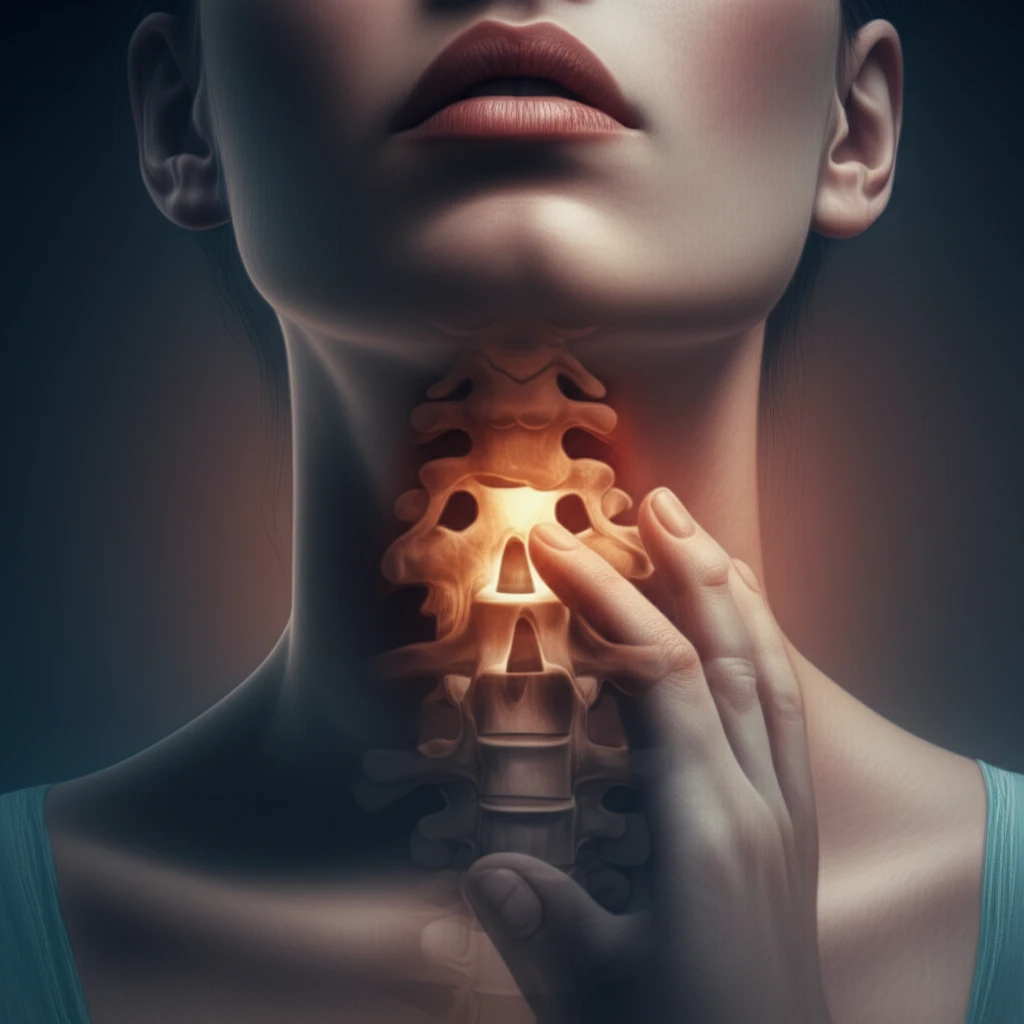
Swallowing Troubles? How Cervical Spine Issues Could Be the Culprit

"Uncover the surprising link between neck problems and dysphagia, and what you can do about it."
Swallowing is something most of us take for granted. This complex process involves a symphony of brain activity and muscle coordination, seamlessly moving food and liquids from our mouths to our stomachs. But what happens when this carefully orchestrated activity goes awry? When swallowing becomes difficult or painful, a condition known as dysphagia, it can significantly impact our quality of life.
Dysphagia is more common than you might think, affecting around 3% of the general population. That number jumps to approximately 10% in adults over the age of 65. Beyond the discomfort and inconvenience, dysphagia can lead to increased healthcare costs, longer hospital stays, and a greater reliance on health services. So, what's causing this disruption in the swallowing process?
The answer might lie in an unexpected place: your cervical spine. The bones in your neck are closely related to the structures involved in swallowing. Problems in your neck can directly affect your ability to swallow properly. Let's explore how conditions like cervical osteophytosis (bone spurs) and changes in spine posture can contribute to swallowing difficulties, and what can be done to find relief.
A Frequently Overlooked Cause
Cervical spine posture can affect swallowing in otherwise normal individuals by disturbing the sphincteric action of the larynx and upper esophageal sphincter. Cervical osteophytosis and abnormal cervical curvature may therefore be overlooked causes of swallowing disorders. One study reported that cervical osteophytes caused dysphagia in 11.7% of a studied population with a mean age of 79 ± 8 years, suggesting that this cause may be underrecognized.
When Surgery Is Considered
Conservative treatment is generally tried first for dysphagia associated with cervical osteophytes. According to one surgical report, surgery was performed when conservative care failed, dysphagia progressed, or another form of cervical spondylosis was present. Anterior cervical osteophyte excision is described as a common surgical method, and a 2019 series resected anterior osteophytes through a standard anterior approach in 14 consecutive patients treated between 2009 and 2015.
Recognizing the Mechanisms
Earlier literature described several mechanisms by which cervical osteophytes may cause dysphagia. These include direct compression by the osteophytes, irritation of the pharyngo-esophageal region, and cricopharyngeal spasm. Historical case reporting helped establish cervical osteophytes as a rare but identifiable cause, including a report of a 65-year-old man first seen in an otolaryngology clinic in June 1964.
What is Cervical Osteophytosis and How Does It Affect Swallowing?
Cervical osteophytosis is characterized by bony overgrowths, or bone spurs, on the vertebrae of the neck. These spurs can develop due to age-related degeneration, arthritis, or other factors. While some people with cervical osteophytes experience no symptoms, others may find that these bony growths interfere with the normal swallowing process.
- Direct Compression: Osteophytes can physically press on the pharynx (throat) and esophagus, making it difficult for food and liquids to pass through.
- Epiglottic Interference: Bone spurs at the C3-C4 level can disrupt the normal tilting of the epiglottis, a flap of cartilage that protects the airway during swallowing.
- Inflammation and Spasm: Osteophytes can trigger inflammation in the surrounding tissues, leading to cricopharyngeal spasm, a tightening of the muscle at the top of the esophagus.
Posture and Swallowing Safety
Recent reviews describe skeletal and cervical changes as factors that can impair swallowing function. Decreased cartilage elasticity and degenerative changes in the cervical spine may weaken airway-protection mechanisms, contributing to coughing and choking during swallowing. A systematic review also reports that cervical kyphosis has been associated with muscle weakness, difficulty with laryngeal elevation, and increased aspiration risk, while postural modification may help some patients with osteophyte-related swallowing disorders.
Common Findings, Different Severity
Cervical osteophytes are common in older adults and are often asymptomatic, but they can produce troubling dysphagia in some patients. Less commonly, they may also contribute to dyspnea and airway compromise. A 2025 study specifically evaluated clinical characteristics, surgical outcomes, and prognostic factors in patients with cervical spondylosis and dysphagia caused by anterior osteophytes, highlighting the need to distinguish symptom-free osteophytes from clinically significant disease.
Don't Overlook Your Neck: The Importance of Considering Cervical Spine Issues in Dysphagia
If you're experiencing swallowing difficulties, it's crucial to consider the possibility of cervical spine involvement. Cervical osteophytosis and abnormal cervical curvature are often overlooked as potential causes of dysphagia. A thorough evaluation, including a radiologic study of the cervical spine, can help identify these issues. Remember, postural modifications and targeted treatments can often provide relief and improve your ability to swallow comfortably.
Beyond Difficulty Swallowing
Advanced dysphagia caused by cervical osteophytosis can have serious effects on daily health. A reported case study identifies malnutrition, weight loss, and aspiration pneumonia as possible complications. These consequences illustrate why persistent swallowing difficulty may warrant evaluation for cervical osteophytosis rather than being treated as an isolated inconvenience.