
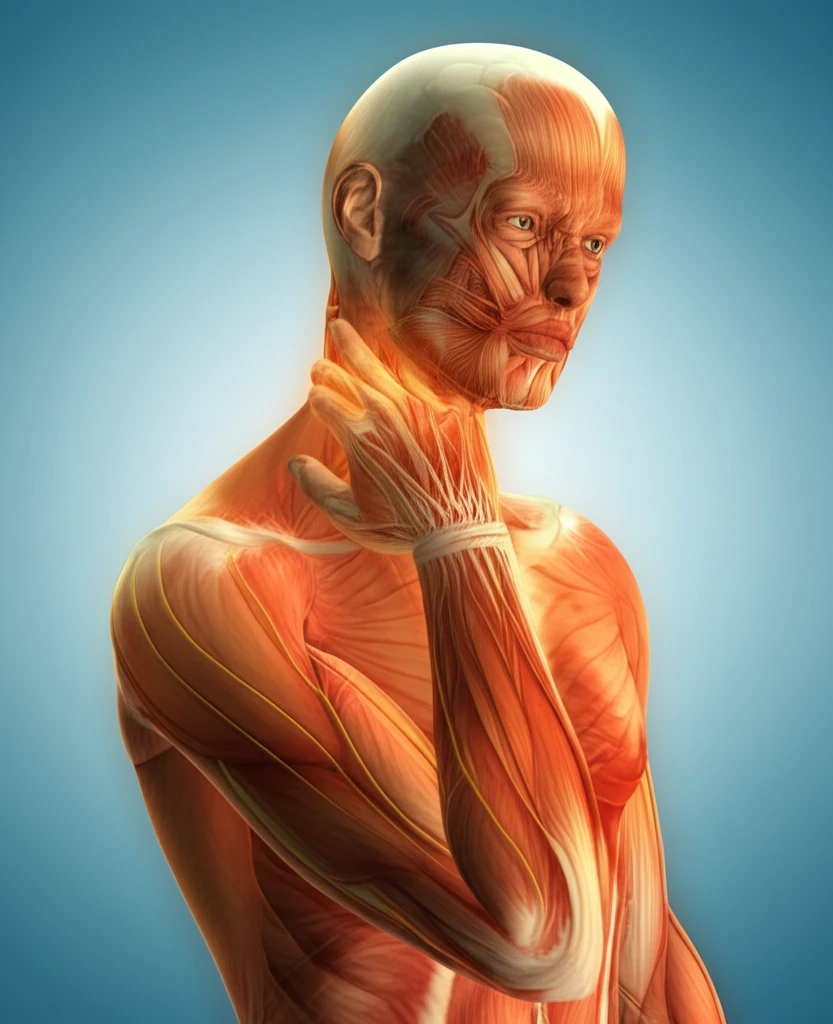
Neck and Arm Pain: Is It Really Your Nerves?

"Unraveling the Mystery of Cervicobrachial Pain and When to Suspect a Nerve Issue"
That sharp pain shooting down your arm, coupled with a stiff neck? It's a scenario all too familiar for many. This combination, known as cervicobrachial pain (CBP), is a common reason people seek help from physiotherapists. The initial assumption is often a nerve issue, but is that always the case?
Cervicobrachial pain, characterized by discomfort extending from the neck into the arm, upper back, and even the chest, can significantly impact daily life. While cervical radiculopathy (nerve root compression) is a common suspect, many individuals experience this pain without any clear nerve deficits. So, what's really going on?
The discomfort could stem from various sources, including dysfunctional spinal discs, facet joint problems, muscular imbalances in the upper quarter, or even inflamed neural tissues. Understanding the true origin of your pain is crucial for effective treatment and lasting relief.
Evidence Gap
No source material was provided for current statistics or impact. A reliable assessment of neck and arm pain therefore cannot be quantified from the supplied evidence. Any conclusions about prevalence, burden, or outcomes would require separate health-specific sources.
Evidence Gap
No source material was provided describing accepted approaches or their limitations. The supplied evidence does not support claims about diagnosis, treatment, or clinical effectiveness. Health-specific clinical sources would be needed to evaluate standard methods.
ServusTV Programming Records
The supplied sources concern ServusTV programming rather than the history of neck and arm pain or nerve research. ServusTV provides a current television schedule, program information, broadcast notices, a media library, livestreams, and news. Independent listings also describe the ServusTV schedule and upcoming highlights. These sources offer no evidence about medical milestones or foundational discoveries.
When is Cervicobrachial Pain Actually a Nerve Problem?
Researchers sought to determine how often cervicobrachial pain is truly neurogenic – originating from the nerves themselves. In a study of 361 participants experiencing CBP, aged 20-65 years, a thorough screening process was conducted to identify the underlying cause of their symptoms.
- Pain reproduction during active cervical spine movements (extension, lateral flexion, rotation) and arm movements
- Symptom replication with passive movements mirroring active movements
- Adverse responses to neural tissue provocation tests (median, ulnar, and radial nerves), with symptom alteration during nerve differentiation maneuvers
- Tenderness upon palpation of cervical spine processes (nerve roots) and along the median, ulnar, and radial nerve trunks
- Hyperalgesic (increased sensitivity) of cutaneous tissues (tender points)
- Evidence of related pathology, such as a positive Spurling's test or radiological findings of cervical disc issues or stenosis
Adult-Content Platform Sources
The supplied sources do not present research or reviews about neck and arm pain. One Reddit discussion asks how much money can be earned on XVideos and Pornhub and mentions XHamster, while XVIDEOS RED describes a paid premium-content program. The associated FAQ states that XVideos.com content is free and that users can purchase premium membership through XVideos.RED. None of these sources addresses nerves, diagnosis, treatment, or medical outcomes.
Unavailable Evidence
The listed sources are OpenAI login and technical trace pages, not medical discussions or evaluations. One page provides no description because access is restricted. The trace snippets expose technical request details, including hostnames, timestamps, IP addresses, and user-agent information, but they do not address neck and arm pain. No counterargument or treatment failure can be established from this material.
YouTube Music and YouTube
The supplied sources compare media services rather than approaches to neck and arm pain. YouTube Music advertises access to over 100 million songs, including albums, playlists, remixes, music videos, live performances, covers, and hard-to-find music. YouTube is described as a platform for enjoying, uploading, and sharing videos, while its YouTube Music channel provides news and updates. These sources do not support a medical comparison.
Don't Assume: Get the Right Diagnosis for Lasting Relief
If you're experiencing neck and arm pain, don't automatically assume it's a nerve problem. A comprehensive evaluation by a qualified healthcare professional is essential to identify the true source of your symptoms. This ensures you receive the most appropriate and effective treatment plan for long-term relief.
Evidence Gap
No source material was provided for synthesis or expert commentary. The available evidence elsewhere does not substantiate medical conclusions about neck and arm pain. Any expert interpretation would require relevant clinical or research sources.
Evidence Gap
No source material was provided about future directions in nerve, neck, or arm-pain research. The supplied sources do not support projections about emerging diagnostics, treatments, or technologies. Specific forecasts would require dedicated medical research evidence.
Evidence Gap
No source material was provided about broader social, healthcare, or systemic challenges related to neck and arm pain. The available sources concern unrelated media and online-platform topics. No health-system conclusion can be drawn without relevant evidence.
Evidence Gap
No source material was provided about patients' experiences or the real-world impact of neck and arm pain. The supplied sources do not describe symptoms, disability, care access, or quality of life. Health-specific patient or clinical evidence would be needed for this subsection.