
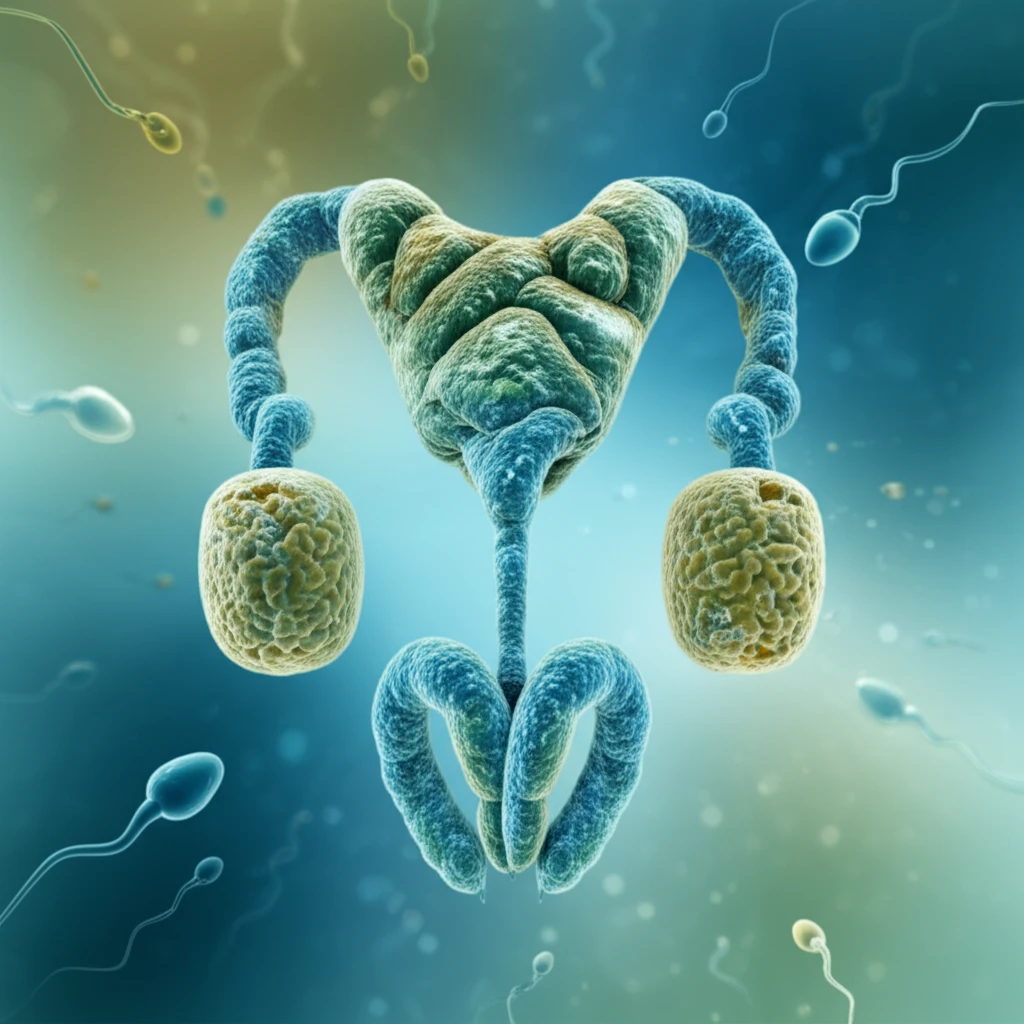
Decoding Male Infertility: How Autosomal Gene Research Offers New Hope

"Unlocking the Genetic Secrets of Sertoli Cell-Only Syndrome (SCOS) and Male Infertility"
Infertility affects millions of couples worldwide, and male infertility contributes significantly to these challenges. While factors like hormonal imbalances and lifestyle choices are well-recognized, genetics plays an increasingly understood role. Recent research is shedding light on the complex genetic underpinnings of male infertility, specifically focusing on autosomal gene defects and their association with conditions like Sertoli Cell-Only Syndrome (SCOS).
Sertoli Cell-Only Syndrome (SCOS) is a condition characterized by the absence of germ cells in the seminiferous tubules of the testes. This leads to an inability to produce sperm, resulting in infertility. While a deletion in the Y chromosome (azoospermia factor a) is a known genetic cause, many other instances of SCOS remain unexplained, prompting scientists to investigate other potential genetic factors.
A pivotal study by Koc et al. delves into the role of autosomal gene defects in patients with SCOS, marking a significant step forward in understanding the genetic landscape of male infertility. This research not only examines the genetic aspects but also considers the clinical background, providing a comprehensive view of the condition. By exploring these genetic connections, researchers hope to pave the way for improved diagnostic and therapeutic strategies.
Evaluation and Diagnostic Gaps
The initial evaluation of male infertility includes a detailed history of the couple, including prior infertility in either partner’s previous relationships and the duration of unprotected intercourse. Endocrine evaluation is not recommended as a primary first-line test, although the literature is described as controversial. For Sertoli cell-only syndrome (SCOS), the etiology remains largely unknown despite a handful of studies.
Unraveling the Link Between Autosomal Genes and SCOS
The study by Koc et al. employs advanced genomic techniques to analyze the genetic makeup of individuals with SCOS. Using genome-wide analysis with single-nucleotide polymorphism and comparative genomic hybridization arrays, the researchers identified five genes located on autosomes that appear to be associated with SCOS. This discovery is particularly significant because it broadens our understanding beyond the Y chromosome, highlighting the potential involvement of other genes in infertility.
- HOXD9: This gene is involved in embryonic development and skeletal morphogenesis. Its role in spermatogenesis is not fully understood, but its involvement in developmental processes suggests it may influence testicular development and sperm production.
- SYCE1: This gene is crucial for the proper pairing and segregation of chromosomes during meiosis, the cell division process that produces sperm. Defects in SYCE1 can lead to impaired sperm production and infertility.
Validation Remains a Limitation
A systematic review of whole-exome and whole-genome sequencing studies from 2014–2024 reports that only 34% of the genes identified—49 genes—underwent functional validation; the remaining 66% (94 genes) were assessed solely through in silico prediction. Separately, a study of a homozygous PIWIL2 frameshift variant says independent studies are needed to validate its correlation with SCOS before PIWIL2 can be considered for clinical genetic testing and counseling. These findings highlight the gap between candidate-gene findings and evidence ready for clinical use.
Outcomes and Histological Severity
A study titled “Quantifying Heterogeneity of Testicular Histopathology in Men with Nonobstructive Azoospermia” reports an overall sperm retrieval rate (SRR) of 42% and a clinical intrauterine gestation rate of 30%. A 2026 review describes SCOS as the most severe histological phenotype of male infertility, associated with non-obstructive azoospermia and low testicular volume. These figures and descriptions concern different aspects of the condition and should not be read as a direct comparison of outcomes for SCOS specifically.
A Promising Path Forward in Fertility Research
The identification of autosomal gene defects associated with SCOS opens new avenues for research and potential clinical applications. By understanding the genetic mechanisms underlying male infertility, scientists and clinicians can develop more accurate diagnostic tools and personalized treatments. This research offers hope for couples facing infertility, potentially leading to improved outcomes and a greater chance of conceiving.
Toward More Consistent Research
In June 2025, an international collaboration of clinicians, researchers, and people with fertility problems was brought together to develop a core outcome set for future infertility research, motivated by a desire to improve its quality and consistency. A market report identifies increasing prevalence, advances in diagnostic technologies, and growing awareness of male reproductive health as drivers of the male infertility diagnosis and treatment market. The available source material describes these directions but does not establish specific future clinical outcomes.
Visibility and Lived Experience
A 2026 interdisciplinary contribution draws on ethnographic case studies and sociocultural analyses to highlight the systemic neglect of male infertility in clinical practice and public discourse. A 2019 qualitative questionnaire study focused on men diagnosed with male-factor infertility, a group its authors describe as under-researched and marginalised in reproductive medicine. Together, these sources point to social and institutional dimensions that accompany the medical experience of infertility.