
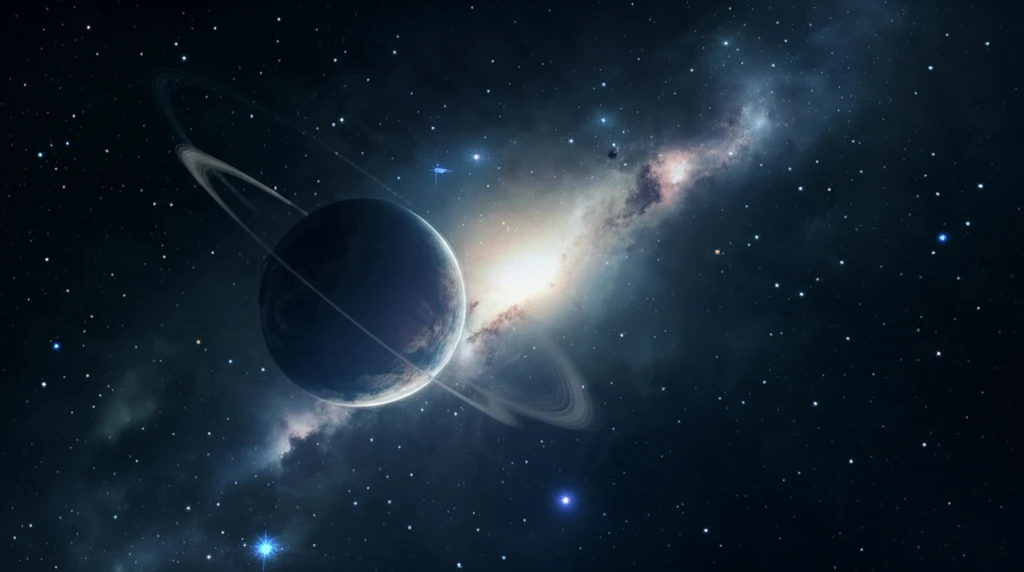
A vibrant exoplanet atmosphere with spectral lines representing different atmospheric gases.

Decoding Alien Skies: How Scientists Are Building a 'Spectral Zoo' of Exoplanet Atmospheres

"Embark on an interstellar journey to understand how astronomers are piecing together the secrets of distant worlds by analyzing the light that filters through their atmospheres. Discover the challenges and triumphs of exoplanet spectral analysis."


For decades, the search for life beyond Earth has captivated scientists and dreamers alike. As our technology advances, we're no longer just speculating about the existence of other worlds—we're beginning to analyze their atmospheres. The sheer variety of exoplanets discovered—planets orbiting stars other than our Sun—has revealed a stunning range of possibilities, each with its own unique atmospheric conditions. This has led to the development of a new field: exoplanet atmospheric characterization.

Imagine trying to understand the weather on a planet trillions of miles away. That's the challenge facing today's astronomers. By studying the light that passes through or is emitted by these exoplanets' atmospheres, scientists can deduce their chemical composition, temperature, and even the presence of clouds and hazes. This information provides clues about a planet's potential habitability and whether it could support life as we know it.

This article delves into the methods and challenges of creating a "spectral zoo" of exoplanet atmospheres. We'll explore how scientists use sophisticated instruments and techniques to dissect the faint signals from distant worlds, and what they hope to learn about the universe and our place within it.

The Exoplanet Spectral Zoo: A Universe of Possibilities

A vibrant exoplanet atmosphere with spectral lines representing different atmospheric gases.

The term “spectral zoo” aptly describes the vast and diverse range of exoplanet atmospheres that scientists are discovering. Unlike our familiar solar system, exoplanets exhibit a stunning array of characteristics. From scorching hot gas giants to icy super-Earths, each planet boasts a unique atmospheric composition and structure. This diversity presents both an opportunity and a challenge: to catalog and understand these atmospheres, we need a comprehensive approach.

One of the primary methods for studying exoplanet atmospheres is spectroscopy. When light from a star passes through a planet's atmosphere, certain wavelengths are absorbed by the gases present. By analyzing which wavelengths are missing or diminished, scientists can identify the atmospheric components. This is similar to how a prism separates white light into a rainbow, revealing the individual colors that make it up. Each gas leaves a distinctive "fingerprint" in the spectrum, allowing astronomers to determine what's in the air of a distant world.

Key Atmospheric Components and Their Spectral Signatures:
  • Water Vapor: Indicates potential for liquid water, a key ingredient for life.
  • Methane: Can be a sign of biological activity, though also produced by geological processes.
  • Carbon Dioxide: Influences a planet's temperature through the greenhouse effect.
  • Oxygen: A strong indicator of life, as it's highly reactive and needs constant replenishment.
However, obtaining these spectra is no easy task. Exoplanets are incredibly faint compared to their host stars, making it difficult to isolate their atmospheric signals. Scientists use powerful telescopes equipped with specialized instruments like coronagraphs and spectrographs to block out the starlight and capture the faint light from the exoplanet. Even then, the data can be noisy and require sophisticated analysis techniques to extract meaningful information.

The Future of Exoplanet Exploration: Taming the Spectral Zoo

Despite the challenges, the field of exoplanet atmospheric characterization is rapidly advancing. As new telescopes and instruments come online, scientists will be able to probe exoplanet atmospheres with ever-increasing precision. The James Webb Space Telescope, for example, is already providing unprecedented insights into the atmospheres of distant worlds. By combining these observations with sophisticated computer models, we're getting closer to understanding the true diversity of planets beyond our solar system and whether any of them could harbor life. The journey to decode alien skies has just begun, and the discoveries that await us promise to be transformative.

About this Article -

This article was crafted using a human-AI hybrid and collaborative approach. AI assisted our team with initial drafting, research insights, identifying key questions, and image generation. Our human editors guided topic selection, defined the angle, structured the content, ensured factual accuracy and relevance, refined the tone, and conducted thorough editing to deliver helpful, high-quality information.See our About page for more information.

This article is based on research published under:

DOI-LINK: 10.1007/978-3-319-55333-7_98, Alternate LINK

Title: The “Spectral Zoo” Of Exoplanet Atmospheres

Journal: Handbook of Exoplanets

Publisher: Springer International Publishing

Authors: Aki Roberge, Sara Seager

Published: 2018-01-01

Everything You Need To Know

1

What is meant by the term 'Spectral Zoo' in the context of exoplanet research?

The 'Spectral Zoo' is a term used to describe the vast and diverse collection of exoplanet atmospheres that scientists are discovering. Each exoplanet has a unique atmospheric composition and structure, ranging from hot gas giants to icy super-Earths. This variety presents a challenge to catalog and understand these atmospheres comprehensively. It signifies the universe of possibilities of different exoplanet compositions and characteristics which need to be cataloged and understood. The 'Spectral Zoo' embodies the stunning array of atmospheric conditions found on planets beyond our solar system.

2

How does spectroscopy enable scientists to study the atmospheres of exoplanets?

Spectroscopy is a primary method for studying exoplanet atmospheres. When light from a star passes through an exoplanet's atmosphere, certain wavelengths are absorbed by the gases present. By analyzing which wavelengths are missing or diminished, scientists can identify the atmospheric components. Each gas leaves a distinctive 'fingerprint' in the spectrum, allowing astronomers to determine the composition of a distant world's atmosphere. The missing wavelengths act like barcodes providing information about the composition of the atmosphere, revealing information on the potential habitability of the world.

3

What key atmospheric components are scientists looking for when characterizing exoplanet atmospheres, and what do these components indicate?

Key atmospheric components such as water vapor, methane, carbon dioxide, and oxygen provide essential clues about an exoplanet's potential habitability. Water vapor indicates the potential for liquid water, a key ingredient for life. Methane can signify biological activity, although it can also be produced by geological processes. Carbon dioxide influences a planet's temperature through the greenhouse effect. Oxygen is a strong indicator of life, as it's highly reactive and needs constant replenishment. Detecting these components through spectroscopy is crucial in assessing whether an exoplanet could support life as we know it.

4

What specialized instruments and techniques do scientists use to overcome the challenges of studying exoplanet atmospheres?

Scientists use powerful telescopes equipped with specialized instruments like coronagraphs and spectrographs to study exoplanet atmospheres. Exoplanets are incredibly faint compared to their host stars, making it difficult to isolate their atmospheric signals. Coronagraphs help block out the starlight, while spectrographs capture the faint light from the exoplanet. These instruments allow scientists to dissect the faint signals from distant worlds and extract meaningful information about their atmospheric composition. These sophisticated tools and techniques enable the characterization of exoplanet atmospheres despite the challenges of distance and faint signals.

5

How is the James Webb Space Telescope contributing to the advancement of exoplanet atmospheric characterization, and what are the future implications of its findings?

The James Webb Space Telescope is providing unprecedented insights into the atmospheres of distant worlds. By combining observations from such advanced telescopes with sophisticated computer models, scientists are getting closer to understanding the true diversity of planets beyond our solar system and whether any of them could harbor life. The advancements in technology and analysis techniques promise to transform our understanding of exoplanets and our place in the universe. Future observations will refine our understanding and may help identify habitable worlds.

Newsletter Subscribe

Subscribe to get the latest articles and insights directly in your inbox.