
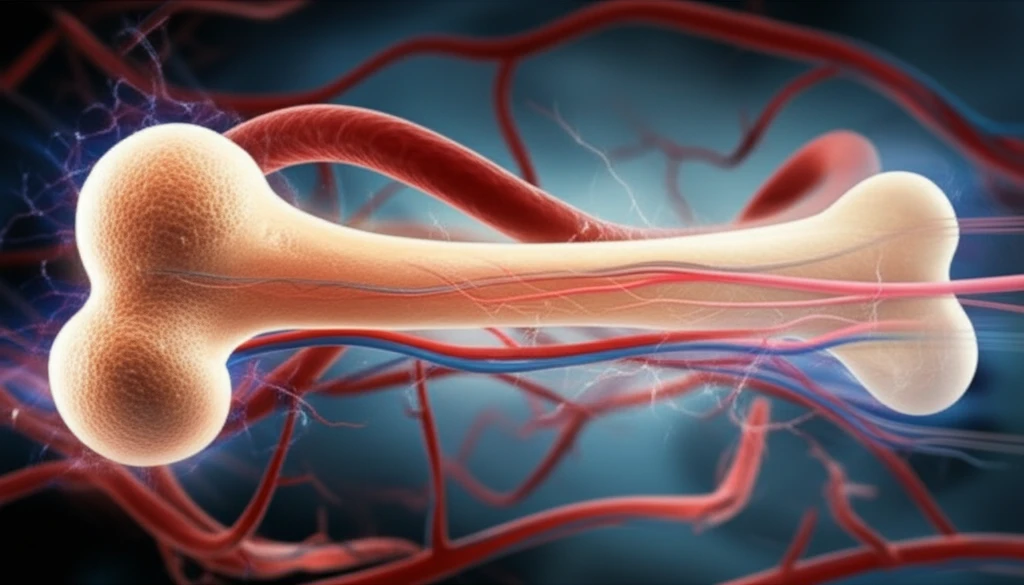
Bone Loss Breakthrough: A New Drug Offers Hope for Estrogen-Deficient Women

"Scientists develop SF-deferoxamine, a bone-seeking angiogenic drug that effectively prevents bone loss in estrogen-deficient mice, offering a promising alternative for osteoporosis treatment."
Osteoporosis, a prevalent metabolic bone disease, significantly impacts millions, particularly women facing estrogen deficiency. Characterized by decreased bone mass and increased fracture risk, it poses a major health challenge. Traditional treatments often come with significant side effects, underscoring the urgent need for innovative solutions.
Recent scientific advancements have focused on enhancing bone regeneration through targeted drug delivery. Angiogenesis, the formation of new blood vessels, plays a crucial role in bone health, making it a key target for therapeutic interventions. Researchers have been exploring ways to stimulate angiogenesis directly in bone tissue to combat bone loss more effectively.
A groundbreaking study introduces SF-deferoxamine, a novel compound designed to address bone loss associated with estrogen deficiency. This bone-seeking angiogenic drug shows promise in preventing bone loss with reduced toxicity, offering a potential alternative to existing treatments. The research highlights the drug's ability to promote bone regeneration and improve bone health in preclinical models.
Understanding SF-Deferoxamine: How This New Drug Targets Bone Loss
SF-deferoxamine is a modified version of deferoxamine (DFO), a chelating agent known for its ability to bind to iron and promote angiogenesis. Angiogenesis, the formation of new blood vessels, is critical for bone regeneration and overall bone health. SF-deferoxamine enhances this process by combining DFO with iminodiacetic acid (IDA), a bone-seeking agent. This innovative combination allows the drug to target bone tissue more effectively, reducing systemic side effects.
- Enhanced Bone Targeting: IDA ensures that SF-deferoxamine accumulates specifically in bone tissue, maximizing its therapeutic effect.
- Reduced Biotoxicity: By delivering the drug directly to the bone, SF-deferoxamine minimizes exposure to other organs, lowering the risk of adverse effects.
- Promotion of Angiogenesis: SF-deferoxamine stimulates the formation of new blood vessels, which are essential for bone repair and regeneration.
- Inhibition of Bone Loss: The drug effectively prevents the breakdown of bone tissue, preserving bone density and strength.
Future Directions and Clinical Implications
While SF-deferoxamine shows significant promise, further research is needed to fully understand its long-term effects and potential benefits in humans. Clinical trials are essential to confirm its safety and efficacy in treating osteoporosis and other bone-related conditions. The development of SF-deferoxamine represents a major step forward in targeted drug delivery for bone health. By reducing toxicity and enhancing bone regeneration, this innovative drug could transform the lives of millions affected by bone loss.