
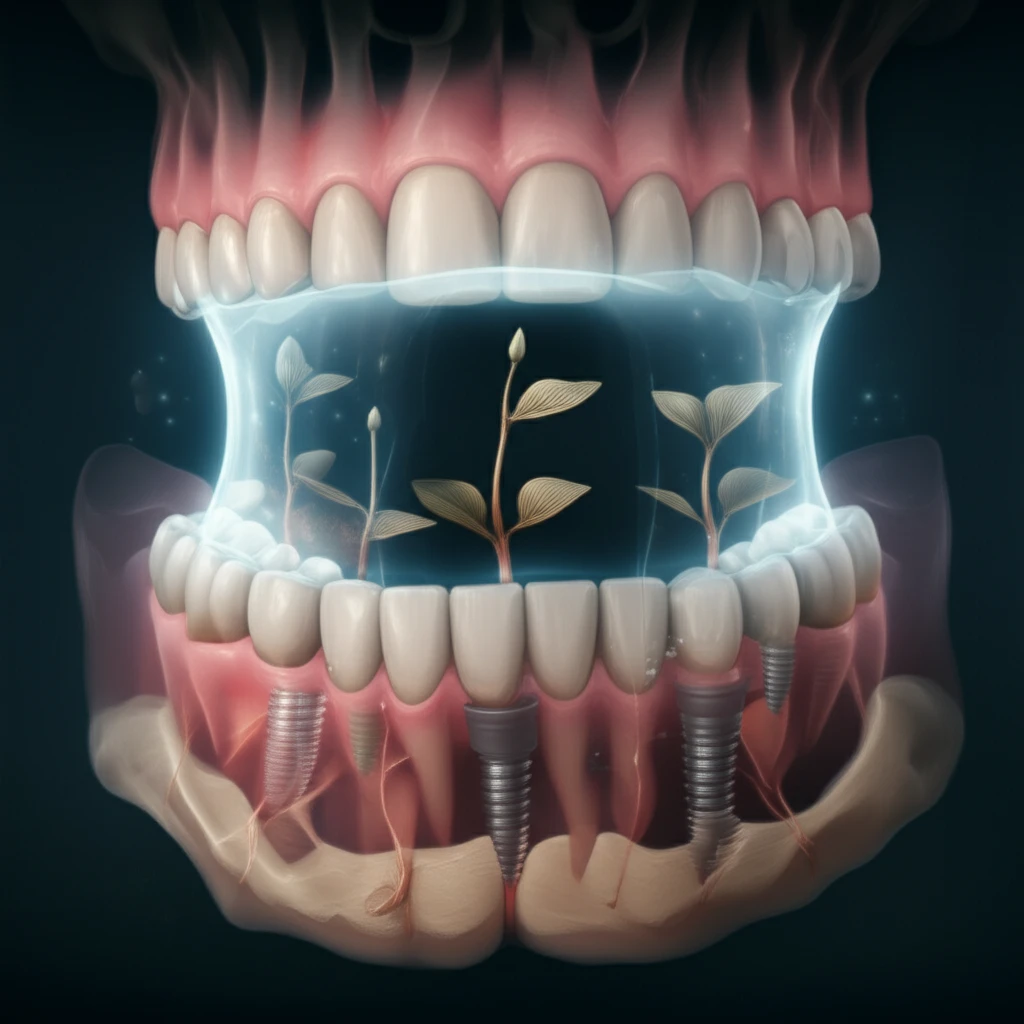
Saving Your Smile: A Complete Guide to Alveolar Ridge Preservation

"Learn how alveolar ridge preservation can protect your jawbone after tooth extraction and set the stage for successful dental implants."
Losing a tooth can be more than just a cosmetic issue; it can kick off a series of changes in your jawbone. When a tooth is extracted, the bone that supports it, known as the alveolar ridge, can start to resorb or shrink over time. This natural process can affect your appearance and make future dental procedures, like implants, more complicated.
Alveolar ridge preservation (ARP) is a proactive approach to minimize bone loss after tooth extraction. By using various techniques and materials, dentists can help maintain the original height and width of the alveolar ridge, setting the stage for successful implant placement and a confident smile.
This guide will walk you through everything you need to know about alveolar ridge preservation. From understanding why it's important to exploring the different methods available, you’ll gain valuable insights into protecting your jawbone health and ensuring the best possible outcome for your future dental needs.
Current Statistics & Impact
Alveolar ridge preservation demonstrates a clinically meaningful effect of 1.89 mm (95% CI: 1.41–2.36; p < .001) in reducing post-extraction bone loss. In a retrospective comparison, 297 extraction sites received ARP while 277 healed spontaneously, with 171 of the untreated sites showing significant dimensional changes. Most alveolar remodeling occurs within the first three months, with reported average reductions of 1.24 mm in height and 3.8 mm in width. Among 25 biomaterials evaluated, eight showed statistically significant preservation benefits over spontaneous healing.
Standard Approach & Limitations
Alveolar ridge preservation (ARP) is a surgical approach intended to reduce ridge resorption following tooth extraction and preserve bone volume in both horizontal and vertical dimensions for future implant placement. Techniques typically involve socket grafting with bone substitute materials and/or sealing the socket with barrier membranes. While bone grafting materials reduce the resorption process compared to natural healing, they fail to preserve the entire original volume of the alveolar ridge. Systematic reviews confirm that ARP modalities consistently outperform extraction alone across clinical, radiographic, and patient-centered outcomes.
Historical Perspective
The concept of alveolar ridge preservation emerged from the recognition that post-extraction bone remodeling creates significant impediments to prosthetic rehabilitation. Early research established that the alveolar process undergoes predictable dimensional changes following tooth loss, with the most rapid resorption occurring in the initial healing phases. Foundational studies in socket grafting demonstrated that placing biomaterials at the time of extraction could modulate this natural healing cascade. Over time, the procedure evolved from simple socket filling to guided bone regeneration principles incorporating barrier membranes and growth factors.
Why is Alveolar Ridge Preservation So Important?
The alveolar process, which supports the teeth, starts to degrade after a tooth is removed. Preserving the alveolar ridge is key for several reasons:
- Maintaining Bone Volume: ARP limits the amount of bone loss after extraction.
- Improving Aesthetics: Preserving the natural contours of the gums and jawbone leads to better cosmetic results, especially in the front of the mouth.
- Facilitating Implant Placement: Adequate bone volume makes implant placement easier and more predictable.
- Supporting Facial Structure: The alveolar ridge contributes to the overall structure of the face. Preserving it helps maintain a youthful appearance.
- Preventing Complications: Reduced bone loss minimizes the need for extensive bone grafting procedures in the future.
Latest Research & Reviews
Recent studies highlight that molar extraction sites experience disproportionately greater bone resorption compared to non-molar sites, with spontaneous healing shifting the ridge margin lingually and creating uneven contours. Severe pre-existing bone loss from endodontic or periodontal pathology further aggravates dimensional changes after extraction. A 2023 review confirms that alveolar remodeling leads to measurable losses in both ridge width and height, complicating subsequent implant placement. Current research encompasses a wide variety of regenerative modalities aimed at mitigating these site-specific challenges.
Counter Arguments & Failures
Despite widespread adoption, alveolar ridge preservation does not completely prevent bone resorption, and some studies report incomplete volume maintenance even with optimal technique. Graft materials may resorb at unpredictable rates, and residual particles can persist long-term without full integration into native bone. Complications such as membrane exposure, infection, and soft tissue dehiscence can compromise outcomes. Patient factors including smoking, systemic disease, and poor oral hygiene further limit predictability. The added cost and surgical time of ARP must be weighed against cases where spontaneous healing yields adequate ridge dimensions for planned prosthetics.
Comparative Analysis
Platelet-rich fibrin (PRF), an autologous growth-factor concentrate, has been proposed as an alternative to traditional grafting materials for alveolar ridge preservation. Structured reviews of randomized controlled trials compare PRF against spontaneous healing, evaluating its potential to improve healing outcomes through sustained growth factor release. Histomorphometric analyses from systematic reviews reveal that ARP procedures generally yield higher percentages of new bone formation compared to spontaneous healing, though residual graft material often remains at the grafted sites. The choice between autologous concentrates like PRF and particulate bone grafts involves trade-offs between osteogenic potential, handling properties, and the need for secondary surgical sites.
Is Alveolar Ridge Preservation Right for You?
If you are facing a tooth extraction, discuss alveolar ridge preservation with your dentist. They can evaluate your individual needs and recommend the best approach to protect your jawbone health and ensure a successful outcome for future dental treatments. Taking a proactive step today can help you maintain a healthy and confident smile for years to come.
Synthesis & Expert Commentary
The collective evidence positions alveolar ridge preservation as a valuable but imperfect tool in implant dentistry. While ARP consistently outperforms spontaneous healing in preserving ridge dimensions, the magnitude of benefit varies by technique, material, and anatomical site. Experts emphasize that ARP should be viewed as ridge preservation rather than ridge maintenance—some dimensional loss remains inevitable. Clinical decision-making increasingly incorporates patient-specific factors such as extraction indication, planned prosthetic timeline, and aesthetic zone requirements. The procedure's cost-effectiveness is most compelling in aesthetic zones and delayed implant protocols where spontaneous healing would necessitate more complex augmentation later.
Future Outlook & Next Frontiers
As of 2026, alveolar ridge preservation has become a fundamental tool in implant dentistry, with ongoing research focused on optimizing biomaterial combinations and delivery methods. Emerging frontiers include the integration of growth factors, stem cell therapies, and personalized grafting protocols based on site-specific resorption risk profiles. Digital planning and 3D-printed scaffolds promise more precise ridge contour preservation. The field continues to evolve toward minimally invasive approaches that maintain the biological advantages of ARP while reducing surgical morbidity and cost. Long-term studies tracking implant survival in ARP-treated sites versus augmented sites will further define optimal treatment algorithms.
Broader Context & Systemic Challenges
Alveolar ridge preservation sits within larger healthcare challenges including access to specialized surgical care, cost barriers for advanced biomaterials, and variability in provider training. Insurance coverage for ARP remains inconsistent, often classifying it as elective rather than medically necessary despite its role in enabling definitive prosthetic rehabilitation. An aging population with increasing tooth loss amplifies demand for ridge preservation, while workforce shortages in oral surgery and periodontics limit availability. Standardization of outcome metrics and reporting across studies remains a research priority to enable meaningful comparative effectiveness analyses.
Human Element & Real-World Impact
For patients, alveolar ridge preservation represents the difference between straightforward implant placement and complex, costly reconstruction procedures involving block grafts or sinus lifts. Preserving native ridge architecture maintains natural emergence profiles for prosthetic teeth, directly impacting speech, mastication, and psychosocial well-being. Patients who undergo ARP at the time of extraction often avoid a second major surgery and extended treatment timelines. However, the procedure adds immediate postoperative discomfort and expense at a moment when patients are already coping with tooth loss. Shared decision-making that incorporates patient values, financial circumstances, and aesthetic priorities is essential to aligning ARP recommendations with individual goals.