
Graft-Less Sinus Floor Augmentation: Is it the Future of Dental Implants?

"Explore the innovative technique that's transforming dental implant procedures, offering less invasive and more cost-effective solutions for patients with severe bone resorption."
The world of dental implants is constantly evolving, with clinicians and researchers continually seeking methods to improve patient outcomes and reduce the complexity of procedures. One such area of advancement is in addressing bone resorption in the posterior maxilla, a common challenge that can hinder the successful placement of dental implants.
Traditionally, bone graft materials have been the go-to solution to compensate for bone loss in the upper jaw. However, these procedures can be invasive and costly, leading to a growing interest in graft-less techniques. These alternative approaches aim to achieve similar results with less trauma and expense for the patient.
This article delves into a promising innovation: a new implant design specifically engineered for graft-less sinus floor augmentation. This technique offers a potential game-changer for individuals facing significant bone loss, providing a less invasive and more efficient pathway to restoring their smiles.
The Growing Demand for Sinus Augmentation
The posterior maxilla presents significant challenges for dental implant placement due to bone resorption following tooth loss. Sinus floor augmentation has become an increasingly common procedure to address these deficiencies, though precise global statistics remain limited in the literature. As the aging population grows and implant dentistry expands, the demand for effective sinus augmentation techniques continues to rise.
Traditional Grafting and the Rise of Graftless Alternatives
The standard approach to sinus floor elevation has traditionally involved bone grafting materials to regenerate bone volume in the atrophic posterior maxilla. Over the last decade, graftless bone augmentation procedures have emerged as an alternative, utilizing the space created beneath the elevated sinus membrane for new bone formation without graft materials. A systematic review found that graftless maxillary sinus membrane elevation shows promise for implantation in the atrophic posterior maxilla, though clinical evidence continues to accumulate. Recent prospective studies with over 5-year follow-up demonstrate that graftless sinus floor elevation performed simultaneously with implant placement is a safe and reliable procedure.
Evolution of Sinus Augmentation Techniques
Sinus floor elevation techniques have evolved substantially since their introduction in dental implantology. Early approaches relied heavily on autogenous bone grafts harvested from the patient, which added complexity and morbidity to procedures. The development of lateral window and crestal approaches represented significant milestones in making these procedures more predictable and less invasive.
How Does This New Implant Design Work?
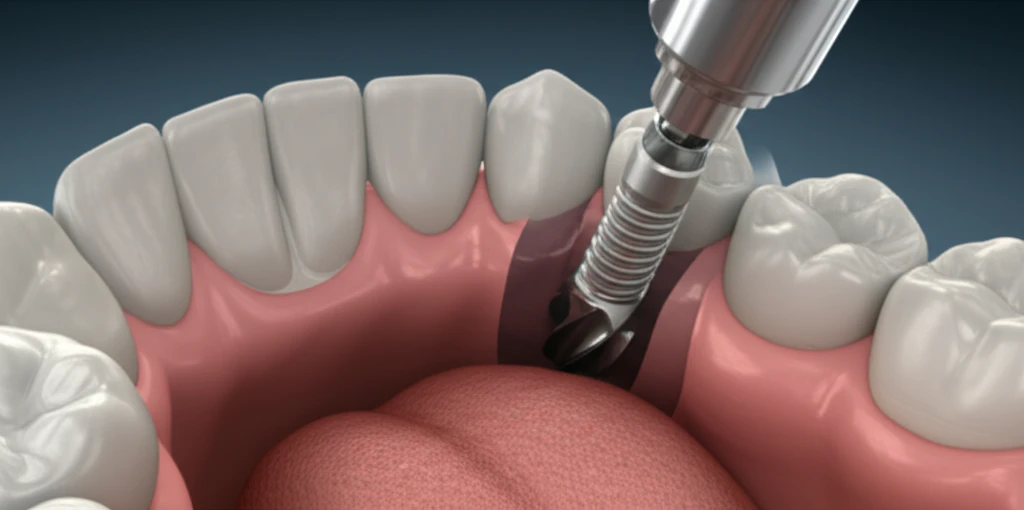
The study published in Clinical Oral Implants Research investigates the clinical performance of a new reverse spiral flute implant design, manufactured by Nobel Biocare AB. This implant is designed for use in both lateral and crestal graft-less sinus floor elevation protocols, offering versatility in addressing different anatomical situations.
- Anodized Surface: Enhances osseointegration, promoting better bone-to-implant contact.
- Rounded Apex: Minimizes the risk of sinus membrane perforation during placement.
- Sharp Cutting Flute: Uniquely oriented to direct bone chips into the sinus cavity, stimulating new bone formation in a controlled manner.
Emerging Evidence for Graftless Approaches
A randomized clinical trial evaluated implant stability following graftless lateral window and crestal approaches for maxillary sinus floor elevation, finding promising results at 1-year follow-up. Recent literature reviews have documented that new bone can form in and around dental implants placed after sinus floor elevation without the use of bone grafts. A systematic review investigating immediate implant placement combined with indirect sinus lift without grafting in the maxillary posterior region further supports the growing evidence base for these techniques.
Survival Rates and Comparative Outcomes
A meta-analysis of seven randomized controlled trials found high overall implant survival rates in both graftless and bone-grafted sinus lift groups, at 97.92% and 98.73% respectively. While both approaches demonstrate excellent survival, the graftless group showed slightly lower survival rates. The studies highlight that while graftless procedures are viable, they may not achieve identical outcomes to traditional grafted approaches in all clinical scenarios.
Graftless vs. Grafted: A Direct Comparison
Research indicates that bone gain and implant survival were significantly lower in the non-grafted side compared to the grafted side in sinus augmentation procedures. A meta-analysis found the graftless group had significantly lower vertical bone height gain (mean difference of -1.73 mm) and bone density (mean difference of -94.7 HU). However, both approaches are considered viable options when residual bone height is 4mm or more and width is 5mm or more, with the graftless procedure avoiding all complications associated with graft materials.
The Future of Graft-Less Sinus Floor Augmentation
The study's findings suggest that this innovative implant design holds promise for simplifying and improving outcomes in graft-less sinus floor augmentation. The high cumulative survival rate and increasing ISQ values indicate excellent implant stability and successful osseointegration. While further research is always warranted, this new approach offers a compelling alternative for patients seeking a less invasive and more cost-effective path to dental implant success. As technology advances, graft-less solutions like this will likely play an increasingly important role in modern implant dentistry, improving accessibility and outcomes for a wider range of patients.
Balancing Innovation with Clinical Prudence
The graftless sinus augmentation approach represents an exciting development in implant dentistry, offering patients a less invasive alternative with reduced surgical complexity. While early evidence is promising, clinicians must carefully consider patient-specific factors including residual bone volume, implant stability requirements, and long-term functional demands. The technique appears most suitable for cases with adequate existing bone foundation rather than severely atrophic situations.
Research Directions and Technological Advances
Future research will likely focus on optimizing patient selection criteria and developing predictive models for graftless procedure success. Advances in biomaterials and surface modifications may enhance bone formation without grafts, potentially expanding the indications for these techniques. Long-term studies with larger sample sizes will be essential to establish definitive guidelines for clinical practice.
Implementation Challenges in Clinical Practice
Widespread adoption of graftless sinus augmentation faces hurdles including the need for specialized training and variations in surgeon experience. Healthcare systems must balance the potential cost benefits of reduced graft materials against the learning curve associated with new techniques. Standardization of protocols and clear clinical guidelines will be crucial for consistent outcomes across different practice settings.
Patient Perspectives and Quality of Life
For patients, the appeal of graftless procedures lies in potentially reduced surgical time, fewer donor sites, and faster recovery periods. The avoidance of bone graft harvesting can minimize post-operative discomfort and reduce the risk of complications at donor sites. As evidence accumulates, patient-provider shared decision-making will increasingly incorporate these options when discussing sinus augmentation treatment plans.