
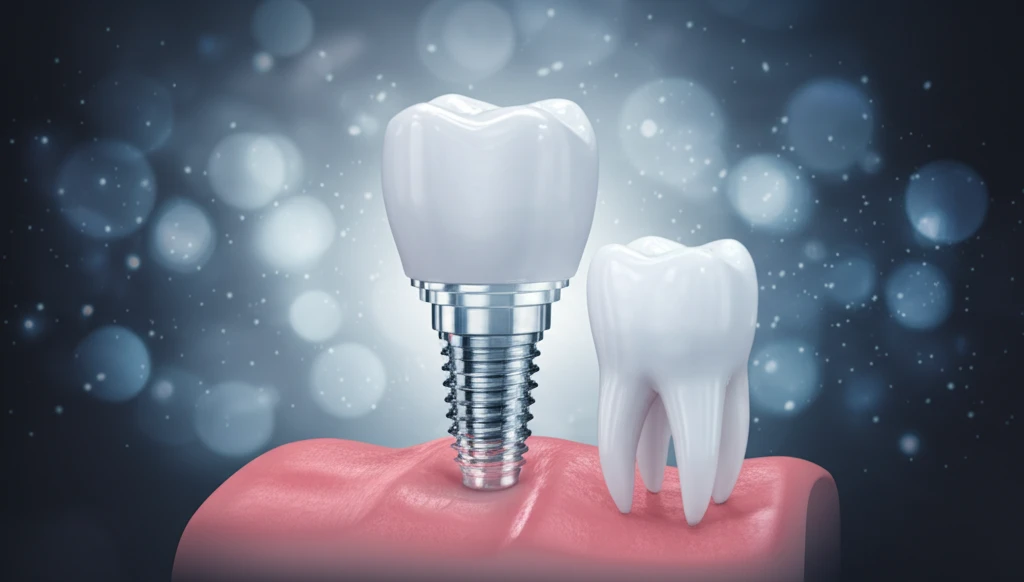
Dental Implants: Are They Right for You? Exploring Success Rates and Factors for Lasting Results

"A comprehensive look at single-tooth implants for molars, focusing on placement, survival rates, and what you need to know for optimal outcomes"
Dental implants have revolutionized tooth replacement, offering a stable and aesthetically pleasing solution for missing teeth. The concept of osseointegration, where the implant fuses directly with the jawbone, has been a game-changer in the field of dentistry. While implants have shown high success rates overall, restoring single missing teeth, particularly in the molar region, presents unique challenges.
When it comes to replacing molars with single implants, several factors can influence the outcome. The molars endure greater occlusal forces, and the bone quality in the mandible (lower jaw) and maxilla (upper jaw) differs. These variations can impact the implant's long-term survival.
A recent study published in The Journal of Korean Academy of Prosthodontics investigated the survival rates of single implants placed in the mandibular first and second molar areas. The findings shed light on the factors that contribute to successful molar implant outcomes, offering valuable information for both dentists and patients.
The Growing Demand for Dental Implants
The United States has approximately 66,101 active dentists as of 2023, according to the National Provider Identifier Registry. Dental implants represent a significant and growing segment of restorative dentistry, with cylindrical dental implants alone projected to reach a market value of $9 billion by 2033. Data shows that 9% of dental implants are placed in patients aged 65 to 74, reflecting the strong correlation between age-related tooth loss and implant demand. This demographic trend underscores the expanding role implants play in modern dental care.
Standard vs. Mini Implants: Size, Strength, and Fit
Traditional dental implants typically have a diameter of 3.4 to 5.8mm and a length of 7 to 15mm, making them roughly the width of a pencil eraser. Mini implants offer a narrower alternative for patients with limited bone density or smaller jaw structures. However, custom dental implants are increasingly valuable in complex cases such as bone resorption or sinus lift procedures, where size mismatches of standard implants can cause complications like bone damage or spacing issues. This tailored approach ensures optimal fit and reduces risk in challenging anatomical situations.
From Ancient Wire to Osseointegration
The concept of replacing missing teeth dates back to at least 2500 BC, when ancient Egyptians used gold wire ligatures to stabilize teeth. Research indicates that early dental implant attempts can be traced as far back as 3000 BC during the Egyptian civilization. The modern era of implant dentistry was transformed by Professor Per-Ingvar Branemark's discovery of osseointegration, which demonstrated that titanium could bond directly with living bone tissue. This foundational breakthrough paved the way for the reliable, long-lasting implant systems used today.
Key Factors Influencing Implant Success
The study analyzed data from 308 single implants placed in the mandibular first and second molar regions of 284 patients between 2002 and 2009. Researchers looked at various factors, including:
- Bone Quality: The density and health of the jawbone at the implant site.
- Occlusal Forces: The amount of pressure and stress the implant endures during chewing.
- Anatomical Structures: Proximity to nerves or other anatomical features in the mandible.
Emerging Insights and Ongoing Studies
Recent research published in Nature has examined the confidence of primary care dental practitioners in assessing, referring, and maintaining dental implants, highlighting the need for continued education across the profession. Scientists are also investigating the potential for adults to eventually grow their own replacement teeth rather than relying on traditional fillings or implants, representing a potential paradigm shift in dental treatment. A systematic review has addressed the relationship between diabetes mellitus and dental implant outcomes, reflecting growing interest in how systemic health factors influence implant success. These studies collectively point toward a more nuanced, patient-specific approach to implant dentistry.
Complications and What Can Go Wrong
While dental implants have high success rates, they are not without risk. Complications can include peri-implantitis (inflammation of the tissue around the implant), screw loosening, implant fracture, nerve injury, and sinus complications. Zirconia implants, though marketed as a metal-free alternative to titanium, have been found to be more prone to cracking, particularly in small diameter sizes that are sometimes necessary in implant placement. Aesthetic failures can also occur when implants do not integrate properly or are positioned incorrectly, leading to unsatisfactory visual outcomes. Understanding these risks is essential for patients and practitioners when planning implant treatment.
Implants vs. Bridges, Dentures, and Alternatives
Dental implants replace both the tooth and its root without involving neighboring teeth, offering a distinct advantage over dental bridges. Bridges are a quicker and less expensive option but require filing down adjacent healthy teeth for support. Implants provide a non-removable, durable alternative to dentures, which are a common but less stable solution for tooth loss. Each option presents different trade-offs in terms of cost, longevity, invasiveness, and impact on surrounding oral structures, making individualized assessment essential for optimal outcomes.
Making Informed Decisions About Your Dental Health
Dental implants can be a life-changing solution for missing teeth, restoring both function and aesthetics. When considering single-tooth implants for molars, understanding the factors that influence success is essential. This study emphasizes the importance of careful planning, precise execution, and patient-specific considerations to achieve long-lasting and successful outcomes. If you're considering a dental implant, consult with your dentist or a qualified implant specialist to determine the best course of treatment for your individual needs.
Expert Guidance for Informed Decisions
Dental experts consistently recommend that patients schedule a thorough consultation and evaluation before proceeding with implant treatment. Seeking a second opinion from a specialist with cutting-edge expertise can provide additional assurance and help patients understand all available options. Following all treatment recommendations, including pre-surgical assessments and post-operative care instructions, is critical for achieving the best possible outcome. Professional guidance ensures that each patient's unique health profile and goals are fully considered.
Market Growth and Material Innovations
The global dental implants market was valued at approximately $5.8 billion in 2025 and is projected to reach $12.49 billion by 2035, growing at a compound annual growth rate of over 8%. Market expansion is driven by advances in biomaterials, including titanium, zirconia, and ceramics, each offering different benefits in terms of biocompatibility and durability. Insurance coverage trends are gradually shifting to make implants more accessible to a broader patient population. Technological efficiencies are also contributing to competitive pricing, making implants a more viable option for many individuals.
Materials, Applications, and Access Barriers
Dental implants are metal posts or frames surgically positioned into the jawbone beneath the gums, serving as anchors for replacement teeth. The choice of material—whether titanium, zirconia, or ceramics—influences both the aesthetic result and the long-term longevity of the implant. Beyond simple tooth replacement, implants are increasingly used in orthodontic applications to extrude impacted teeth, retract molar abutments, and correct tooth positioning. However, broader adoption faces systemic challenges including cost barriers, varying insurance coverage, and disparities in access to specialized implant care.
Healing, Confidence, and Quality of Life
The osseointegration period, during which the implant bonds with the jawbone, typically takes between three to six months and is a critical phase of the implant process. Research into the psychosocial impacts of dental implants has shown that they significantly improve patients' self-perception of dental aesthetics and overall confidence. Real-world case studies, such as full-mouth rehabilitations, demonstrate how multiple implants can restore function and appearance for patients with extensive tooth loss. These outcomes highlight that dental implants are not only a functional solution but also a transformative one for patients' quality of life.