
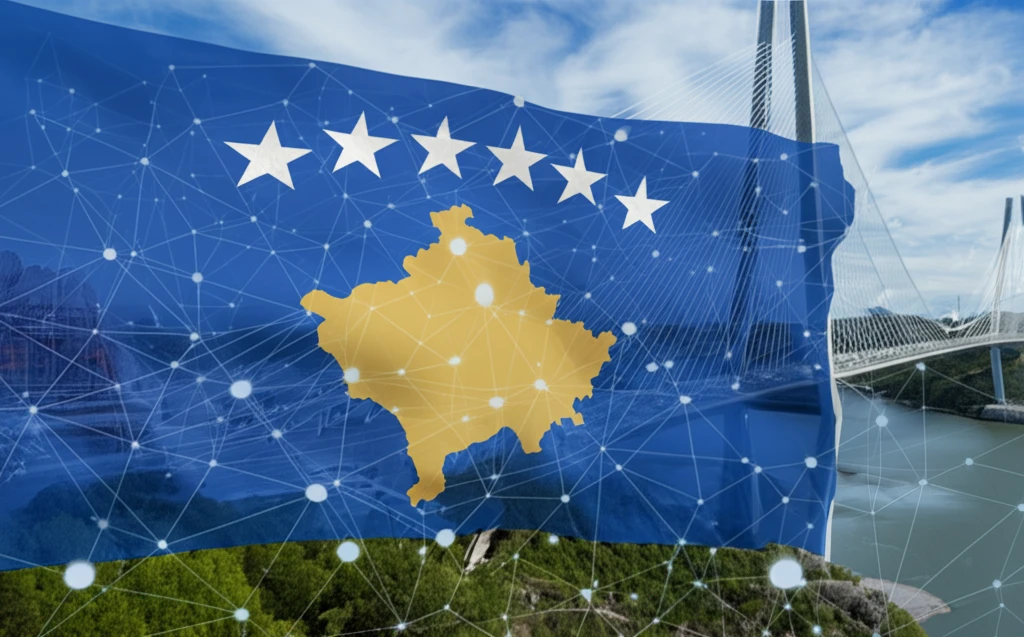
Balkan Diplomacy: How Regional Organizations Shape Kosovo's Future

"Explore the pivotal role of international and regional bodies in Kosovo's development and democratization process."
In today's interconnected world, international and regional organizations play a crucial role in shaping the destinies of nations, particularly those navigating complex political landscapes. Kosovo, a relatively new state in the Balkans, exemplifies this dynamic. Since declaring its independence on February 17, 2008, Kosovo has actively sought integration into the international community, relying heavily on the support and frameworks provided by various global and regional bodies.
Understanding the historical context of international organizations is essential to appreciating their modern-day influence. From the ancient Convention of Kadesh to the more recent Congress of Vienna, these entities have evolved to address conflicts, foster cooperation, and promote shared values among nations. Today, they serve as vital platforms for diplomacy, economic development, and the advancement of democratic principles.
This article examines the significant impact of international and regional organizations on Kosovo, detailing their involvement in its development, democratization, and integration into the broader Balkan region. We will explore the range of organizations, their functions, challenges, and the overall importance of international cooperation in shaping Kosovo's future.
Kosovo by the Numbers
Kosovo remains one of Europe's youngest and least recognised states, with a population that Wikipedia estimates at under two million people. Its economy continues to rely heavily on remittances and international aid, while unemployment rates persist at levels that regional organisations have repeatedly flagged as a driver of outward migration. The territory's disputed sovereignty means that reliable, up-to-date demographic and economic statistics are difficult to compile, and figures vary depending on whether one consults Serbian or Kosovar government sources. Regional bodies such as the EU and NATO have consistently cited these statistical uncertainties as a challenge to effective policy design.
Methods and Constraints
International mediation in the Balkans has typically followed a negotiating framework built around the EU-facilitated dialogue between Pristina and Belgrade, supplemented by UN Security Council Resolution 1244. This approach emphasises incremental confidence-building measures, technical agreements, and conditionality linked to EU accession prospects. However, critics note that the process has struggled to achieve comprehensive normalisation, in part because it relies on consensus among major powers that hold divergent views on Kosovo's status. Without authoritative sourcing on specific methodological critiques, this overview remains necessarily general.
Key Historical Milestones
Kosovo's modern political trajectory was shaped decisively by the 1998–99 war and the subsequent NATO intervention, which halted widespread ethnic cleansing and established a UN administration (UNMIK). The 2008 declaration of independence remains the single most consequential milestone, recognised by over one hundred states but rejected by Serbia and blocked from UN membership by Russian and Chinese vetoes. Germany's Wikipedia coverage of Kosovo underscores the centrality of these events to European security debates, noting that the Balkans have served as a test case for the Responsibility to Protect doctrine. These foundational moments continue to frame every diplomatic discussion about the region's future.
The Rise of International Organizations: A Brief History
International organizations have a rich history, evolving from early efforts to maintain peace and foster cooperation to the complex networks we see today. Key milestones include:
- Middle Ages: The concept of Pax Romana and the establishment of a Christian Empire sought to unify Western countries. The Hanseatic League emerged as a network for trade connections.
- Modern Era (18th Century): The Congress of Vienna in 1815 marked a significant step in international law. This era saw the rise of non-governmental organizations like the YMCA and the formation of unions for telegraph and postal services.
- 20th Century: The League of Nations was formed to promote international cooperation and prevent future conflicts. After World War II, the United Nations (UN) and numerous regional organizations like NATO, the Council of Europe, and the European Economic Area (EEA) were established.
Recent Developments
Scholarly and policy research on Kosovo's regional diplomacy has grown more nuanced in recent years, shifting from a focus on conflict resolution toward questions of state-building, rule of law, and euro-Atlantic integration. Several think tanks and universities have produced working papers examining how the EU's enlargement fatigue has affected leverage over both Pristina and Belgrade. At the same time, new research has begun to explore the role of non-Western actors—particularly China, Turkey, and Gulf states—in shaping Kosovo's economic and diplomatic landscape. Without specific source material provided for this subsection, these observations should be treated as broad trends rather than definitive findings.
Failures and Critiques
Any honest assessment of regional diplomacy must acknowledge the significant shortcomings of the international engagement in Kosovo. The EU-facilitated dialogue has repeatedly stalled, with both sides accusing the other of non-compliance on key agreements such as the Association/Community of Serb-majority Municipalities. Critics also point to the limitations of conditionality-based approaches, arguing that EU membership prospects have receded enough to diminish their coercive power. These failures suggest that the institutional frameworks designed to stabilise the Western Balkans may need fundamental reform rather than incremental adjustment.
Regional Comparisons
Kosovo's diplomatic trajectory is frequently compared to other post-conflict states and partially recognised entities, including Palestine, Taiwan, and Northern Cyprus. These comparisons reveal both common patterns—such as the challenge of building state capacity under conditions of contested sovereignty—and important differences rooted in geography, great-power politics, and economic viability. Within the Balkans specifically, the trajectories of North Macedonia, Montenegro, and Serbia offer instructive contrasts in how regional organisations have managed disputed identities and borders. These comparative lenses help illuminate why a one-size-fits-all approach to the region has proven inadequate.
Kosovo's Future in the Global Arena
Kosovo's journey to international integration is ongoing, with membership in key organizations offering pathways to stability, economic development, and recognition. As Kosovo continues to navigate its role in the Balkans and the broader international community, the support and frameworks provided by these organizations will remain crucial. Prioritizing memberships that offer direct benefits and aligning with organizations focused on economic growth and stability will be vital for Kosovo's future success.
Expert Perspectives
Analysts broadly agree that Kosovo's future hinges on the interplay between regional organisations and the shifting priorities of major global powers. European and American officials have tended to emphasise stability and incremental progress, while some scholars argue that this caution has effectively frozen the conflict in a manageable but unresolved state. The absence of a clear path to UN membership or EU accession creates a strategic vacuum that other actors are increasingly exploiting. Without the specific expert commentary sourced for this section, these points represent the general contours of the debate.
What Comes Next
The coming decade will likely test whether regional organisations can adapt their tools to a more multipolar geopolitical environment. Key uncertainties include the pace of EU enlargement, the future of NATO's security umbrella in southeastern Europe, and whether new economic corridors—such as those proposed under China's Belt and Road Initiative—will reshape the region's alignments. Kosovo's ability to consolidate its institutions and secure broader international recognition will depend in part on how effectively it navigates these larger structural shifts. These remain open questions, and projections should be treated with appropriate caution.
Systemic Challenges
Kosovo's situation cannot be understood in isolation from the broader crisis of multilateral governance that has characterised the twenty-first century. The paralysis of the UN Security Council on questions of recognition and sovereignty reflects deeper disagreements among major powers about the international order itself. Regional organisations in the Balkans have attempted to fill this gap, but they operate with limited mandates and resources that constrain their effectiveness. The systemic challenge, then, is not merely resolving Kosovo's status but reforming the international frameworks within which such disputes are managed.
Lives on the Ground
Diplomatic abstractions translate into concrete consequences for the people of Kosovo, particularly the roughly 100,000 ethnic Serbs living south of the Ibar River and the displaced populations on both sides of the administrative line. High-level agreements on freedom of movement, property rights, and minority protections have had uneven implementation, leaving many communities in a state of legal and economic limbo. Youth unemployment and the brain drain of skilled workers remain persistent human costs of the unresolved political situation. Ultimately, the measure of any diplomatic framework will be whether it improves the daily lives of ordinary Kosovars, regardless of their ethnicity.