
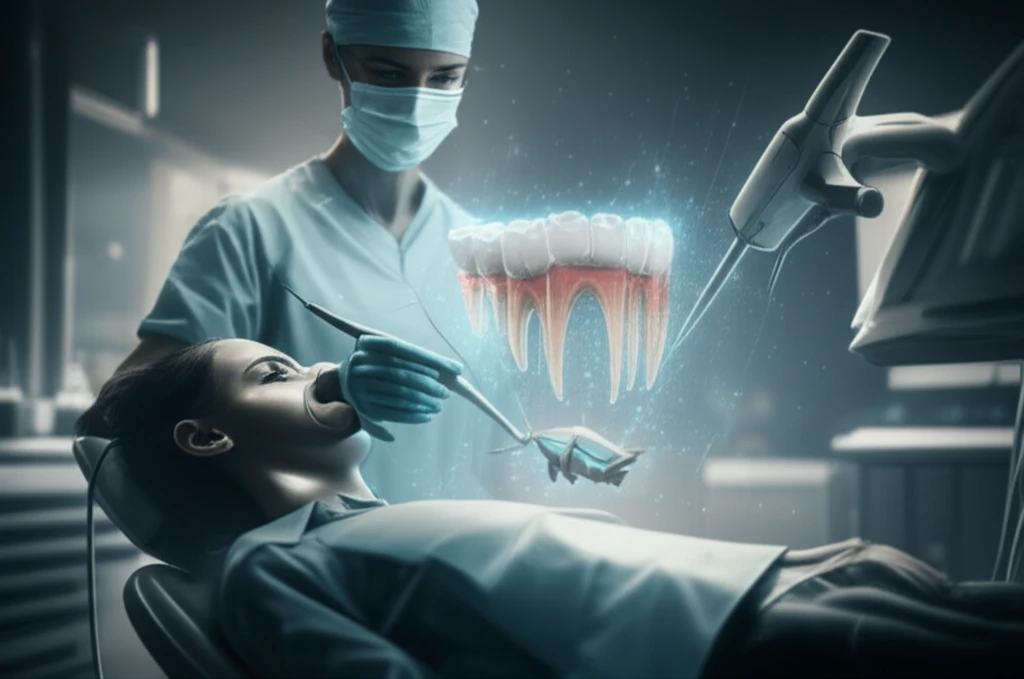
Futuristic intraoral scanner creating a holographic dental model.

Are Intraoral Scanners the Future of Dentistry? A Deep Dive into Accuracy

"Explore how digital models created with intraoral scanners stack up against traditional methods and what it means for patient care."


The world of dentistry is rapidly evolving, driven by advancements in technology that promise greater precision, efficiency, and patient comfort. One of the most transformative innovations is the use of digital dental models, crafted directly from intraoral scanners. These scanners eliminate the need for traditional impressions, streamlining workflows and opening new possibilities for appliance fabrication and treatment planning.

Digital models offer several advantages, including reduced chair time, minimized patient discomfort, and the potential for more precise indirect bracket setups. By incorporating digital technology, dental practices can minimize the need for bracket repositioning, ultimately decreasing overall treatment time. The appeal is clear: a faster, more comfortable experience for patients and a more efficient practice for clinicians.

However, the universal adoption of intraoral scanners has been gradual. With various methods available to digitize dental models, dental professionals need to know how accurate these newer approaches are. This article explores the accuracy of 3D measurements taken from digital models created by intraoral scanners, comparing them to manual measurements. It provides a comprehensive look into whether these scanners are truly as accurate as traditional methods.

How Accurate Are Intraoral Scanners Compared to Traditional Methods?

Futuristic intraoral scanner creating a holographic dental model.

A recent study published in the American Journal of Orthodontics and Dentofacial Orthopedics sought to evaluate and compare digital dental models generated from two commercial intraoral scanners against manual measurements. The focus was on performing 3-dimensional surface measurements along curved lines—a critical aspect of dental morphology. The study used dry mandibles (n = 61) with intact dentition, digitized using the Cadent iTero and Lythos Digital Impression System. These models were then converted into stereolithography files for measurement using specialized software. Manual measurements were taken directly on the mandibular teeth for comparison.

Measurements were conducted at various locations on the dental arch, capturing data in multiple directions. Statistical analyses, including one-sample t-tests, linear regression analyses, and Bland-Altman plots, were employed to assess the accuracy and agreement between the different methods. The level of significance was set at P < 0.05 to determine statistical relevance.

  • No Significant Differences: The study found no significant differences between any of the paired methods (P > 0.05), indicating a level of agreement between the intraoral scanners and manual measurements.
  • Random Errors Detected: Bland-Altman analysis revealed no fixed bias in any approach, but random errors were detected across all comparisons.
  • Low Mean Bias: The mean biases of digital models obtained by iTero and Lythos scanners were low when compared to direct caliper measurements. The comparison between the two intraoral scanners yielded the lowest mean bias.
  • No Proportional Bias: No comparison displayed statistical significance for t-scores, suggesting an absence of proportional bias.
The results indicated that intraoral scanners can produce digital dental models that are comparatively accurate when performing direct surface measurements along curved lines in three dimensions. This finding supports the growing confidence in using intraoral scanners for various dental applications, from creating retainers to planning complex orthodontic treatments.

The Future of Digital Dentistry

The study's conclusion highlights that intraoral scanners can produce digital dental models that are comparatively accurate for direct surface measurements along curved lines in 3D. As technology continues to advance, the integration of intraoral scanners into dental practices promises to enhance efficiency, precision, and patient experience. Although challenges remain, the evidence suggests that intraoral scanners are poised to play a pivotal role in the future of digital dentistry, providing clinicians with reliable and accurate tools for diagnosis, treatment planning, and appliance fabrication.

About this Article -

This article was crafted using a human-AI hybrid and collaborative approach. AI assisted our team with initial drafting, research insights, identifying key questions, and image generation. Our human editors guided topic selection, defined the angle, structured the content, ensured factual accuracy and relevance, refined the tone, and conducted thorough editing to deliver helpful, high-quality information.See our About page for more information.

Everything You Need To Know

1

What exactly are intraoral scanners and why are they becoming so popular in dentistry?

Intraoral scanners are devices used in dentistry to create digital dental models. These scanners capture the surface contours of the teeth and gums, generating a 3D digital representation of the patient's mouth. This eliminates the need for traditional physical impressions, improving efficiency and patient comfort. This technology is significant because it streamlines workflows, reduces chair time, and opens new possibilities for treatment planning and appliance fabrication. The implications of using intraoral scanners include more precise indirect bracket setups, minimizing the need for bracket repositioning, and decreasing overall treatment time.

2

Why are digital dental models created by intraoral scanners considered to be such a significant advancement in dental practices?

Digital dental models are important because they offer several advantages over traditional methods. They reduce chair time, minimize patient discomfort, and can lead to more precise treatment outcomes. By minimizing the need for adjustments like bracket repositioning, digital models contribute to more efficient treatment. The significance of digital models lies in their ability to enhance the overall dental experience for both patients and clinicians, making dental practices more efficient and treatment more predictable. Another implication is the improved communication between dental professionals and laboratories due to the ease of sharing digital information.

3

How was the accuracy of intraoral scanners evaluated in comparison to traditional measurement methods?

The study compared digital dental models generated from two commercial intraoral scanners, the Cadent iTero and the Lythos Digital Impression System, against manual measurements. Dry mandibles with intact dentition were digitized using these scanners, and the resulting models were converted into stereolithography files. The accuracy of the intraoral scanners was assessed by performing 3-dimensional surface measurements along curved lines, which is a critical aspect of dental morphology. The significance lies in validating the accuracy of intraoral scanners for dental applications. The implications of this study's methods include establishing a benchmark for future research and providing dental professionals with confidence in using these scanners for diagnosis, treatment planning, and appliance fabrication.

4

What were the main findings of the study regarding the accuracy and reliability of intraoral scanners like Cadent iTero and Lythos Digital Impression System?

The key findings were that there were no significant differences between the measurements taken by the intraoral scanners and the manual measurements. The study indicated a level of agreement between the intraoral scanners (Cadent iTero and Lythos Digital Impression System) and manual measurements. While random errors were detected across all comparisons, the mean biases of digital models obtained by the scanners were low when compared to direct caliper measurements. This is significant because it supports the reliability and accuracy of intraoral scanners in creating digital dental models. This accuracy has implications for various dental applications, from creating retainers to planning complex orthodontic treatments.

5

What does the future hold for digital dentistry with the increasing use of intraoral scanners?

The future of digital dentistry includes greater integration of intraoral scanners into dental practices, leading to enhanced efficiency, precision, and patient experience. As technology advances, intraoral scanners are poised to play a pivotal role in providing clinicians with reliable and accurate tools for diagnosis, treatment planning, and appliance fabrication. One implication is the potential for more personalized and precise treatment plans. Another consideration not discussed is the cost of equipment, training, and the learning curve associated with adopting new digital workflows. These factors will influence how quickly and widely intraoral scanners are adopted.

Newsletter Subscribe

Subscribe to get the latest articles and insights directly in your inbox.