
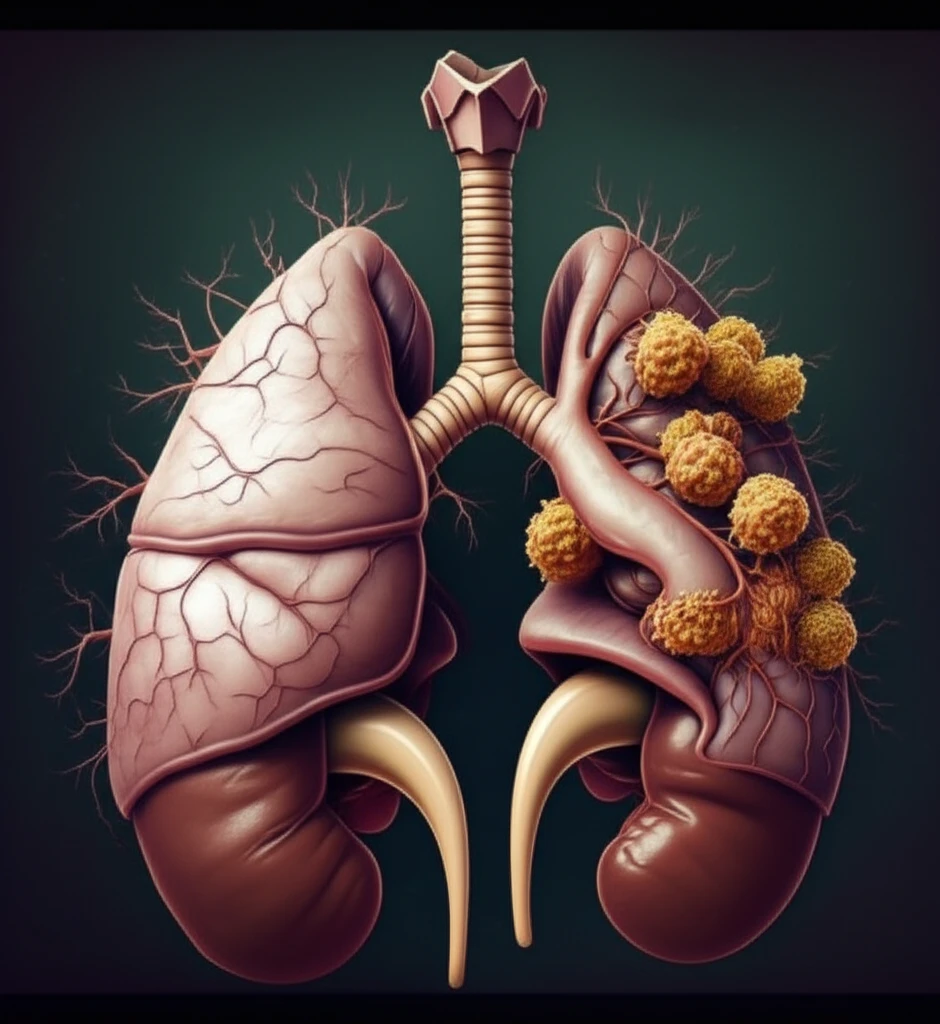
Surreal illustration of lungs and kidneys intertwined with staphylococcus aureus bacteria.

Unraveling the Mystery: When Lung Problems Point to Kidney Disease

"A 26-year-old's pneumonia turned into a diagnostic quest, revealing the surprising link between his lungs and kidneys."


When a patient presents with a combination of lung and kidney issues, it can be a diagnostic puzzle. A recent case highlights this challenge: a 26-year-old man, initially treated for pneumonia, developed complications that ultimately revealed a rare connection between his lung infection and kidney disease.

The patient's journey began with community-acquired pneumonia in his left lower lobe, leading to hypoxemic respiratory failure. After treatment, he developed chest pain and other symptoms that seemed disconnected from his initial lung infection. His medical history, notable for type 1 diabetes and recurrent skin infections, added layers of complexity to the case.

This article will explore how doctors unraveled the mystery, connecting the patient's lung infection to a serious kidney condition. It underscores the importance of considering systemic connections when diagnosing and treating seemingly isolated medical problems.

The Surprising Link: How Lung Infection Triggered Kidney Damage

Surreal illustration of lungs and kidneys intertwined with staphylococcus aureus bacteria.

The patient's presentation of both lung and kidney issues raised concerns about a potential pulmonary-renal syndrome. While conditions like vasculitis and Goodpasture's syndrome were considered, initial tests came back negative. However, the presence of dysmorphic red cells and granular casts in his urine pointed towards glomerulonephritis, a type of kidney disease.

Further investigation, including a renal biopsy, revealed IgA-dominant infection-associated glomerulonephritis. This rare condition occurs when an infection triggers an abnormal immune response, leading to kidney damage. In this case, the patient's lung infection, caused by Staphylococcus aureus, was the likely culprit.

  • IgA Deposition: The hallmark of this condition is the deposition of IgA (immunoglobulin A) in the kidney's glomeruli, the filtering units of the kidney.
  • Infection Link: It's strongly associated with ongoing or recent infections, most commonly caused by Staphylococcus aureus.
  • Kidney Damage: This deposition leads to inflammation and damage to the glomeruli, impairing their ability to filter waste and excess fluids.
The connection between the lung infection and kidney damage underscores the body's complex interconnectedness. The persistent Staphylococcus aureus infection in the lungs likely triggered an immune response that went awry, ultimately affecting the kidneys.

Lessons Learned: The Importance of Comprehensive Diagnosis

This case highlights the importance of considering systemic connections when diagnosing seemingly isolated medical problems. What appeared to be a straightforward case of pneumonia turned out to be a complex interplay between lung infection and kidney disease.

The successful treatment of this patient involved not only addressing the lung infection but also managing the kidney damage caused by the glomerulonephritis. This required a combination of antibiotics to eradicate the infection and supportive care to manage the kidney dysfunction.

Ultimately, this case serves as a reminder that a thorough and comprehensive approach to diagnosis is essential for uncovering the underlying causes of complex medical conditions.

About this Article -

This article was crafted using a human-AI hybrid and collaborative approach. AI assisted our team with initial drafting, research insights, identifying key questions, and image generation. Our human editors guided topic selection, defined the angle, structured the content, ensured factual accuracy and relevance, refined the tone, and conducted thorough editing to deliver helpful, high-quality information.See our About page for more information.

This article is based on research published under:

DOI-LINK: 10.1056/nejmcps1802644, Alternate LINK

Title: Complements From The Lung

Subject: General Medicine

Journal: New England Journal of Medicine

Publisher: Massachusetts Medical Society

Authors: Nicholas S. Downing, Ciaran J. Mcmullan, Helmut G. Rennke, Bruce D. Levy, Joseph Loscalzo

Published: 2018-11-01

Everything You Need To Know

1

How can a lung infection lead to kidney damage?

The connection involves a lung infection, specifically community-acquired pneumonia, triggering an abnormal immune response that leads to kidney damage. In this instance, a Staphylococcus aureus infection in the lungs initiated a process where IgA (immunoglobulin A) was deposited in the kidney's glomeruli, leading to IgA-dominant infection-associated glomerulonephritis. This condition impairs the kidney's ability to filter waste and excess fluids.

2

What is IgA-dominant infection-associated glomerulonephritis, and how does it affect the kidneys?

IgA-dominant infection-associated glomerulonephritis is a rare condition where an infection triggers an unusual immune response, resulting in kidney damage. The hallmark of this condition is the deposition of IgA (immunoglobulin A) in the kidney's glomeruli. This deposition leads to inflammation and damage, impairing the kidney's ability to filter waste and excess fluids. Staphylococcus aureus is commonly associated with this condition.

3

Why was pulmonary-renal syndrome considered in this case, and what other conditions fall under that category?

Pulmonary-renal syndrome was considered due to the patient's presentation of both lung and kidney issues. This syndrome encompasses a group of disorders where lung and kidney problems occur simultaneously. Conditions like vasculitis and Goodpasture's syndrome fall under this umbrella. Although initial tests for these specific conditions came back negative, the presence of dysmorphic red cells and granular casts in the patient's urine pointed towards the possibility of glomerulonephritis, eventually leading to the diagnosis of IgA-dominant infection-associated glomerulonephritis.

4

How did the patient's existing conditions like type 1 diabetes and recurrent skin infections contribute to the complexity of the diagnosis?

The patient's type 1 diabetes and recurrent skin infections added complexity by potentially weakening his immune system and increasing his susceptibility to infections like Staphylococcus aureus. These pre-existing conditions made him more vulnerable to developing complications from pneumonia, increasing the risk of triggering the abnormal immune response that led to IgA-dominant infection-associated glomerulonephritis. Managing these underlying health issues is crucial in preventing similar complications in the future.

5

What are the broader implications of this case for diagnosing and treating medical conditions?

The key takeaway is the importance of considering systemic connections when diagnosing seemingly isolated medical problems. A condition that appears to be a straightforward case of pneumonia may have underlying connections to other organs, like the kidneys. Thorough investigation, including considering rare conditions like IgA-dominant infection-associated glomerulonephritis, is crucial for accurate diagnosis and treatment. This approach helps in understanding the interplay between different systems in the body and can lead to more effective treatment strategies.

Newsletter Subscribe

Subscribe to get the latest articles and insights directly in your inbox.