
Unlocking the Potential: How MIF and D-DT Could Revolutionize Treatment for Immune and Respiratory Diseases

"Targeting these key proteins may offer new hope for autoimmune conditions and chronic respiratory illnesses."
Macrophage migration inhibitory factor (MIF) and D-dopachrome tautomerase (D-DT) are drawing increasing attention in the world of medical research. These proteins, involved in a wide array of bodily functions, are now considered potential therapeutic targets, especially for immune-inflammatory and chronic respiratory diseases. But what exactly are MIF and D-DT, and why are they so important?
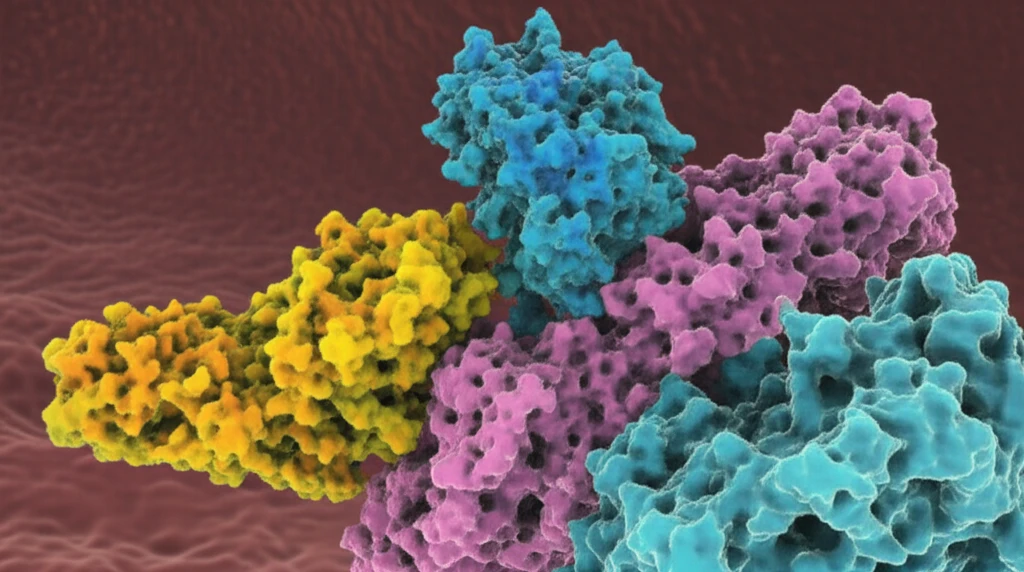
MIF is a protein that functions as a cytokine, enzyme, endocrine regulator, and chaperone molecule. It binds to the cell-surface receptor CD74, which, in association with CD44, triggers a cascade of signals inside the cell. MIF also acts as a ligand for chemokine receptors like CXCR2, CXCR4, and CXCR7. Complementing MIF is D-DT, a more recently identified member of the MIF superfamily.
The combined pharmacological and clinical properties of MIF and D-DT suggest that inhibiting them simultaneously could yield synergistic benefits. This article will focus on the roles these proteins play in human immune-inflammatory, autoimmune, and chronic respiratory diseases, providing an updated look at the progress in identifying specific small-molecule inhibitors targeting these proteins.
Macrophages: Central Players in Inflammatory Disease
Macrophages are highly plastic cells that regulate inflammatory and fibrotic processes across several autoimmune and inflammatory rheumatic diseases. These cells shift within a range of pro-inflammatory and anti-inflammatory phenotypes, making them critical mediators of disease progression. Macrophage migration inhibitory factor (MIF) is a pleiotropic cytokine originally identified as a T cell-derived factor that inhibits macrophage migration, but it has since been recognized as a key player in the progression of various conditions. Dysregulation of macrophage function is implicated in autoimmune diseases, where their phagocytic function becomes weakened and abnormal activation occurs.
Current Anti-Inflammatory Therapies and Their Shortcomings
Current anti-inflammatory therapies face significant limitations in treating immune-mediated diseases, particularly in their inability to selectively target disease-relevant immune cells while preserving protective populations. One promising direction to overcome these limitations is the development of narrow-spectrum migration inhibitors that selectively block the trafficking of specific immune cell subsets. Macrophage polarization—the balance between pro-inflammatory M1 and anti-inflammatory M2 phenotypes—has emerged as a critical therapeutic target, with histone deacetylases (HDACs) identified as potential contributors and therapeutic targets in this process. These approaches aim to restore immune homeostasis without the broad immunosuppression associated with conventional treatments.
Understanding Macrophage Biology and Migration
Macrophages are key players in inflammation, pathogen defense, and tissue repair, influenced not only by biochemical cues but also by the mechanical properties of their microenvironment. Research has revealed that extracellular matrix stiffness, shear stress, and cyclic stretch all shape macrophage behavior through mechanotransduction pathways. The understanding of monocyte and macrophage biology in inflammation has advanced significantly through studies of chemoattractants, inflammasomes, and integrins that guide their function during inflammatory events. Clinical trials of macrophage-based targeted drugs and nanoparticle-based therapies represent recent milestones in translating this foundational research into therapeutic applications.
Decoding MIF and D-DT: What You Need to Know
MIF, first identified in the late 1960s, gets its name from its ability to inhibit macrophage migration. This multifaceted protein exhibits properties of a cytokine, endocrine molecule, chaperone-like protein, and enzyme [1,2]. Beyond its role in inflammation and immunity, MIF is also a hormone released by the pituitary and adrenal glands during hypothalamic-pituitary-adrenal (HPA) axis activation. It also serves as a cytosolic chaperone and displays intrinsic enzymatic activities, such as D-dopachrome, phenylpyruvate tautomerase, and thiol-protein oxidoreductase activities.
- Similarities: Both catalyze tautomerization, with D-DT producing 5,6-dihydroxyindole from keto-enol tautomerization and decarboxylation.
- Differences: D-DT is less enzymatically active than MIF, engages the CD74 receptor differently, and lacks the pseudo-(E)LR motif for CXCR2 and CXCR4 binding [4,5].
Macrophage Polarization in Inflammatory Regulation
Recent studies have demonstrated how macrophages adapt their phenotypes in response to their surroundings, underscoring the importance of polarization changes in various inflammatory conditions. Macrophage polarization plays a vital role in regulating inflammation, and the balance of this process is crucial for maintaining tissue health and influencing disease progression. The molecular mechanisms underlying these polarization states are becoming increasingly understood, revealing potential therapeutic targets for modulating immune responses. This research highlights the dynamic nature of macrophage function and its central role in both promoting and resolving inflammation.
Challenges in Macrophage-Targeted Therapies
Dysregulation in inflammation is a major factor identified in many chronic infections, lung pathologies, foam cell formation, and autoimmune diseases such as diabetes. Metabolic pathways and their intermediates have a significant influence on macrophage polarization, complicating therapeutic interventions. The dual roles of macrophages in both promoting tissue damage and facilitating repair create challenges in developing treatments that can selectively modulate their function. Understanding how macrophage metabolism becomes dysregulated in disease states remains a critical obstacle to developing effective targeted therapies.
Macrophage Subtypes and Therapeutic Potential
Integrating recent advances in macrophage biology provides a comprehensive framework for understanding their dual roles in immune regulation and tissue homeostasis. The heterogeneity of macrophage subtypes, their distribution across tissues, and their polarization states offer insights for treating inflammatory and age-related diseases through macrophage-centered immunomodulation. Different macrophage populations exhibit distinct functional characteristics that can be leveraged for therapeutic purposes. This comparative approach to understanding macrophage biology is essential for developing targeted interventions that can address the complex roles these cells play in health and disease.
The Future of MIF and D-DT in Therapy
MIF and D-DT are multifunctional proteins with a range of functions, including immunomodulatory properties, and their expressions are often upregulated in several diseases. In addition, these two proteins could be effective biomarkers or promising therapeutic target candidates in several human disorders.
Mechanotransduction in Macrophage Function
In innate immune cells like monocytes and macrophages, mechanotransduction plays a vital role in shaping inflammatory responses, phagocytosis, migration, and tissue remodeling. This mechanosensing capability allows macrophages to integrate physical cues from their environment with biochemical signals to mount appropriate immune responses. Understanding how mechanical forces influence macrophage behavior opens new avenues for therapeutic intervention in inflammatory diseases. The interplay between mechanical and chemical signaling in macrophages represents a frontier in immunology research.
Emerging Therapeutic Horizons
The field of macrophage-based therapeutics continues to evolve, with nanoparticle delivery systems and targeted cell therapies showing promise in preclinical and early clinical studies. Future research will likely focus on personalized approaches that account for individual variations in macrophage function and disease presentations. The development of biomarkers to monitor macrophage polarization states in patients could enable more precise therapeutic interventions. These advances suggest a future where immune modulation becomes increasingly targeted and effective.
Overcoming Systemic Barriers to Treatment
Translating macrophage research into effective treatments requires addressing systemic challenges including drug delivery to specific tissue sites, maintaining therapeutic efficacy while minimizing side effects, and navigating regulatory pathways for novel biologics. The complexity of immune regulation means that interventions targeting macrophages must be carefully calibrated to avoid disrupting beneficial immune functions. Collaborative efforts between basic researchers, clinicians, and industry partners will be essential for overcoming these barriers and bringing new therapies to patients.
Patient Access and Quality of Life
Ultimately, the success of any new therapy depends on its accessibility to patients and its ability to improve quality of life. Macrophage-targeted treatments have the potential to offer more effective alternatives to conventional immunosuppressive therapies, potentially reducing side effects and improving patient outcomes. As these therapies move through clinical development, ensuring equitable access across diverse populations will be crucial. The real-world impact of these advances will be measured not just in clinical outcomes but in the daily lives of patients living with immune and respiratory diseases.
Whether high levels of these cytokines represent a cause or an effect of the inflammatory milieu associated with disease pathogenesis remains unknown. Current efforts aim to develop specific strategies to restore the expression of MIF and/or D-DT and a better understanding of the overall risk:benefit ratio of these different approaches.
Despite the report of different classes of potent and selective small-molecule MIF inhibitor directed against the MIF tautomerase active site, none have been approved for clinical use. One of the current challenges is to design such inhibitors with optimized drug-like properties for clinical trials. To date, the most advanced anti-MIF therapy is imalumab, an anti-MIF antibody currently in a clinical trial for cancer treatment.