
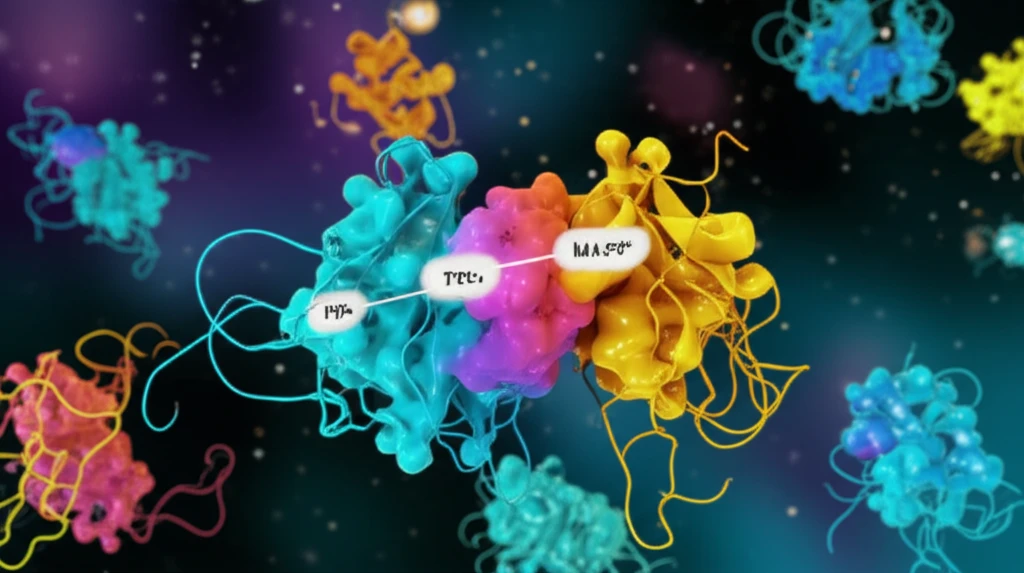
Unlocking the Secrets of MASP-3: How This Enzyme Could Revolutionize Treatment for Autoimmune Diseases

"New research sheds light on the crucial role of MASP-3 in the complement system and its potential as a therapeutic target."
The human body's defense system, known as the complement system, is a complex network of proteins that work together to protect against infection and maintain tissue homeostasis. However, when this system becomes dysregulated, it can lead to a variety of autoimmune and inflammatory diseases. Recent research has focused on understanding the intricate mechanisms that govern the complement system to identify potential therapeutic targets.
One of the key players in the complement system is mannose-binding lectin-associated serine protease 3 (MASP-3). MASP-3 is involved in the lectin pathway, one of the three major pathways of complement activation. This enzyme has garnered significant attention due to its unique role in activating factor D, a crucial component of the alternative pathway. Understanding how MASP-3 is activated and how it interacts with other complement proteins is essential for developing targeted therapies.
This article delves into the latest research on MASP-3, exploring its activation mechanisms, interactions with other complement factors, and potential implications for treating autoimmune diseases. We will unpack complex scientific findings in an accessible way, providing insights into how this enzyme could revolutionize the treatment of conditions characterized by complement dysregulation.
MASP’s Cultural Reach
The São Paulo Museum of Art, or MASP, is an art museum in São Paulo, Brazil, recognized as a landmark and symbol of modern Brazilian architecture. Its original 1968 headquarters is a concrete-and-glass structure designed by Lina Bo Bardi, while the institution was founded in 1947 as a private nonprofit organization. MASP’s collection contains about 10,000 works from Africa, Asia, Europe, the Americas, and Brazil, spanning antiquity through the 21st century and including paintings, sculptures, drawings, photographs, clothing, and other media.
Evidence Limits
The supplied source material does not describe standard approaches, accepted methods, or limitations related to MASP-3 or autoimmune-disease treatment. Any account of established methods would therefore require additional medical and scientific sources. Conclusions in this area should remain appropriately cautious until such evidence is provided.
Historical Context
The supplied source material does not document the history or foundational discoveries of MASP-3. It therefore cannot support a reliable timeline of enzyme research or autoimmune-disease milestones. A historical account would require dedicated biomedical sources.
Decoding the Activation Mechanism of MASP-3
MASP-3, along with MASP-1 and MASP-2, are serine proteases associated with mannose-binding lectin (MBL). These proteases circulate in the blood as zymogens, inactive precursor enzymes, in complex with pattern recognition molecules (PRMs) such as MBL, collectins, and ficolins. Activation of the lectin pathway is initiated when these PRMs recognize and bind to specific carbohydrate patterns on the surface of pathogens or altered self-cells.
- Pro-factor D Activation: MASP-3 converts pro-factor D into its active form, factor D.
- Alternative Pathway Link: This activation links the lectin and alternative pathways.
- Resting Conditions: A significant portion of MASP-3 remains active even under "resting" conditions.
The 1968 Floating Museum
A 2023 account describes Lina Bo Bardi’s MASP as São Paulo’s iconic 1968 floating museum. The building is presented as having a 74-meter red-concrete span, glass easels, and democratized public space below. These details concern MASP’s architecture and public design, not current research on the MASP-3 enzyme.
Evidence Not Supplied
No source material was supplied for counterarguments or failures involving MASP-3. The available materials do not establish clinical shortcomings, experimental failures, or competing interpretations in autoimmune-disease research. Such claims should not be made without relevant biomedical evidence.
No Biomedical Comparison
The supplied sources do not compare MASP-3 with other enzymes, treatments, or therapeutic strategies. They concern the São Paulo Museum of Art and its architecture, collections, and visitor information. A meaningful comparison would require sources addressing the relevant medical alternatives.
The Future of MASP-3 Research and Therapeutic Potential
The findings presented in recent research pave the way for further investigation into the regulatory mechanisms governing MASP-3 activation and its interactions within the complement system. A deeper understanding of these processes could lead to the development of targeted therapies for autoimmune diseases characterized by complement dysregulation. By selectively modulating MASP-3 activity, it may be possible to restore balance to the complement system and alleviate the symptoms of these debilitating conditions.
Cautious Synthesis
The supplied material supports describing MASP as a major cultural institution, but it does not support conclusions about MASP-3 or autoimmune diseases. The museum is identified as a private nonprofit founded in 1947, with a 1968 Lina Bo Bardi building and a collection of about 10,000 works. Expert commentary on the enzyme would require qualified biomedical sources.
Research Needed
The supplied sources do not provide projections or next research directions for MASP-3. They cannot substantiate claims about future therapies, clinical trials, or medical applications. Further discussion should wait for current biomedical research evidence.
Contextual Limits
The available source material places MASP within Brazil’s cultural and architectural context rather than a health-care or autoimmune-disease context. It identifies the institution as one of the country’s principal cultural centers and describes its landmark architecture. No systemic medical challenges can be inferred from these sources.
Documented Public Impact
The supplied materials document MASP’s public and cultural role, including its status as a widely visited museum and its collection of approximately 10,000 artworks. Visitor information states that tickets include admission to all galleries on the day of the visit and that children under 14 must be accompanied. These sources do not describe patient experiences or the real-world impact of MASP-3 treatment.