
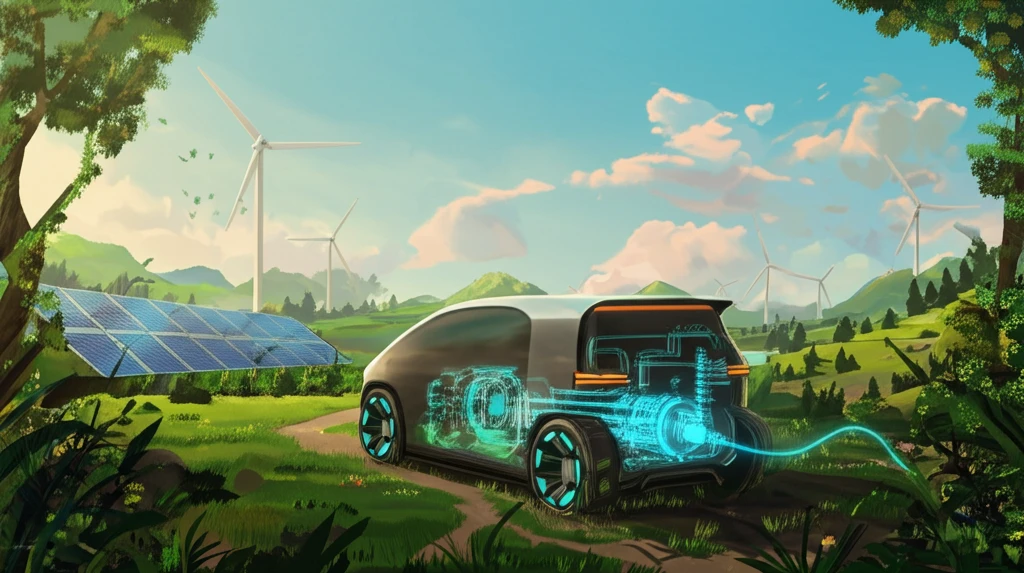
Revolutionizing Transportation: How Integrated Starter-Generator Systems are Shaping the Future of Electric Vehicles

"Discover how cutting-edge power hardware-in-the-loop simulations are optimizing starter-generator systems, paving the way for more efficient and eco-friendly transportation."
Transportation systems have dramatically evolved, yet their reliance on petroleum contributes significantly to global air pollution. The urgent need for energy-efficient and environmentally friendly transportation alternatives is clear, driving the rise of more-electric and all-electric vehicles (EVs) and hybrid electric vehicles (HEVs).
For HEVs and more electric aircraft (MEA), mechanical engines remain vital, and power electronics converters are becoming increasingly important. These converters enhance controllability and efficiency, paving the way for innovations like the Integrated Starter-Generator System (ISGS).
The ISGS represents a key technology in reducing fuel consumption and improving efficiency in HEVs and MEAs. By combining traditional internal combustion engines (ICE) with electric drives, optimized powertrain architectures are emerging. Different types of electric machines, such as asynchronous induction machines (AIM) and permanent magnet synchronous machines (PMSM), are now operating as integrated starter generators (ISG), each requiring sophisticated control methods.
Data Integration and System Modernization Trends
Modern data integration platforms are undergoing significant architectural evolution. Microsoft Fabric Data Factory represents the next generation of integration tools, offering a simpler architecture with built-in AI capabilities. Existing workloads can upgrade to Fabric to access new capabilities across data science, real-time analytics, and reporting, reflecting a broader industry trend toward integrated solutions.
Conventional ISG Design Considerations
Integrated starter-generator (ISG) systems typically combine the functions of a conventional starter motor and alternator into a single unit. This consolidation aims to reduce component count, weight, and complexity in vehicle electrical architectures. However, balancing the dual functions of starting the engine and generating electrical power within one compact unit presents significant engineering challenges. The approach requires careful thermal management and electromagnetic design optimization to ensure reliable operation under varying load conditions.
Foundations of Electromechanical Integration
The concept of combining starting and generating functions dates to early automotive electrical engineering efforts. Belt-driven starter-generator systems emerged as a transitional technology between conventional starters and more advanced ISG configurations. Early implementations faced challenges with efficiency at low speeds and integration complexity with existing powertrain architectures. These foundational experiences shaped subsequent development of modern ISG designs for hybrid and electric vehicle applications.
Understanding Integrated Starter-Generator Systems
At its core, the ISGS combines the functions of a starter and generator into a single, highly integrated unit. In engine starting mode, it operates as a motor, using a controller to initiate the engine. Once the engine runs stably, it switches to generator mode, transferring power to provide for the secondary electrical needs of the vehicle or aircraft.
- Reduced fuel consumption
- Improved efficiency
- Higher power density
- Simplified power electronics architecture
Contemporary ISG Development Directions
Current research in integrated starter-generator technology focuses on improving power density and efficiency across a wider operating range. Studies explore advanced motor topologies and power electronics configurations to enhance performance. Researchers are investigating thermal management strategies to address heat dissipation challenges in compact ISG designs. The integration of ISG systems with vehicle energy management algorithms represents an active area of investigation.
Challenges in ISG Implementation
Some critics argue that ISG systems may not provide sufficient cost advantages over separate starter and generator components in certain vehicle segments. Reliability concerns have been raised regarding the dual-function nature of ISG units operating under demanding conditions. Market adoption has been slower than initially anticipated in some regions due to technical and economic factors. These perspectives highlight the need for continued improvement in ISG technology and business case validation.
ISG vs. Conventional Architectures
ISG systems offer potential advantages in terms of weight reduction and packaging efficiency compared to discrete starter-alternator configurations. The consolidated design may reduce manufacturing complexity and assembly time in vehicle production. However, the failure mode implications of a single unit serving dual critical functions require careful consideration in vehicle design. Performance characteristics under transient conditions differ between ISG and conventional approaches, influencing system-level trade-offs.
The Future is Integrated
The development and validation of the ISGSE mark a significant step forward in transportation electrification. By using advanced simulation techniques, engineers can design and test more efficient and reliable ISGS solutions, accelerating the transition to a future where electric and hybrid vehicles dominate our roads and skies, reducing pollution and dependence on fossil fuels.
Integrated Assessment of ISG Technology
Integrated starter-generator systems represent a significant architectural approach in vehicle electrification strategies. The technology addresses the need for multifunctional components in increasingly electrified powertrains. Industry perspectives vary on the optimal application scenarios for ISG versus alternative configurations. Continued development and real-world validation will be important for establishing the role of ISG systems in future vehicle platforms.
Emerging Directions in ISG Development
Future ISG systems may incorporate advanced materials and manufacturing techniques to improve performance metrics. Integration with 48-volt mild hybrid architectures represents a near-term application opportunity. Research into bidirectional power flow capabilities could expand ISG functionality in vehicle-to-grid applications. The evolution of ISG technology will likely be influenced by broader trends in power electronics and motor design.
ISG Systems Within Vehicle Electrification
The adoption of ISG systems occurs within the broader context of vehicle electrification and emissions reduction efforts. Supply chain considerations and manufacturing scalability present challenges for widespread ISG implementation. Regulatory frameworks and market incentives may influence the pace of ISG adoption across different vehicle segments. Interoperability with existing vehicle electrical systems requires careful integration planning.
Practical Considerations for ISG Deployment
Service technicians face new skill requirements for diagnosing and maintaining ISG-equipped vehicles. Consumer acceptance of ISG technology depends on reliability track records and perceived value. The transition from conventional to ISG architectures may require workforce adaptation in automotive manufacturing and service sectors. Real-world performance data from early ISG implementations will inform future design and deployment decisions.