
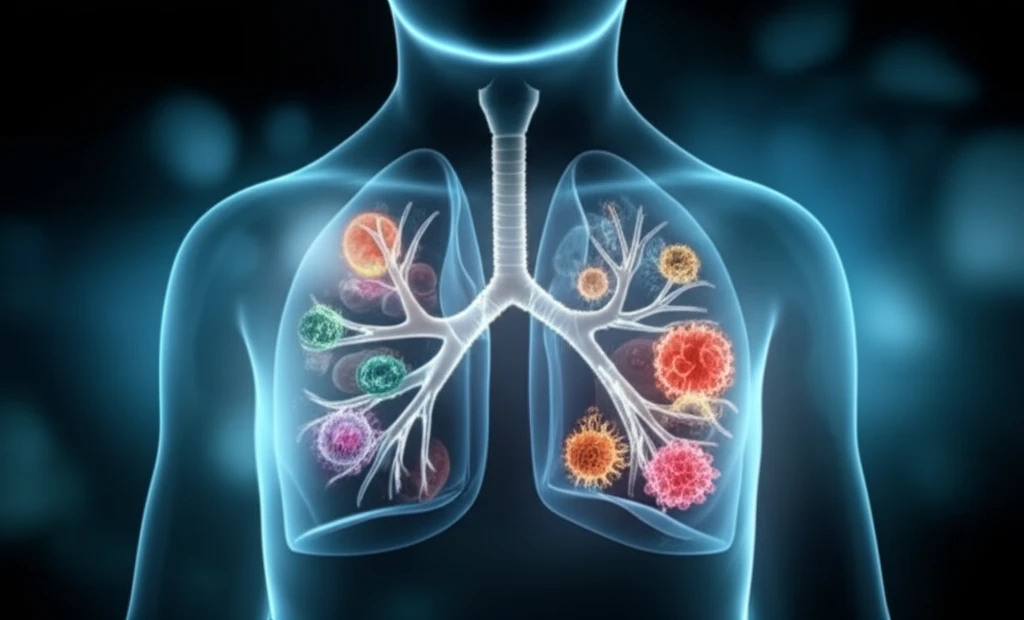
Surreal illustration of a child's lung intertwined with viruses and inflammatory cells, symbolizing the complex relationship between infection and asthma.

Unlocking the Mystery: Infections, Eosinophilia, and Childhood Asthma

"A Deep Dive into the Intricate Relationship Between Early Infections, Immune Responses, and the Development of Asthma in Children"


Asthma's underlying mechanisms are complex and not entirely understood. One aspect is the interaction between infections, the immune system, and the onset of asthma in children. This article explores this connection, providing insights and practical knowledge.

For decades, researchers have investigated how respiratory pathogens contribute to asthma. However, critical questions remain unanswered. Which pathogens are most likely to trigger recurrent wheezing and asthma? Do these early infections directly cause asthma, or do they simply affect individuals who are already predisposed? What specific immunological processes are involved?

This article will explore the interactions between respiratory infections and asthma development, emphasizing the roles of specific pathogens and eosinophilia. Gain a deeper understanding of the underlying science, empowering you to make informed decisions about your child's health.

The Infection Link: How Early Infections Impact Asthma Development

Surreal illustration of a child's lung intertwined with viruses and inflammatory cells, symbolizing the complex relationship between infection and asthma.

It's well-documented that many infants hospitalized with bronchiolitis later develop asthma. Studies show that babies born during the winter virus season have a higher risk of developing asthma by age six. While the precise mechanisms are debated, it's clear that respiratory infections play a significant role in asthma development.

Respiratory syncytial virus (RSV) is often the main culprit. Most children contract RSV before age three, making it a major cause of bronchiolitis in infants. While no studies directly prove RSV causes asthma, research indicates a strong link between the timing of RSV infection and later asthma development.

  • RSV and Timing: Infants born just before peak RSV season face a heightened risk of developing asthma.
  • Preventive Measures: Giving high-risk children anti-RSV immune globulin can improve lung function and reduce asthma and allergy incidence.
  • The Big Picture: Since nearly all children contract RSV, other factors like genetics and environment also contribute to asthma's development.
Recent research highlights human rhinovirus (HRV) as another key player. While HRV is often found in asymptomatic children, it's a significant cause of wheezing illnesses. The severity of the illness can depend on individual factors or the specific virus strain. Studies show that HRV infections during the first three years of life can increase asthma risk tenfold. Other viruses, such as human bocavirus (HBoV) and human metapneumovirus (HMPV), have also been linked to wheezing and asthma.

The Path Forward: Focus on Early Intervention

Viral and bacterial infections significantly impact childhood respiratory health and can lead to long-term issues like recurrent wheezing. There's a strong link between early childhood infections and asthma, but the exact mechanisms are still unclear. A deeper understanding of these processes will enable clinicians to improve diagnosis, treatment, and monitoring of asthma. It's essential to shift focus from solely treating symptoms to addressing the root causes, ensuring the best possible care for young patients.

About this Article -

This article was crafted using a human-AI hybrid and collaborative approach. AI assisted our team with initial drafting, research insights, identifying key questions, and image generation. Our human editors guided topic selection, defined the angle, structured the content, ensured factual accuracy and relevance, refined the tone, and conducted thorough editing to deliver helpful, high-quality information.See our About page for more information.

Everything You Need To Know

1

How are early childhood infections linked to the development of asthma?

The connection between early infections and asthma development in children is complex. Respiratory infections, especially those occurring in early childhood, are believed to play a significant role in the development of asthma. Specific pathogens like Respiratory Syncytial Virus (RSV) and human rhinovirus (HRV) have been identified as key players. However, the precise mechanisms through which these infections contribute to asthma are still not completely understood. Further research is needed to fully understand the nature and factors related to childhood asthma.

2

What is Respiratory Syncytial Virus (RSV), and how does it relate to asthma in children?

Respiratory Syncytial Virus (RSV) is a common virus that affects most children before the age of three. It is a major cause of bronchiolitis in infants, which is the inflammation of the small airways in the lungs. Research suggests a strong link between the timing of RSV infection and later asthma development. Infants born just before peak RSV season appear to face a heightened risk of developing asthma. Giving anti-RSV immune globulin to high-risk children can improve lung function and reduce asthma and allergy incidence. However, other factors also play a role.

3

What role does human rhinovirus (HRV) play in childhood asthma?

Human rhinovirus (HRV) is another key virus that has been identified as an important contributor to childhood asthma. While HRV is often found in asymptomatic children, it is also a significant cause of wheezing illnesses. Studies have shown that HRV infections during the first three years of life can increase the risk of developing asthma tenfold. The severity of the illness caused by HRV can vary depending on individual factors or the specific virus strain involved.

4

What is the role of Eosinophilia in the context of asthma and infections?

Eosinophilia is not specifically explained. It usually refers to a higher than normal level of eosinophils in the blood. Eosinophils are a type of white blood cell that is part of the immune system. They are often associated with allergic reactions and parasitic infections. In the context of asthma and infections, eosinophilia may indicate an immune response to certain pathogens or allergens that could be contributing to the development or exacerbation of asthma symptoms. Further studies are needed to confirm the role.

5

Why is early intervention important in addressing childhood respiratory infections and asthma?

Early intervention is important because viral and bacterial infections can significantly impact childhood respiratory health and lead to long-term issues such as recurrent wheezing and asthma. Shifting focus from solely treating symptoms to addressing the root causes of these issues is essential for providing the best possible care for young patients. A deeper understanding of the processes involved in early childhood infections and asthma development will enable clinicians to improve diagnosis, treatment, and monitoring of asthma.

Newsletter Subscribe

Subscribe to get the latest articles and insights directly in your inbox.