
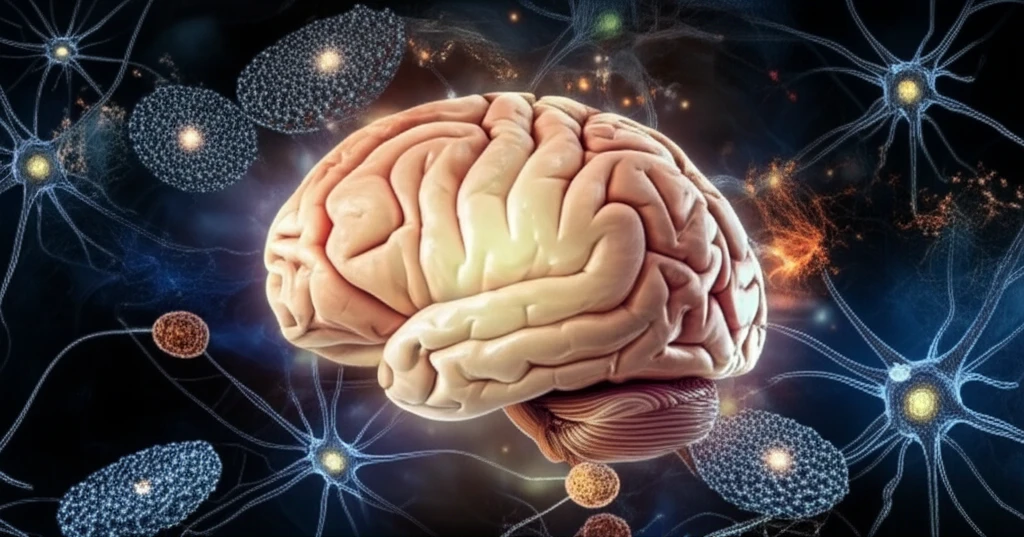
Unlocking the Mystery: How a Tiny Brain Receptor Could Revolutionize Alzheimer's Treatment

"Delving into the world of alpha-7 nAChR and its potential to combat Alzheimer's Disease."
Alzheimer's disease (AD), a progressive neurological disorder, currently affects millions worldwide, and as the global population ages, this number is expected to rise dramatically. Characterized by memory loss, cognitive decline, and behavioral changes, AD presents a significant challenge to individuals, families, and healthcare systems. While research has made significant strides in understanding the disease, effective treatments remain elusive. However, a promising avenue of exploration has emerged: the alpha-7 nicotinic acetylcholine receptor (a7 nAChR), a tiny receptor in the brain with big potential.
The a7 nAChR is a type of receptor that is activated by acetylcholine, a neurotransmitter crucial for brain function. This receptor is particularly interesting because of its role in various brain processes, including memory, learning, and inflammation. Recent research has revealed that the a7 nAChR might play a pivotal role in Alzheimer's disease, offering new avenues for therapeutic intervention. The receptor's involvement in critical processes such as amyloid-beta (Aβ) accumulation and neuronal function makes it a key focus for scientists.
This article explores the role of the a7 nAChR in Alzheimer's disease. We delve into its structure, functions, and how it interacts with the disease's core mechanisms. We'll explore how this receptor influences amyloid-beta accumulation, synaptic plasticity, and cognitive abilities. Furthermore, we will examine the potential of targeting a7 nAChR as a therapeutic strategy, looking at the latest research and clinical trials that offer hope for the future of AD treatment.
Understanding the Alpha-7 Nicotinic Acetylcholine Receptor (a7 nAChR)
The a7 nAChR is a protein found on the surface of nerve cells in the brain. It belongs to a family of receptors that respond to acetylcholine. When acetylcholine binds to the a7 nAChR, it opens a channel that allows ions, particularly calcium, to flow into the cell. This influx of ions triggers a cascade of cellular events influencing nerve cell function. The a7 nAChR is found in brain regions critical for cognitive functions, such as the cerebral cortex and hippocampus. This localization makes it a compelling target for therapies aiming to address cognitive decline in AD.
- Neurotransmitter Release: a7 nAChRs help regulate the release of neurotransmitters like acetylcholine, which is crucial for memory and cognitive functions.
- Synaptic Plasticity: By influencing the strength of connections between neurons (synapses), a7 nAChRs play a key role in learning and memory.
- Inflammation: a7 nAChRs can reduce inflammation in the brain, which is believed to contribute to the progression of AD.
- Neuronal Survival: The receptor can promote the survival of neurons, which helps protect against cell death in the brain.
A Brighter Future for Alzheimer's Treatment
The a7 nAChR is a promising avenue for Alzheimer's disease treatment and understanding its role in AD pathogenesis is vital to developing effective therapies. By continuing research on this receptor, we can develop new treatments and slow down the progression of the disease. This could improve the lives of millions worldwide affected by this devastating illness. The future of AD treatment depends on a multidisciplinary approach. While research on a7nAChR is progressing, other important factors will be considered in drug development like disease stage, genetics, and lifestyle. There is reason to be hopeful, and the ongoing efforts of researchers, clinicians, and patients around the world bring the world closer to the much-needed breakthroughs in the fight against Alzheimer's disease.