
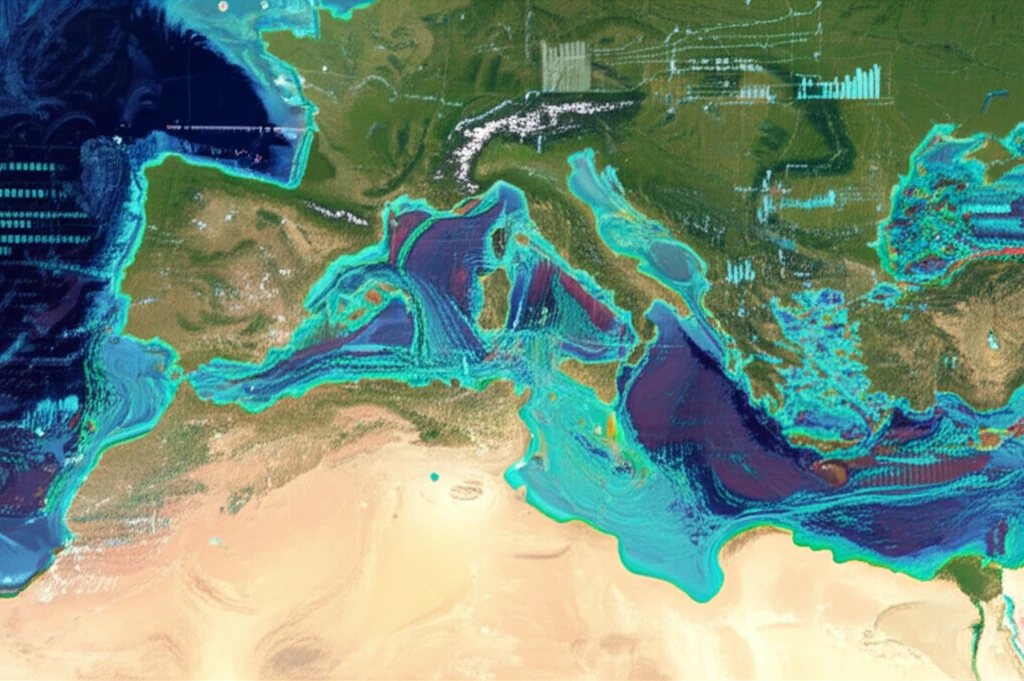
Satellite view of the Mediterranean Sea with ocean currents and data overlays.

Unlocking Ocean Secrets: How Mediterranean Monitoring Systems Keep Our Seas Healthy

"Dive into the world of operational oceanography and discover how advanced monitoring systems are safeguarding the Mediterranean's precious marine environment."


Our oceans are vital to the global economy and society, supporting countless activities from fishing and transportation to recreation. However, these activities are increasingly threatened by human impact and natural hazards. To ensure we can sustainably use marine resources, we need accurate, reliable information about the ocean's current state and its future variability.

That's where operational oceanography comes in. Since the 1990s, international organizations and research communities have recognized the importance of developing worldwide networks for sharing and using real-time ocean data. This data is crucial for predictive models that help us understand and manage marine environments, from physical conditions to the health of marine ecosystems.

The Mediterranean Ocean Colour Observing System (OCOS) is at the forefront of this effort. As part of the European Ocean Colour Service, OCOS delivers high-quality data and products for the Mediterranean Sea, using advanced satellite technology and rigorous quality control measures. This system helps bridge the gap between the data provided by space agencies and the needs of marine researchers, policymakers, and industries reliant on the ocean.

Why Is Ocean Colour Monitoring So Important?

Satellite view of the Mediterranean Sea with ocean currents and data overlays.

Ocean color data provides unique and essential information about the biological components of the marine environment. Even though assimilating ocean color data into models is still developing, measurements of phytoplankton pigment concentration, specifically chlorophyll (CHL), are increasingly used to validate marine ecosystem models. Satellites play a vital role in gathering this information, supplementing traditional in-situ (on-site) analysis methods.

However, achieving the desired accuracy in ocean color monitoring is challenging. Factors such as the calibration of space sensors, atmospheric correction processes, and the unique bio-optical characteristics of the ocean can all introduce uncertainties. Global algorithms used to retrieve chlorophyll levels often struggle to perform well in specific regions like the Mediterranean Sea, where water properties differ significantly from the global average.

  • Data Flow Uncertainty: The system must be able to track and manage uncertainties in the data as it moves through the processing stages.
  • Backup Solutions: In case of system failures, alternative solutions must be in place to ensure end-users continue to receive the data they need.
  • Product Quality Assessment: The quality of the data products must be scientifically assessed to ensure their accuracy and reliability.
The Mediterranean OCOS addresses these challenges by using customized processing chains and regional bio-optical algorithms. These tailored approaches improve the accuracy of ocean color data in the Mediterranean, providing a more reliable picture of the marine environment. By focusing on regional needs, the system supports better management of human activities and the sustainable exploitation of marine resources.

Looking Ahead: Continuous Improvement and Data Accessibility

The Mediterranean OCOS is committed to ongoing development and improvement. By addressing the challenges of data accuracy and reliability, the system provides valuable insights into the health and dynamics of the Mediterranean Sea. As technology advances and our understanding of marine ecosystems deepens, the OCOS will continue to play a crucial role in supporting sustainable ocean management and protecting this vital resource for future generations.

About this Article -

This article was crafted using a human-AI hybrid and collaborative approach. AI assisted our team with initial drafting, research insights, identifying key questions, and image generation. Our human editors guided topic selection, defined the angle, structured the content, ensured factual accuracy and relevance, refined the tone, and conducted thorough editing to deliver helpful, high-quality information.See our About page for more information.

Everything You Need To Know

1

What is operational oceanography, and why is it important?

Operational oceanography is the systematic and long-term study of the oceans through continuous data collection and modeling. It is important because it delivers real-time data critical for predictive models, aiding in the sustainable management of marine environments, understanding physical conditions, and maintaining the health of marine ecosystems. It allows us to monitor and manage marine resources effectively in the face of increasing human impact and natural hazards. Without operational oceanography, our ability to predict and mitigate the effects of environmental changes on the oceans would be severely limited. Related systems include worldwide networks for sharing and using real-time ocean data.

2

What is the Mediterranean Ocean Colour Observing System (OCOS), and what is its purpose?

The Mediterranean Ocean Colour Observing System (OCOS) is a specific system designed to provide high-quality data and products for the Mediterranean Sea. It is significant as part of the European Ocean Colour Service, using satellite technology and in-situ measurements to offer accurate monitoring and forecasting of the marine environment. OCOS bridges the gap between data from space agencies and the needs of marine researchers and policymakers. Without such a system, decision-makers would lack the detailed, reliable information needed to sustainably manage the Mediterranean Sea and its resources. OCOS customized processing chains and regional bio-optical algorithms to improve accuracy of ocean color data.

3

Why is it so important to monitor ocean color?

Ocean color monitoring is crucial because it offers unique data about the biological components of the marine environment. Specifically, measurements of phytoplankton pigment concentration, like chlorophyll (CHL), are used to validate marine ecosystem models. Satellites gather this information, supplementing traditional on-site analysis. Without it, we would lack essential insights into the health of marine ecosystems, making it harder to manage and protect marine resources effectively. Ocean color monitoring faces challenges like sensor calibration, atmospheric correction, and the unique bio-optical characteristics of different ocean regions.

4

What is data flow uncertainty, and why is it important to address it in systems like the Mediterranean OCOS?

Data flow uncertainty refers to the need to track and manage uncertainties as data moves through the processing stages in systems like the Mediterranean OCOS. It is important because untracked uncertainties can lead to inaccurate conclusions about the state of the marine environment, undermining the reliability of management decisions. Addressing data flow uncertainty ensures that end-users receive the most accurate data possible, improving the effectiveness of marine resource management. The Mediterranean OCOS uses customized processing chains and regional bio-optical algorithms to address these challenges.

5

What is product quality assessment, and why is it important for monitoring systems like the Mediterranean OCOS?

Product quality assessment involves scientifically assessing the accuracy and reliability of the data products generated by monitoring systems like the Mediterranean OCOS. It is important because it ensures that the data used for decision-making is of high quality, leading to more effective and sustainable management of marine resources. Without quality assessment, there is a risk that inaccurate or unreliable data could be used, leading to poor environmental outcomes. The Mediterranean OCOS is committed to ongoing development and improvement, using continuous product quality assessment to improve the data.

Newsletter Subscribe

Subscribe to get the latest articles and insights directly in your inbox.