
Unlocking Male Fertility: The Role of Phospholipases in Sperm Health

"Could targeting these enzymes revolutionize infertility treatments and contraception?"
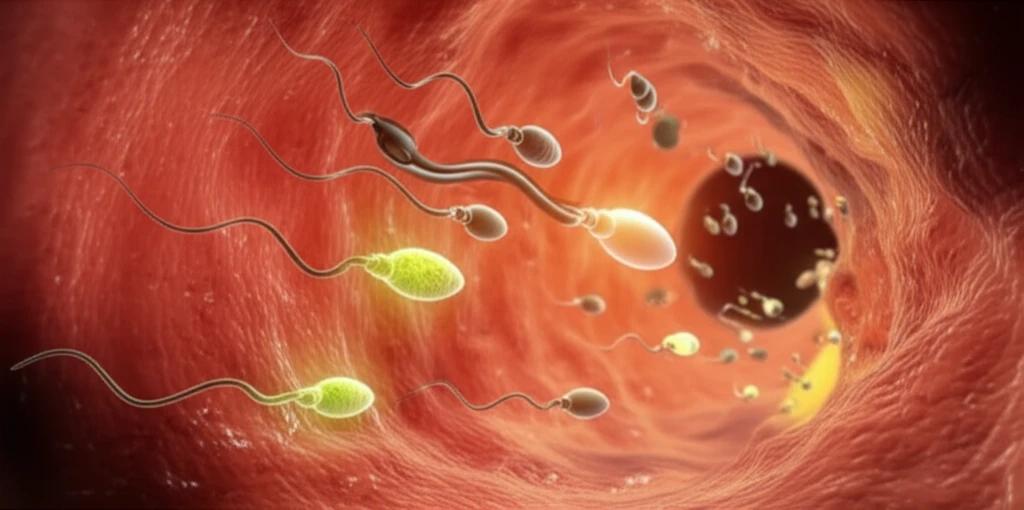
For fertilization to occur in mammals, sperm must undergo a complex journey through the female reproductive tract, completing several critical steps. At the heart of these processes are phospholipases, enzymes that regulate the lipid composition of sperm by hydrolyzing phospholipids. These enzymes play diverse roles, influencing everything from sperm motility to the acrosome reaction and the activation of the egg itself.
Specifically, two phospholipases, PLCC and secreted PLA₂ of group X, are emerging as potential therapeutic targets for treating male infertility. Understanding their functions could lead to innovative solutions for couples struggling to conceive.
While the importance of lipids in sperm function is increasingly recognized, their precise role in fertilization remains somewhat mysterious. This article will explore recent discoveries about mammalian sperm phospholipases, how they operate, their impact on key stages of sperm biology, and their potential as therapeutic targets.
Phospholipases: A Diverse Family Targeting Glycerophospholipids
Phospholipids form the core structure of biological membranes and play an active role in cell signaling. They participate directly or indirectly in numerous signaling pathways via their hydrolysis. Glycerophospholipids (GPLs) are amphipathic molecules consisting of a polar phosphoalcohol head linked to two fatty acids via a glycerol molecule.
- PLA₁ and PLA₂: Hydrolyze the sn-1 and sn-2 positions of GPLs, respectively, releasing a fatty acid and a lysophospholipid.
- PLB: Hydrolyzes both sn-1 and sn-2 bonds, releasing two fatty acids.
- PLC: Specifically hydrolyzes the sn-3 bond of phosphatidylinositol 4,5-bisphosphate (PIP2), yielding inositol 1,4,5-triphosphate (IP3) and diacylglycerol.
- PLD: Hydrolyzes the phosphoalcohol bond, releasing phosphatidic acid and an alcohol.
The Future of Phospholipases in Fertility
Phospholipases play a crucial role in sperm physiology, with alterations in phospholipid composition affecting their activity and downstream signaling pathways. These findings help explain the links between infertility and altered sperm lipid profiles in infertile men. Select PLs, such as sPLA2-GX and PLCC, represent promising targets for developing fertility-enhancing drugs. Meanwhile, PLCζ and PLC84 inhibitors could pave the way for novel contraceptive methods.