
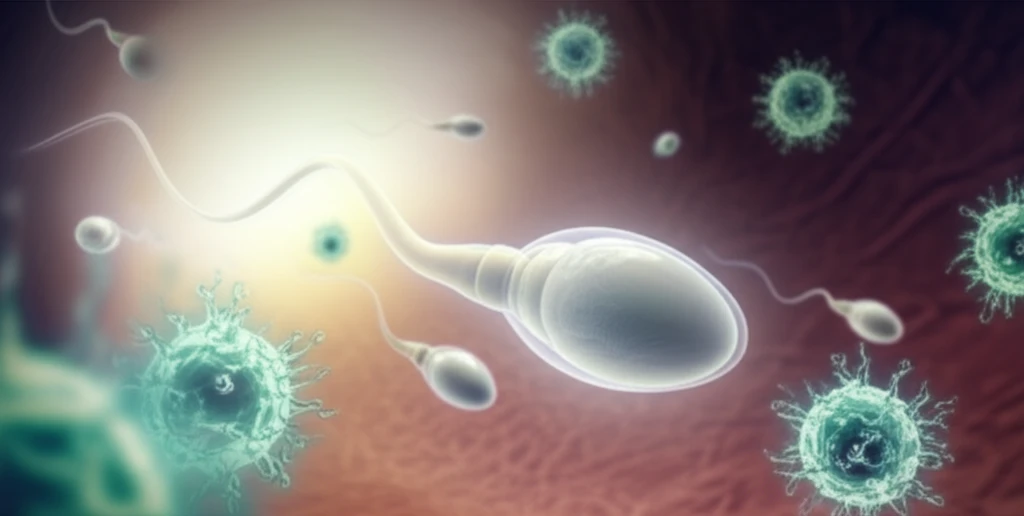
Leukemia and Male Infertility: Unraveling the Connection and Future Hopes

"Discover the surprising link between leukemia and male infertility, exploring past research, current understandings, and future strategies for fertility preservation."
Leukemia, a cancer of the blood and bone marrow, presents numerous challenges for those diagnosed. While survival rates have significantly improved, thanks to advancements in treatment, the long-term effects on overall health and well-being remain a crucial consideration. Among these concerns is the potential impact on fertility, particularly in men.
Spermatogenesis, the intricate process of sperm production, is vulnerable to disruption by various factors, including illness and medical interventions. Leukemia and its treatments, such as chemotherapy and radiation, can significantly affect the delicate hormonal balance and cellular environment necessary for healthy sperm development.
This article aims to shed light on the connection between leukemia and male infertility. We will explore the existing research, discuss the potential mechanisms involved, and highlight the latest strategies for fertility preservation, offering hope and guidance to individuals navigating this challenging landscape.
Current Statistics & Impact
Leukemia patients show impairment in endocrine hormones involved in spermatogenesis and decreased semen parameters both before and after treatment. Among long-term male survivors of childhood acute lymphoblastic leukemia, the prevalence of infertility was 46.0% compared to 17.5% in siblings (RR = 2.64, 95% CI 1.88-3.70, p < 0.001). Acute myeloid leukemia can affect sperm parameters, spontaneous acrosome reaction, and fertility capacity through changes in gonadotropins, testosterone, systemic inflammatory cytokines, and testicular factors affecting spermatogonial stem cell proliferation and differentiation.
Standard Approach, Accepted Methods & Their Limitations
Current clinical practice for leukemia patients of reproductive age typically involves fertility counseling and sperm cryopreservation prior to initiating chemotherapy or radiotherapy, given the well-established gonadotoxicity of these treatments. However, assessing actual infertility risk remains challenging due to multi-faceted treatment protocols that continuously evolve, and the disease itself can impair spermatogenesis before any intervention. Guidelines exist to balance fertility preservation offers against actual post-treatment infertility chances, but individualized risk prediction is limited by heterogeneous treatment regimens and variable patient factors.
Historical Perspective, Milestones, Foundational Discoveries
Leukemia has long been recognized as one of the most common cancers affecting patients of reproductive age, with the negative impact of chemotherapy on male fertility well established in clinical literature. Foundational research demonstrated that leukemia itself adversely affects sperm quality even before chemotherapy treatment begins, indicating a direct disease effect on spermatogenesis. The process of spermatogenesis—proliferation and differentiation of spermatogonial stem cells to generate sperm—was identified as being impaired by leukemia through endocrine hormone disruption. Aggressive chemotherapy and/or radiotherapy for leukemia treatment were established as leading to infertility or permanent male sterility.
How Leukemia Impacts Sperm Quality: Understanding the Mechanisms
Leukemia's impact on male fertility is multifaceted, stemming from both the disease itself and the treatments employed to combat it. Several mechanisms contribute to the decline in sperm quality observed in leukemia patients:
- Direct Damage to Testicular Cells: Chemotherapy and radiation, while effective in killing cancer cells, can also damage the germ cells responsible for sperm production. This damage can lead to a decrease in sperm count, motility, and morphology.
- Inflammation and Immune Response: Leukemia triggers a systemic inflammatory response, with the release of cytokines and other immune factors. These factors can disrupt the testicular microenvironment, interfering with spermatogenesis.
- Infiltration of Leukemic Cells: In some cases, leukemic cells can infiltrate the testes, directly impacting the structure and function of the testicular tissue. This infiltration can further disrupt spermatogenesis and contribute to infertility.
- Oxidative Stress: Cancer treatments, including chemotherapy, can induce oxidative stress, which damages cells and DNA. High levels of oxidative stress in the testes can impair sperm production and function.
Latest Research and Reviews
A 2026 systematic review and meta-analysis provides the first comprehensive quantitative synthesis of fertility outcomes in leukemia survivors stratified by treatment modality, sex, and leukemia subtype, revealing considerable variation in infertility risk between treatment types that complicates fertility counseling and preservation decisions. Research on chronic myeloid leukemia specifically examines the impact of first-line tyrosine kinase inhibitors and other treatments on male fertility, aiming to tailor treatment plans for CML patients concerned about future conception. The FertiTOX project framework conducted a systematic review evaluating fertility outcomes following different treatment modalities, highlighting the need for treatment-stratified data to guide clinical decision-making.
Counter Arguments and Failures
Assessing actual infertility risk after cancer treatment remains challenging due to the multi-faceted nature of evolving treatment plans, making it difficult to balance fertility preservation offers against genuine post-treatment infertility chances. Current guidelines attempt this balance but are limited by continuously evolving treatment protocols and the complex interplay between disease effects and treatment toxicity. Cancer treatment-related infertility represents an important survivorship issue that should be addressed at diagnosis and in follow-up, yet implementation gaps persist in clinical practice. The subtle impacts of leukemia on male fertility—from hormonal imbalances to cellular interactions—are often underappreciated in standard oncology care.
Comparative Analysis
Different leukemia subtypes and their respective treatments show varying impacts on male fertility, with acute lymphoblastic leukemia survivors showing 46% infertility prevalence compared to siblings, while chronic myeloid leukemia patients on tyrosine kinase inhibitors present distinct fertility considerations. Treatment modality significantly influences outcomes, with aggressive chemotherapy and radiotherapy carrying higher gonadotoxicity than targeted therapies, though long-term data on newer agents remains limited. The disease itself impairs spermatogenesis before treatment across subtypes, though mechanisms may differ between acute and chronic leukemias. Comparative data across leukemia types and treatment eras is needed to refine risk stratification for fertility counseling.
Hope for the Future: Preserving Fertility in Leukemia Patients
While leukemia and its treatments can pose significant challenges to male fertility, advancements in reproductive medicine offer hope for preserving the possibility of fatherhood. Sperm cryopreservation, the process of freezing and storing sperm samples before cancer treatment, remains the most established and effective strategy. Testicular tissue cryopreservation is showing significant advancement as well.
Synthesis & Expert Commentary
The convergence of evidence indicates that both leukemia and its treatments independently threaten male fertility through multiple mechanisms—direct disease effects on spermatogenesis and endocrine function, plus gonadotoxicity from chemotherapy, radiotherapy, and targeted agents. Current fertility preservation approaches, while established, face implementation challenges including timely referral, patient awareness, and accurate individualized risk prediction. The field is moving toward treatment-stratified fertility counseling informed by systematic reviews and meta-analyses that quantify risks by leukemia subtype, treatment modality, and patient age. Multidisciplinary collaboration between oncologists, reproductive specialists, and survivorship programs remains essential for comprehensive care.
Future Outlook & Next Frontiers
Advances in male infertility diagnostics, including genomics and molecular testing over the past 40 years, have elucidated previously idiopathic cases and may enable better prediction of leukemia patients at highest fertility risk. Research aims to tailor CML treatment plans specifically for patients concerned about future conception, moving toward comprehensive management approaches that integrate fertility preservation into standard oncologic care. Emerging spermatogonial stem cell technologies and testicular tissue cryopreservation offer potential for prepubertal patients who cannot bank sperm. Approximately 30% of male infertility cases remain idiopathic, suggesting further molecular discoveries could reveal novel preservation targets.
Broader Context & Systemic Challenges
Male infertility affects approximately 15% of couples worldwide and recent large-scale cohort studies reveal it may reflect broader health concerns beyond reproductive implications. Men with poorer semen parameters have elevated all-cause mortality compared to fertile counterparts, with a dose-response relationship suggesting semen quality serves as a biomarker for overall health. This systemic perspective is particularly relevant for leukemia survivors who face both treatment-related infertility and potential long-term health sequelae. The intersection of cancer survivorship, fertility preservation, and systemic health monitoring represents an evolving challenge for healthcare systems managing growing survivor populations.
The Human Element & Real-World Impact
Behind the statistics are individual men and couples navigating cancer diagnosis during reproductive years while confronting uncertain fertility futures, often with limited time for decision-making before urgent treatment begins. The psychological burden of potential infertility compounds cancer-related distress, affecting quality of life long after treatment completion. Disparities in access to fertility preservation—driven by cost, geography, and awareness—create inequities in reproductive options for leukemia survivors. Patient-centered approaches that integrate fertility discussions into initial treatment planning, provide decision support, and ensure long-term follow-up are critical for addressing the human dimensions of this medical challenge.