
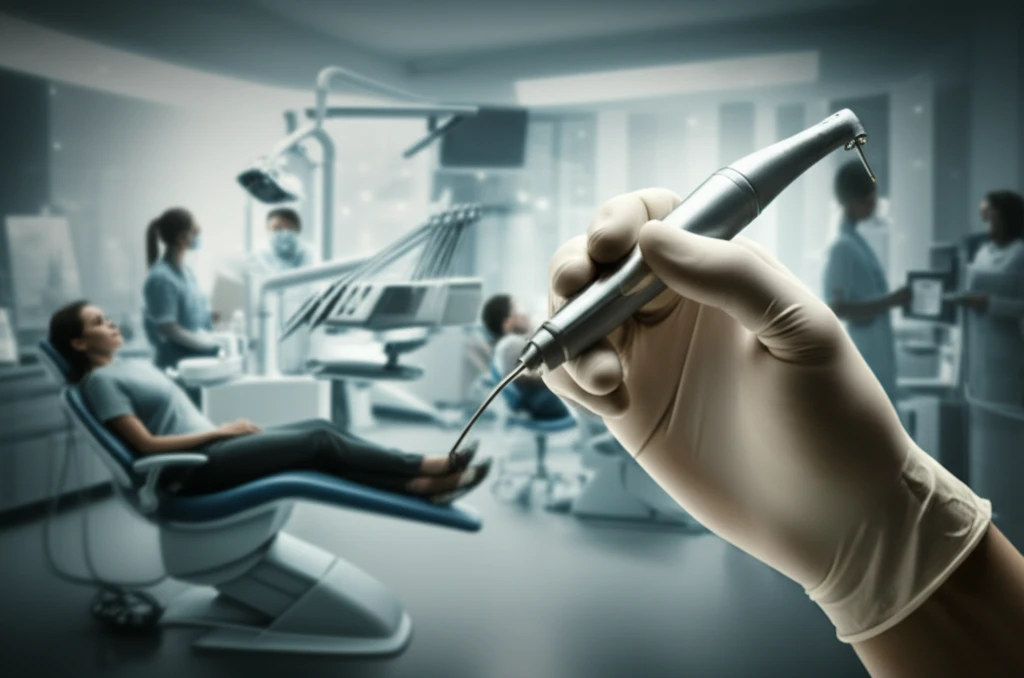
Unlocking Dental Excellence: Revolutionary Technologies and Techniques Transforming Practices

"From Cutting-Edge Handpieces to Advanced Composite Materials, Discover the Innovations Reshaping Modern Dentistry."
Dentistry is experiencing a dynamic transformation, fueled by technological advancements and innovative techniques. This evolution promises to revolutionize how dental practices operate and enhance patient care. From sophisticated handpieces to cutting-edge composite materials, the field is rapidly adopting new tools and methods that improve efficiency, precision, and overall patient experience.
This article delves into some of the most impactful innovations currently reshaping the dental landscape. We will explore the benefits of advanced handpiece technologies designed to streamline procedures and reduce costs. Additionally, we will examine groundbreaking developments in composite materials that offer superior aesthetics and durability. These advancements not only benefit dental professionals but also contribute to enhanced patient satisfaction and long-term oral health.
Join us as we uncover the latest trends and technologies driving the future of dentistry. This guide is designed to provide a comprehensive overview of key innovations and offer valuable insights for both practitioners and patients. Whether you are a dental professional looking to enhance your practice or an individual interested in understanding the latest advancements in oral healthcare, this article provides you with the essential knowledge.
Why Dental Innovation Matters
Dental technology is reshaping how practices approach diagnosis, treatment, communication, and patient care. Its impact may vary by technology, practice setting, and patient need, so broad claims about universal benefits should be treated cautiously. In general, innovation offers opportunities to improve precision, efficiency, and access while creating new implementation demands.
Balancing Established and New Methods
Dental practices continue to rely on established clinical methods, while newer digital tools increasingly supplement or modify those workflows. Conventional approaches can remain valuable because they are familiar and widely integrated into practice routines. However, their limitations may include workflow constraints, variable efficiency, and fewer opportunities for digital integration, depending on the procedure and practice.
From Ancient Tools to Digital Dentistry
The history of dentistry spans approximately 13,000 years and includes more than 350 recorded events involving dentistry and medicine. A notable milestone came in 1819, when French dentist Christophe-Francois Delabarre developed a rudimentary form of braces consisting of a woven wire crib fitted over the upper and lower rows of teeth. Over time, dentistry moved from ancient tools toward modern digital technology, reflecting continued innovation by dental professionals. This longer historical perspective shows that today’s digital developments are part of an extended process of technological change.
Elevating Precision: The Advantages of Modern Handpiece Technology
Handpieces are fundamental to various dental procedures, and the continuous advancements in this area have significant implications for both efficiency and patient care. Modern handpiece technologies are designed to meet the exacting demands of modern dentistry, delivering enhanced performance and reliability.
- Enhanced Durability: Modern handpieces are constructed with durable materials, ensuring longevity and reliability.
- Improved Ergonomics: Design features enhance comfort and reduce fatigue for dental professionals.
- Cost-Effectiveness: Comprehensive maintenance packages cover essential services, reducing unexpected costs.
- Precision and Accuracy: These handpieces are engineered to provide precise control, improving the accuracy of dental procedures.
- Hygiene and Safety: Features like enhanced sterilization protocols ensure patient safety.
An Evolving Evidence Base
Research and reviews in dental technology are continuing to examine how emerging tools affect diagnosis, treatment, workflow, and patient care. The evidence base is likely to develop unevenly across technologies and clinical applications. Readers should therefore distinguish between established uses, promising developments, and claims that still require broader evaluation.
Limits of Dental AI and Digital Workflows
AI in dentistry offers potential advantages but also presents disadvantages and limitations that require careful evaluation. Research on locating the apical foramen reports both advantages and disadvantages associated with digital technology, although it suggests AI may be useful for working-length verification and apical-foramen detection by non-experienced dentists or dentists without endodontic specialization during root canal therapy. Digital dentistry can also fail when technology does not fit the clinical situation, which is why one source recommends combining digital and analog workflows. Technology risks may extend beyond treatment itself, since a weak information-technology link can contribute to practice-wide downtime.
Comparing Scanners, Imaging, and Practice Stacks
Comparisons of dental technology increasingly examine accuracy, software ecosystems, open versus closed workflows, and true cost of ownership. Intraoral scanner evaluations focus on these dimensions, while full-arch implant scanning remains a particularly important unresolved challenge in digital implant dentistry. Broader technology-stack comparisons also consider clinical, administrative, and marketing platforms, and imaging guides compare CBCT scanners, intraoral systems, and digital radiography solutions. These comparisons suggest that selecting technology requires attention to integration and workflow, not just individual device features.
Embracing the Future of Dentistry
The dental industry is in an era of transformative change, and by embracing new technologies and techniques, professionals can enhance their practice and improve patient care. These changes show a commitment to providing better and more efficient oral healthcare. Staying informed, adopting new innovations, and prioritizing continuous learning is essential to thriving in this dynamic field.
Integrating Innovation Responsibly
Taken together, dental innovation appears most useful when it addresses a clear clinical or operational need. New tools should be assessed alongside established methods rather than treated as automatic replacements for them. A balanced approach considers evidence, workflow fit, training, cost, patient expectations, and the continuing importance of professional judgment.
The Next Decade of Dental Care
Sources identify digital dentistry, teledentistry, regenerative approaches, personalized care, AI, minimally invasive techniques, and sustainability as trends that may shape dentistry over the next decade. Forecasts for 2026 and beyond also highlight dental implants, 3D printing, clear aligners, preventive care, dental tourism, and future innovations. Emerging-market commentary specifically points to digital dentistry, AI-powered diagnostics, minimally invasive treatments, and personalized oral care. These projections describe a broad direction of travel rather than a guarantee that every trend will mature at the same pace.
Technology Within the Wider Health System
Implementing digital dentistry can create substantial financial challenges for dental schools, including the need for careful financial planning, sustainable budgeting, and adaptation to changing technology. These issues affect education, patient care, and the ability of the dental workforce to adapt to a technology-driven era. Broader public-health sources also emphasize that oral health is inseparable from systemic health and is connected with chronic disease outcomes, nutritional status, communication, and quality of life. Conditions such as diabetes and cardiovascular disease therefore influence how dental care fits within the wider healthcare system.
Technology in Everyday Practice
Reported case studies describe digital dental software as improving efficiency, reducing costs, and increasing patient satisfaction. A CAD/CAM case study focuses on personalized dental restorations created with greater precision and speed. Another real-life business example identifies Align Technology and its Invisalign clear-aligner system, which uses digital dentistry and artificial intelligence to straighten teeth. An AI case study from India, conducted by Geetha and colleagues in 2020, used a neural network to analyze X-rays and identify early cavities.