
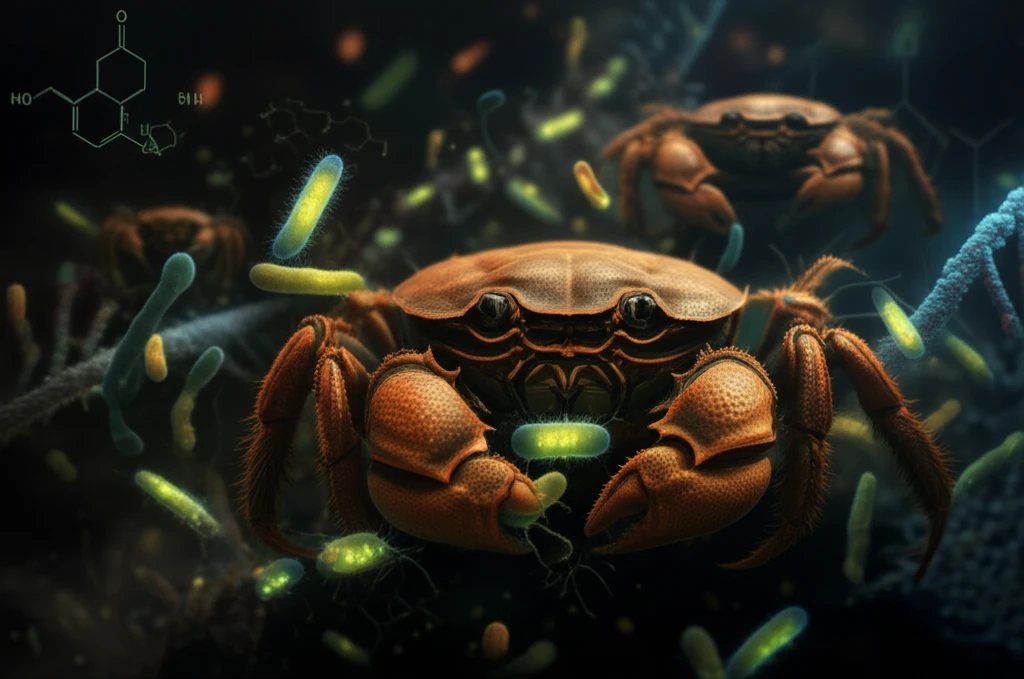
Chinese mitten crabs with glowing bacteria symbolizing healthy gut microbiome.

Unlock Crab Immunity: How L-Tryptophan Fortifies Shellfish Health

"Discover the surprising link between dietary L-tryptophan and enhanced immune defenses in Chinese mitten crabs, offering new strategies for sustainable aquaculture."


In the world of aquaculture, ensuring the health and resilience of farmed species is a constant challenge. For Chinese mitten crabs (Eriocheir sinensis), a delicacy and significant economic resource, maintaining strong immune defenses is crucial for sustainable production. Recent research sheds light on a promising solution: dietary supplementation with L-tryptophan, an essential amino acid.

L-tryptophan isn't just another nutrient; it plays a vital role in various physiological functions, including immune regulation and stress response. Studies have shown that manipulating the gut microbiota of farmed fish and crustaceans can profoundly impact their overall health and survival. This connection between diet, gut health, and immunity sparked an investigation into L-tryptophan's potential benefits for Chinese mitten crabs.

This article explores the findings of a study that examined the effects of dietary L-tryptophan on the survival rate, immune response, and gut microbiota composition of Chinese mitten crabs. The research provides valuable insights into how this amino acid can be used to fortify these crabs against disease and create more sustainable aquaculture practices. We'll break down the key discoveries and explain their implications for both crab farmers and seafood enthusiasts.

L-Tryptophan: The Key to Crab Immunity and Gut Harmony?

Chinese mitten crabs with glowing bacteria symbolizing healthy gut microbiome.

The study investigated the impact of varying levels of L-tryptophan in the diets of Chinese mitten crabs. Researchers closely monitored survival rates, immune responses, and the composition of gut microbiota over 30 days. The results revealed a clear correlation between L-tryptophan supplementation and improved health outcomes. Crabs receiving L-tryptophan-enhanced diets exhibited significantly higher survival rates compared to those fed a basal diet. Furthermore, even a short-term (7-day) boost of L-tryptophan demonstrated a protective effect against bacterial challenges.

To further understand the mechanisms behind these positive effects, the researchers assessed the activities of key antioxidant and phosphatase enzymes in the crabs' serum. They found that L-tryptophan supplementation increased the activity of CAT (catalase) and AKP (alkaline phosphatase), both crucial components of the immune system. This suggests that L-tryptophan helps bolster the crabs' natural defenses against oxidative stress and infection.

  • Improved Survival Rates: L-tryptophan supplementation significantly increased the survival rate of crabs.
  • Enhanced Immune Response: Increased activity of CAT and AKP enzymes in the serum, indicating a stronger immune system.
  • Gut Microbiota Modulation: L-tryptophan significantly increased the richness and diversity of the gut microbiota.
Perhaps one of the most fascinating findings was the impact of L-tryptophan on the crabs' gut microbiota. The study revealed that L-tryptophan supplementation significantly increased the richness and diversity of beneficial bacteria in the gut. Specifically, the abundance of Proteobacteria, Firmicutes, and Actinobacteria—all known for their roles in promoting immunity—was significantly elevated. This suggests that L-tryptophan acts as a prebiotic, fostering a healthy gut environment that supports overall crab health.

A Future of Healthier Crabs and Sustainable Aquaculture

The research highlights the promising potential of L-tryptophan as a tool for enhancing crab health and promoting sustainable aquaculture practices. By supplementing crab diets with this essential amino acid, farmers can potentially reduce disease outbreaks, improve survival rates, and minimize the need for antibiotics.

While this study provides valuable insights, further research is needed to fully understand the mechanisms by which L-tryptophan influences crab immunity and gut health. Future studies could explore the optimal dosage of L-tryptophan for different life stages of the crab, as well as the specific roles of various gut bacteria in mediating the beneficial effects of this amino acid.

Ultimately, the findings suggest that L-tryptophan supplementation represents a viable strategy for improving the health and resilience of Chinese mitten crabs, contributing to a more sustainable and economically viable aquaculture industry. As consumer demand for seafood continues to grow, innovative approaches like this will be essential for ensuring a healthy and sustainable supply.

About this Article -

This article was crafted using a human-AI hybrid and collaborative approach. AI assisted our team with initial drafting, research insights, identifying key questions, and image generation. Our human editors guided topic selection, defined the angle, structured the content, ensured factual accuracy and relevance, refined the tone, and conducted thorough editing to deliver helpful, high-quality information.See our About page for more information.

This article is based on research published under:

DOI-LINK: 10.1016/j.fsi.2018.10.076, Alternate LINK

Title: Effect Of Dietary L-Tryptophan On The Survival, Immune Response And Gut Microbiota Of The Chinese Mitten Crab, Eriocheir Sinensis

Subject: Aquatic Science

Journal: Fish & Shellfish Immunology

Publisher: Elsevier BV

Authors: Xiaozhen Yang, Minjie Xu, Genyong Huang, Cong Zhang, Yangyang Pang, Yongxu Cheng

Published: 2019-01-01

Everything You Need To Know

1

What is L-tryptophan and why is it important for Chinese mitten crabs?

L-tryptophan is an essential amino acid, meaning Chinese mitten crabs cannot produce it on their own and must obtain it through their diet. It plays a vital role in various physiological functions, including immune regulation and stress response. Supplementing the diet of Chinese mitten crabs with L-tryptophan can significantly boost their immune system and gut health. This leads to improved survival rates and more resilient aquaculture practices.

2

How did L-tryptophan affect the health of the Chinese mitten crabs in the study?

The study found that supplementing the diet of Chinese mitten crabs with L-tryptophan improved their health outcomes. The crabs showed increased survival rates, and even short-term supplementation offered protection against bacterial challenges. Furthermore, the activities of key antioxidant and phosphatase enzymes, such as CAT (catalase) and AKP (alkaline phosphatase), which are crucial components of the immune system, were increased in the crabs' serum. This indicates that L-tryptophan helps bolster the crabs' natural defenses against oxidative stress and infection.

3

How does L-tryptophan impact the gut microbiota of the crabs?

L-tryptophan supplementation increased the richness and diversity of beneficial bacteria in the gut of the Chinese mitten crabs. Specifically, the abundance of Proteobacteria, Firmicutes, and Actinobacteria—all known for their roles in promoting immunity—was significantly elevated. This suggests that L-tryptophan acts as a prebiotic, fostering a healthy gut environment that supports overall crab health. A healthy gut microbiota is crucial for the overall health and survival of the crabs.

4

What are the potential benefits of using L-tryptophan in crab farming?

The implications are significant for the aquaculture industry. By supplementing the diets of Chinese mitten crabs with L-tryptophan, farmers could potentially reduce disease outbreaks, improve survival rates, and minimize the need for antibiotics. This could lead to more sustainable aquaculture practices and a more reliable supply of this valuable seafood.

5

What are CAT and AKP and why are they important in the context of this study?

CAT (catalase) and AKP (alkaline phosphatase) are both crucial components of the immune system of Chinese mitten crabs. The study found that L-tryptophan supplementation increased the activity of these enzymes in the crabs' serum. CAT is an antioxidant enzyme that helps protect the crabs from oxidative stress, while AKP plays a role in various metabolic processes and immune function. The increase in the activity of these enzymes suggests that L-tryptophan supplementation strengthens the crabs' immune systems, making them more resistant to disease.

Newsletter Subscribe

Subscribe to get the latest articles and insights directly in your inbox.