
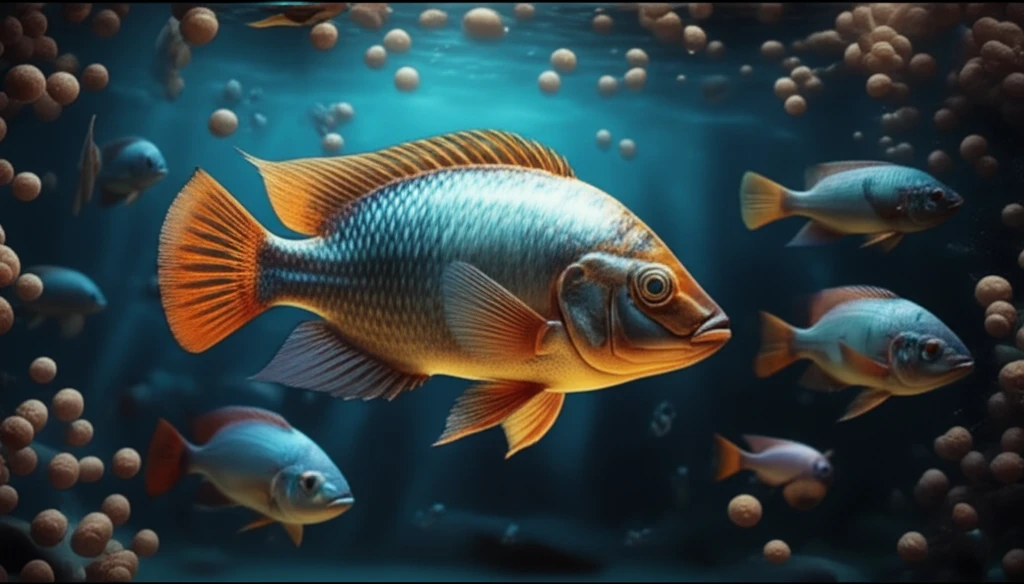
Tilapia swimming in yeast cell-filled tank, representing sustainable aquaculture.

Unlock Aquaculture's Potential: Can Yeast Replace Fishmeal in Tilapia Diets?

"Sustainable solutions in fish farming: Discover how single-cell protein (SCP) from yeast enhances growth and cuts costs."


The world's growing population is driving up demand for protein, both for direct human consumption and as a critical component of animal feed. Traditional sources like fishmeal are under increasing pressure due to overfishing and the depletion of arable land. This necessitates finding innovative, sustainable protein sources that minimize environmental impact and production costs.

Aquaculture holds immense promise for bridging the protein supply gap, but its economic viability hinges on the affordability of aquafeeds. High protein content, largely sourced from expensive fishmeal, significantly increases production costs. This challenge has spurred researchers to explore alternative protein sources that are both cost-effective and nutritionally adequate for fish.

Single-cell proteins (SCP), derived from microorganisms like yeast, offer a compelling solution. Produced from waste materials from agro-based industries, SCPs not only provide a valuable protein source but also help mitigate environmental pollution by converting waste into a usable resource. This article explores the potential of yeast SCP as a fishmeal substitute in the diets of tilapia, one of the most widely farmed fish species globally.

Yeast SCP: A Game-Changer for Tilapia Farming?

Tilapia swimming in yeast cell-filled tank, representing sustainable aquaculture.

A recent study investigated the feasibility of replacing fishmeal with graded levels of yeast SCP in the diets of Oreochromis niloticus fingerlings. The research team formulated diets with 10%, 20%, 30%, 40%, and 50% yeast SCP, ensuring each diet had a consistent 30% protein content. A control diet relied solely on fishmeal as the primary protein source. The fingerlings were fed these diets for 12 weeks, with careful monitoring of their growth performance, feed conversion, and carcass composition.

The results were promising! The diet containing 50% yeast SCP yielded the best growth response, indicated by:

  • Percentage Weight Gain (PWG): 6.04
  • Specific Growth Rate (SGR): 0.041
  • Daily Growth Rate (DRG): 0.0088
  • Feed Conversion Ratio (FCR): 1.94
While there were no statistically significant differences in growth parameters among the different treatments (p > 0.05), the 50% yeast SCP diet consistently outperformed the others. Furthermore, analysis of the fish carcass composition revealed that those fed the 50% yeast SCP diet had the highest percentage of body protein (55.35%) and a lower fat content compared to the control group. This suggests that yeast SCP not only supports growth but may also improve the nutritional profile of the fish.

The Future of Sustainable Fish Farming

This study demonstrates the potential of yeast SCP as a viable and sustainable alternative to fishmeal in tilapia diets. By successfully replacing up to 50% of fishmeal with yeast SCP, aquaculture farmers can significantly reduce production costs, minimize their reliance on unsustainable resources, and improve the nutritional value of their fish. As the demand for protein continues to rise, embracing innovative solutions like yeast SCP will be crucial for ensuring the long-term sustainability and affordability of aquaculture.

About this Article -

This article was crafted using a human-AI hybrid and collaborative approach. AI assisted our team with initial drafting, research insights, identifying key questions, and image generation. Our human editors guided topic selection, defined the angle, structured the content, ensured factual accuracy and relevance, refined the tone, and conducted thorough editing to deliver helpful, high-quality information.See our About page for more information.

Everything You Need To Know

1

What is single-cell protein (SCP) from yeast, and why is it considered a significant alternative in fish farming?

Single-cell protein (SCP) from yeast is a protein source derived from microorganisms like yeast. It's significant because it offers a sustainable alternative to traditional protein sources like fishmeal, which are facing increasing pressure due to overfishing. Yeast SCP can be produced from waste materials, reducing environmental pollution and production costs while still providing essential nutrients for fish.

2

What is fishmeal, and why is replacing it with alternatives being explored in aquaculture?

Fishmeal is a traditional source of protein in aquafeeds. Fishmeal is derived from wild caught fish. Fishmeal is important because it is a high-protein food source that is widely available. Its significance is being challenged as it increases production costs, relies on over fished populations and is not sustainable. Replacing it with alternatives like single-cell protein (SCP) is crucial for the long-term viability of aquaculture.

3

What type of fish was studied, and what levels of yeast single-cell protein (SCP) were tested in their diets?

The study used *Oreochromis niloticus* fingerlings, commonly known as tilapia. They were fed diets containing varying levels of yeast single-cell protein (SCP), ranging from 10% to 50%, with the goal of replacing fishmeal. The importance of using tilapia is that is it one of the most widely farmed fish species globally. The results showed that a diet with 50% yeast SCP yielded the best growth response, indicating that it's a viable alternative to fishmeal in tilapia diets.

4

What are percentage weight gain (PWG), specific growth rate (SGR), daily growth rate (DGR), and feed conversion ratio (FCR), and why are they important in assessing fish diets?

Percentage weight gain (PWG) is a measure of how much weight the fish gained during the study period, specific growth rate (SGR) measures the rate of growth relative to the fish's initial size, daily growth rate (DGR) represents the average amount of weight gained each day, and feed conversion ratio (FCR) indicates how efficiently the fish converted feed into body mass. These metrics are significant because they provide insight into the effectiveness of different diets on fish growth and feed utilization. Lower FCR values are better. In this case a diet of 50% yeast single-cell protein (SCP) was superior.

5

What is carcass composition, and why is it important to analyze in the context of fish diets?

Carcass composition refers to the proportions of different components in the fish body, such as protein, fat, and moisture. Analyzing carcass composition is important because it provides insights into the nutritional quality of the fish. In the study, the tilapia fed the 50% yeast single-cell protein (SCP) diet had the highest percentage of body protein and lower fat content, suggesting that yeast SCP can improve the nutritional profile of the fish.

Newsletter Subscribe

Subscribe to get the latest articles and insights directly in your inbox.