
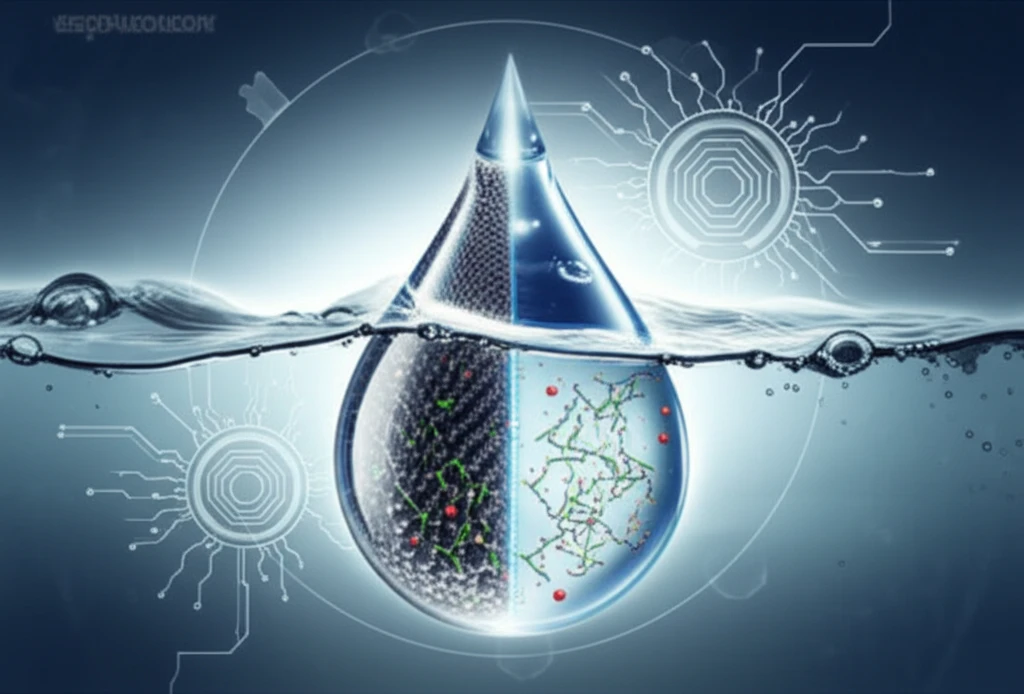
Tiny Tech, Big Clean: How Modified Nanotubes and Smart Sludge Could Revolutionize Water Treatment

"Explore groundbreaking research on using magnetic halloysite nanotubes and sophorolipids to combat dye pollution and improve wastewater treatment."
Water pollution, particularly from industrial dyes and wastewater, poses a significant threat to ecosystems and human health. Traditional methods often fall short in effectively removing these contaminants, spurring the search for more innovative and sustainable solutions. Researchers are now exploring nanotechnology and microbial processes to enhance water purification.
This article examines two promising research areas: the use of magnetic halloysite nanotubes for dye removal and the application of sophorolipid quaternary ammonium salts (SQAS) to improve activated sludge systems in wastewater treatment. These cutting-edge approaches offer potential for more efficient and environmentally friendly water purification processes.
We'll break down the science behind these methods, exploring how they work and what makes them so promising. Whether you're an environmental science enthusiast, a concerned citizen, or simply curious about the future of water treatment, this article will provide a clear and accessible overview of these exciting developments.
Magnetic Nanotubes: Tiny Magnets for Dye Removal
Dyes released from textile and other industries are a major source of water pollution. Traditional treatment methods can be expensive and not always effective. That's where magnetic halloysite nanotubes (MHNTs) come in. These tiny tubes, modified with magnetic properties, offer a novel way to capture and remove dyes from water.
- Synthesis: Alginate hybrid spheres are created with embedded magnetic halloysite nanotubes (MHNTs).
- Magnetic Modification: A 'co-precipitation' method is used to give halloysite nanotubes magnetic properties.
- Dye Adsorption: The MHNT-alginate spheres are mixed with dye-contaminated water, where they adsorb the dye molecules.
- Separation: Thanks to their magnetic properties, the spheres can be easily removed from the water using a magnet, taking the dye with them.
- Analysis: Techniques like FT-IR, TGA, SEM, TEM, BET, and VSM are used to characterize the synthesized particles and measure their dye removal efficiency.
The Future is Clear: Innovations for Cleaner Water
These studies represent significant steps forward in the development of innovative water treatment technologies. By harnessing the power of nanotechnology and microbial processes, researchers are creating new solutions for addressing the growing challenge of water pollution.
While further research and development are needed, these approaches hold great promise for creating more sustainable and effective water purification systems. Imagine a future where industrial wastewater is efficiently cleaned using magnetic nanoparticles and where activated sludge systems are optimized for maximum performance. The innovations discussed in this article bring us closer to that vision.
The journey towards cleaner water requires ongoing research, collaboration, and a commitment to implementing these innovative technologies. By investing in these advancements, we can protect our water resources and ensure a healthier future for all.