
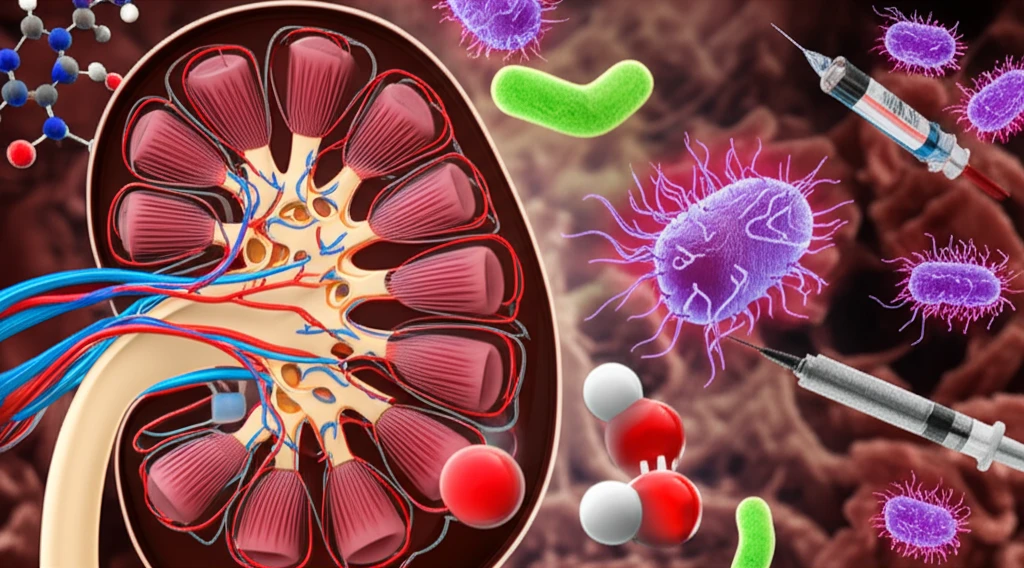
The Hidden Threat: How Heroin Use Can Lead to a Rare Kidney Disease

"Unveiling the Link Between Heroin, Infections, and Secondary Amyloidosis"
In a world grappling with the opioid epidemic, the devastating effects of heroin use extend far beyond the immediate dangers of overdose. Emerging research reveals a hidden threat: the potential for long-term health complications, including a rare but serious kidney disease called secondary amyloidosis. This condition, often triggered by chronic infections, can significantly impact the lives of those struggling with substance abuse.
Secondary amyloidosis is a condition where abnormal proteins accumulate in various organs, leading to organ damage and dysfunction. While it can arise from various underlying causes, chronic infections, particularly those common among individuals who use intravenous drugs, are a significant trigger. This article aims to shed light on this lesser-known consequence of heroin use, highlighting the risks and emphasizing the importance of awareness and early intervention.
Understanding the link between heroin use, recurrent infections, and secondary amyloidosis is crucial for both individuals struggling with addiction and healthcare professionals. By raising awareness, we can improve early detection, promote effective treatment, and ultimately, save lives. This article will delve into the details of this condition, providing valuable insights into its causes, symptoms, and the steps that can be taken to mitigate its impact.
A Rare but Serious Kidney Threat
Heroin use can be associated with AA amyloidosis, a rare kidney disease in which abnormal protein deposits impair renal function. The condition is particularly concerning because kidney damage may develop alongside the recurrent infections and chronic inflammation often affecting people who inject drugs. However, the available evidence is limited and does not establish a single rate of occurrence across all heroin users.
Recognizing AA Amyloidosis
Clinical reports describe AA amyloidosis in people who use heroin, including a woman with active heroin and methamphetamine use who presented with sepsis from osteomyelitis. Reports have linked the condition to intravenous or subcutaneous injection of street drugs, including heroin and cocaine. AA amyloid consists of misfolded aggregates derived from serum amyloid A, and recurrent skin or soft-tissue infections may contribute to its development. A 2025 report advises clinicians to suspect AA amyloidosis when a person with long-term intravenous drug use presents with proteinuria and acute kidney injury.
From Mysterious Deposits to Defined Proteins
Amyloidosis is characterized by protein misfolding into insoluble amyloid fibrils with a thread-like structure and high beta-sheet content. Historically, these deposits were often enigmatic findings discovered after death, although recognition and treatment of amyloidosis have advanced in recent decades. In 1961, Earl P. Benditt and Nils Eriksen at the University of Washington isolated a protein from specimens associated with secondary amyloidosis and initially called it “amyloid of unknown origin.” A later report on heroin-associated AA amyloidosis described 35 of 38 diagnosed patients as having a previous history of heroin use between 2005 and 2015.
Unraveling Secondary Amyloidosis: The Culprit and Its Consequences
Secondary amyloidosis (AA amyloidosis) is a condition characterized by the buildup of abnormal proteins called amyloid fibrils in various organs and tissues. These fibrils are formed from a protein called serum amyloid A (SAA), which is produced in the liver during periods of inflammation. Chronic inflammation, often stemming from persistent infections, is a major driver of AA amyloidosis.
- Kidney Damage: The kidneys are the most commonly affected organs, leading to proteinuria (protein in the urine) and kidney failure.
- Liver and Spleen Enlargement: Amyloid deposits can cause these organs to enlarge, disrupting their normal function.
- Heart Problems: Amyloidosis can lead to heart failure and arrhythmias.
- Gastrointestinal Issues: The digestive system may be affected, leading to malabsorption, diarrhea, and bleeding.
- Neuropathy: Nerve damage can occur, causing pain, numbness, and weakness.
Evidence Continues to Emerge
Research on heroin use and AA amyloidosis continues to evolve alongside the opioid crisis, but comprehensive recent reviews remain limited in publicly available material. A 2025 Cureus case report documented acute renal failure associated with intravenous heroin use. Another report states that, after adjustment for age, race, sex, site, and biopsy year, any past or current heroin use was associated with an estimated 170-times higher risk of kidney AA amyloidosis than no heroin use. This estimate comes from the cited study and should be interpreted in the context of its study design rather than as a universal risk for every person who uses heroin.
Infection May Be the Critical Link
The available evidence does not show that heroin exposure alone explains every case of AA renal amyloidosis. In chronic subcutaneous heroin users, the condition appears to be associated with suppurative skin infections caused by “skin popping.” The proposed mechanism is prolonged immune stimulation from exogenous antigens or repeated acute inflammatory episodes. This supports a more specific explanation involving recurrent infection and inflammation rather than a simple direct-toxic effect of heroin.
A Multifactorial Kidney Risk
Heroin-associated AA amyloidosis appears to sit at the intersection of drug use, injection practices, recurrent infection, and chronic inflammation. The available source material emphasizes associations and proposed mechanisms rather than a definitive comparison of risk across different routes or populations. As a result, comparisons between intravenous use, subcutaneous use, and other causes of AA amyloidosis should remain cautious.
Taking Action: Prevention, Treatment, and Support
Addressing the link between heroin use and secondary amyloidosis requires a multi-faceted approach. Prevention efforts should focus on reducing the risk of substance abuse through education, access to treatment, and harm reduction strategies. Early detection through routine screenings and awareness among healthcare providers is crucial. Treatment involves managing the underlying infections, suppressing inflammation, and providing supportive care for organ damage. Furthermore, individuals struggling with addiction need access to comprehensive treatment programs, including medication-assisted treatment and behavioral therapies. By working together, we can mitigate the devastating consequences of heroin use and protect the health and well-being of those affected.
A Changing Clinical Pattern
AA amyloidosis has traditionally been associated with chronic autoimmune or inflammatory disorders, but reports from urban centers identify injection drug use among affected patients. Reports of intravenous or subcutaneous heroin and cocaine use frequently describe renal amyloidosis alongside substance use disorder and viral infections such as hepatitis or HIV. The cited case material therefore supports considering injection drug use and recurrent inflammation when evaluating unexplained kidney disease, while recognizing that diagnosis requires clinical investigation.
Faster and More Precise Diagnosis
Future work may focus on improving the speed and efficiency of amyloidosis diagnosis. A 2025 review describes the diagnostic workflow for AL amyloidosis as complex and resource-intensive and calls for novel approaches to expedite diagnosis and optimize care. Separately, a market projection estimates that the amyloidosis therapeutics market could reach USD 6.34 billion by 2035, with an 8.18% compound annual growth rate. That market projection concerns amyloidosis therapeutics broadly and should not be treated as a forecast specifically for heroin-associated AA kidney disease.
Public Health Beyond Drug Exposure
The broader public-health concern is not limited to heroin itself: injection drug use can be connected with recurrent infections, AA amyloidosis, and serious systemic illness. Reports also describe renal amyloidosis in people with substance use disorder and concurrent hepatitis or HIV. A documented case involved a 34-year-old woman with systemic AA amyloidosis and sepsis. These patterns highlight the need to consider kidney complications within the wider medical and infectious consequences of injection drug use.
Patients Behind the Association
Case reports show how AA amyloidosis can emerge amid repeated, serious infections rather than as an isolated kidney problem. One 49-year-old woman with polysubstance use disorder had recurrent cutaneous abscesses, spinal diskitis, and septic thrombophlebitis before presenting for emergency care. Another report described a woman actively using heroin and methamphetamine who developed sepsis from osteomyelitis and AA amyloidosis. These cases illustrate the overlapping burdens of substance use, chronic infection, sepsis, and kidney disease.