
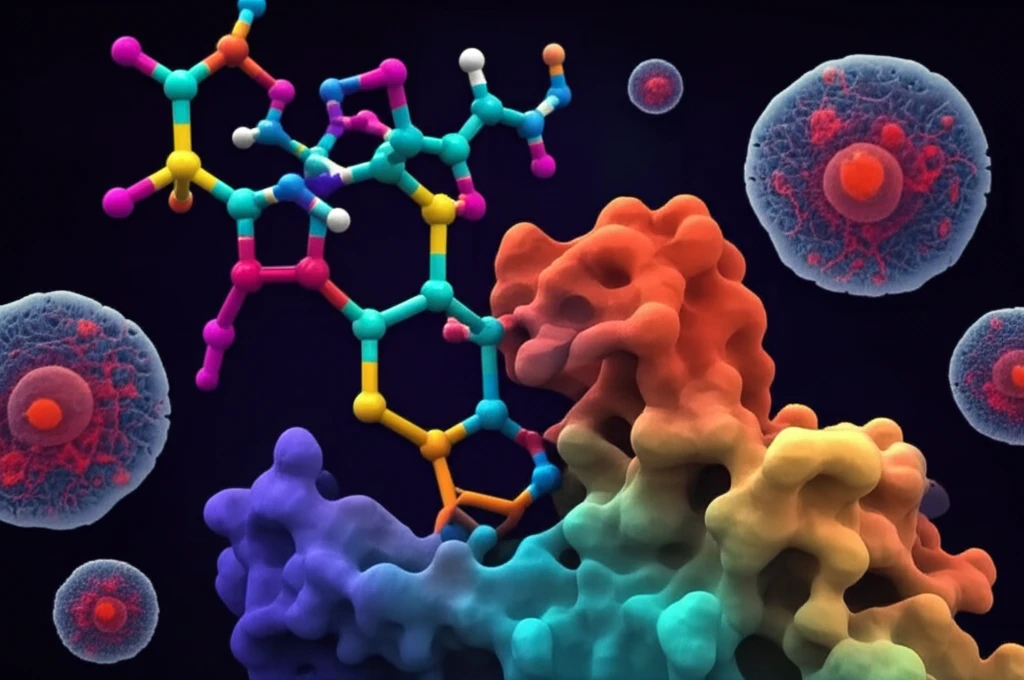
Correcting the Record: Bisindole-oxadiazole Hybrids and Their Anticancer Potential

"An important clarification on NMR data doesn't change the promising results for these potential drug candidates."
Scientific research is a meticulous process, and accuracy in data reporting is paramount. A recently published erratum addresses inaccuracies in the nuclear magnetic resonance (NMR) spectral data for three bisindole-oxadiazole hybrid molecules, initially presented in a 2017 paper by Kamath et al. These compounds have garnered attention for their potential apoptotic, antimetastatic, and Bcl-2 binding capabilities, suggesting promise in cancer therapy.
The original article, titled "Bisindole-oxadiazole hybrids, T3P mediated synthesis and appraisal of their apoptotic, antimetastatic and computational Bcl-2 binding potential," contained incorrect NMR data for compounds 3d, 3g, and 3i. NMR spectroscopy is a critical technique used to elucidate the structure of molecules, making accurate data essential for reproducibility and further research.
The erratum serves to correct these inaccuracies, providing the correct NMR spectral data within the results section and supplementary materials. It's important to note that while the data has been corrected, the core findings and conclusions of the study regarding the apoptotic and antimetastatic potential of these bisindole-oxadiazole hybrids remain unchanged.
Cancer Data and Trends
The CDC says cancer data are used to understand rates and trends, support research, measure progress in prevention and control, focus action on disparities, and improve outcomes. Each year, the American Cancer Society estimates new cancer cases and deaths in the United States and compiles population-based occurrence and outcome data. Its 2024 report used incidence data collected through 2020 and mortality data from the National Center for Health Statistics.
Apoptosis as a Therapeutic Target
Using a cell’s own mechanism for death by targeting apoptosis is described as an approach to controlling the uncontrolled growth of cancer cells. Molecular understanding of apoptosis regulation and signaling defects in tumor cells may help identify their sensitivity or resistance to antitumor therapy and inform future therapeutic targets. A review of apoptosis-detection methods discusses their applicability to cancer treatment as well as their advantages, disadvantages, and limitations.
Bisindole-oxadiazole Hybrids: Why Are They Important?
Bisindole-oxadiazoles represent a class of chemical compounds that have shown promise in preclinical studies for their anticancer properties. These molecules are designed to interfere with key processes in cancer development and progression, including apoptosis (programmed cell death) and metastasis (the spread of cancer cells to other parts of the body).
- Apoptosis Induction: Triggering programmed cell death in cancer cells.
- Anti-Metastatic Activity: Reducing the ability of cancer cells to spread.
- Bcl-2 Inhibition: Disrupting the function of proteins that prevent cell death.
Apoptosis and Cell-Death Pathways
A review published September 15, 2025, describes targeting caspase-induced apoptosis and non-apoptotic cell-death pathways as a cancer-treatment strategy. The review reports that this strategy has made great progress. Its scope includes both caspase-induced apoptosis and non-apoptotic cell-death pathways.
Hybrid Appraisal and Apoptosis Targets
The erratum for “Bisindole-oxadiazole hybrids, T3P mediated synthesis and appraisal of their apoptotic, antimetastatic and computational Bcl-2 binding potential” identifies the properties appraised in that article. A Nature Reviews figure presents therapeutic approaches targeting apoptosis pathways in cancer cells. The supplied material does not report comparative efficacy results between the hybrids and those broader approaches.
The Future of Bisindole-oxadiazoles in Cancer Therapy
While the erratum corrected specific NMR data, the core message from the research remains: bisindole-oxadiazole hybrids hold promise as potential anticancer agents. Their ability to induce apoptosis, inhibit metastasis, and target Bcl-2 proteins makes them attractive candidates for further investigation.
Apoptosis and Cancer Management
A 2022 systematic review describes growing interest in targeting apoptosis in cancer therapy and debate over whether apoptosis should be a main target in cancer management. It discusses apoptosis, its signaling pathways, and how cancer can evade it. An Annual Reviews article says the study of apoptosis has been closely linked to cancer and that elucidating its molecular mechanisms has improved understanding of how cancer cells evade cell-death processes.
Apoptosis Evasion and Resistance
Disorganization of apoptosis can contribute to unchecked cellular proliferation, cancer development, and resistance to drug therapies. A 2022 review describes apoptosis as a major mechanism of cancer-cell death and says that evasion of apoptosis results in therapy resistance. That review covers apoptosis modulators, including MDM2 inhibitors and kinase inhibitors that can induce apoptosis; it also describes extrinsic pathways triggered by external stimuli through cell-surface death receptors.
Further research is needed to fully elucidate the mechanisms of action of these compounds, optimize their structures for improved efficacy and bioavailability, and evaluate their safety and efficacy in preclinical and clinical studies. The corrected NMR data will be invaluable for researchers pursuing these avenues.
The field of cancer research is constantly evolving, and the development of new and effective therapies is an ongoing effort. Bisindole-oxadiazoles represent one potential avenue for developing targeted therapies that can improve outcomes for patients with cancer. The dedication to accuracy and transparency, as demonstrated by the publication of this erratum, is essential for the advancement of scientific knowledge and the development of better treatments.